The short answer
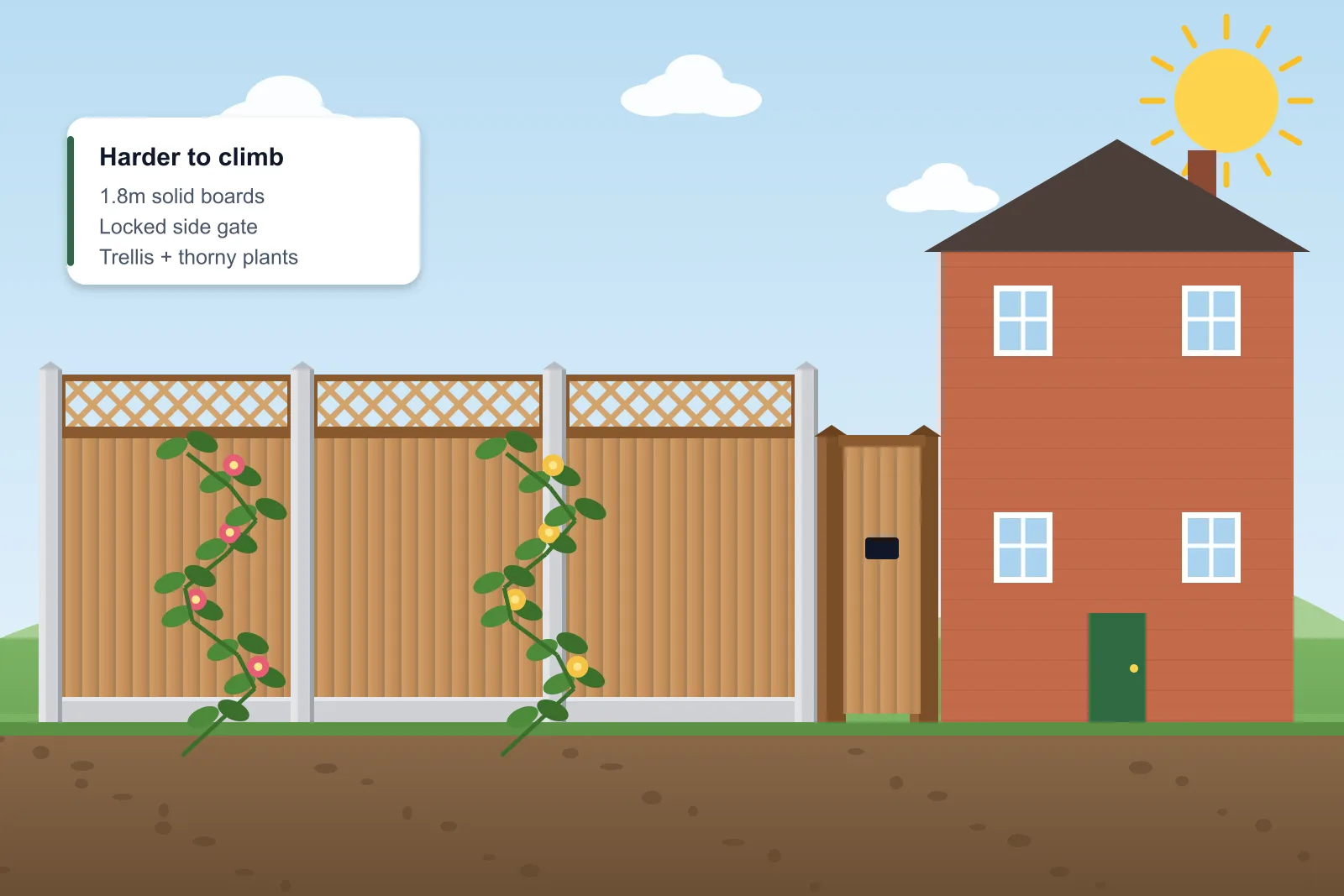
The most effective domestic security fencing is a solid 1.8–2m fence with no footholds on the outside, a matching locked side gate, and a fragile trellis or prickly planting along the top. Rear and side boundaries matter most. Taller fences may need planning permission, and anti-climb toppings must be used responsibly and with warning signs.
Police crime prevention advice is consistent: secure the rear and side of your property first, because that's where most break-ins happen. Front gardens are visible from the street, so intruders are more likely to be seen. Back gardens are hidden, and a weak side gate gives easy access.
Good security fencing isn't about razor wire. It's about making it slower, noisier and more awkward to get in, and making an intruder more likely to be seen.
Height and design
A 1.8m fence is the standard for back gardens, and 2m is the usual maximum without planning permission. Solid fences like closeboard or tongue and groove give fewer footholds than lap panels with horizontal slats. On the outside, avoid horizontal rails or gravel boards that create a step – fix rails on the inside where possible.
See our fence height guide and fence planning permission for the rules.
- Solid boards with no gaps or footholds outside
- Rails and gravel boards on the inside face
- Strong posts – concrete posts are hard to push over
- No bins, walls or sheds outside the fence to climb on
- Gates the same height as the fence
Side gates
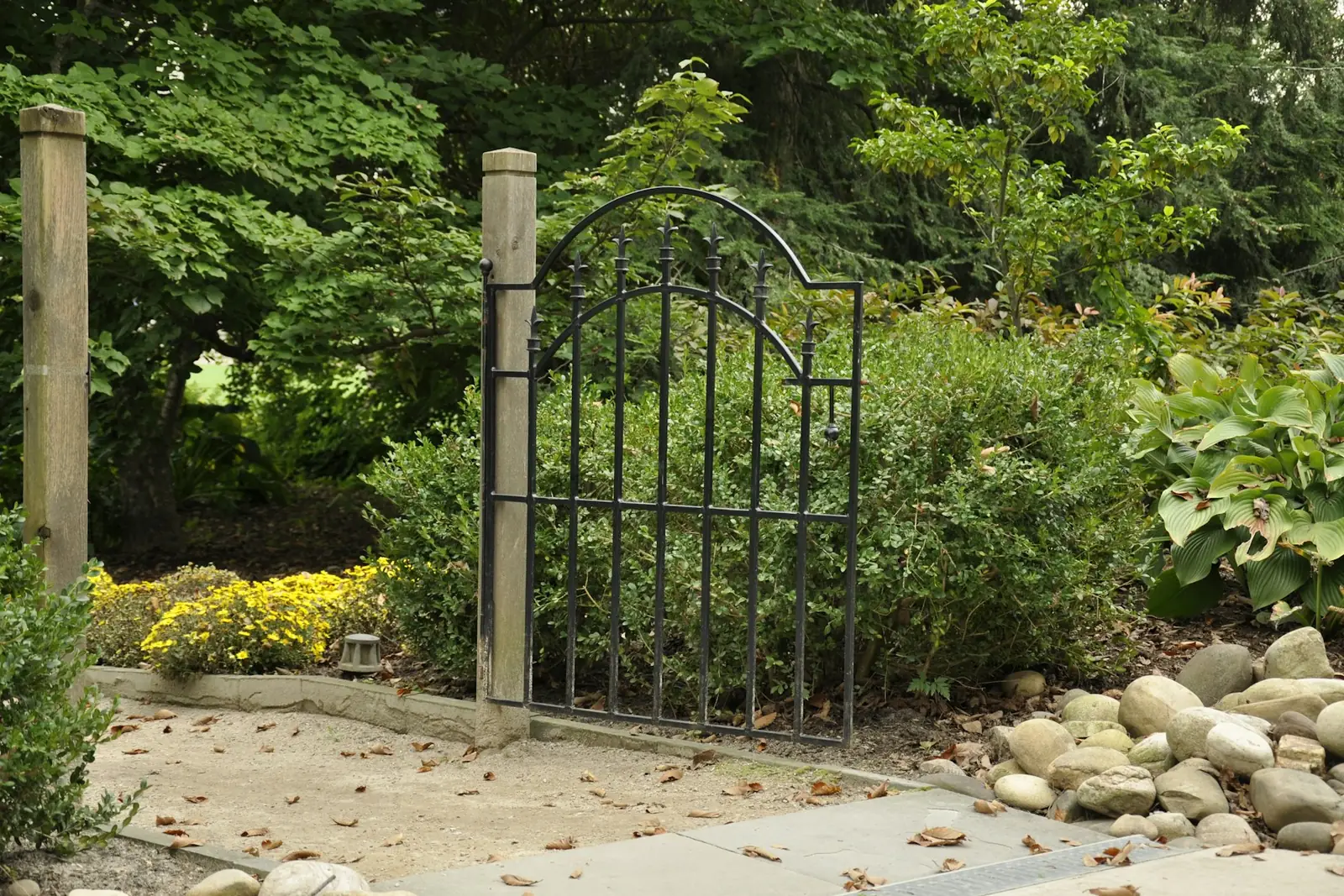
A side gate is often the weakest point. It should be as tall as the fence, flush with the front of the house where possible, solid with no footholds, and locked with a bolt or padlockable lock on the inside. Hinges should be fitted so they can't be removed from outside – use coach bolts or security screws. See our garden gate cost guide.
Trellis and toppings
A lightweight trellis topper is one of the simplest deterrents. It's hard to climb, breaks noisily, and gives climbing plants a framework. Adding 30cm of trellis to a 1.8m fence may take you over 2m, which may need planning permission. See raising fence height with trellis.
Anti-climb toppings such as plastic spikes are legal if they're used responsibly, placed at a sensible height, and accompanied by warning signs. Broken glass and barbed wire on domestic boundaries next to footpaths can expose you to legal liability if someone is injured. Speak to your local council or police crime prevention team if in doubt.
Defensive planting
Prickly plants along the boundary are an effective, attractive deterrent. Pyracantha, holly, berberis, blackthorn and climbing roses trained up a fence or trellis make climbing very unpleasant. Gravel paths beside the house make a noise underfoot, which also helps.
See hedge vs fence and fence climbing plants.
Metal and mesh security fencing
For outbuildings, side passages and rural properties, rigid mesh or metal railings can be very secure while keeping visibility, which helps neighbours see what's going on. See metal fencing and chain link and mesh fencing.