The short answer
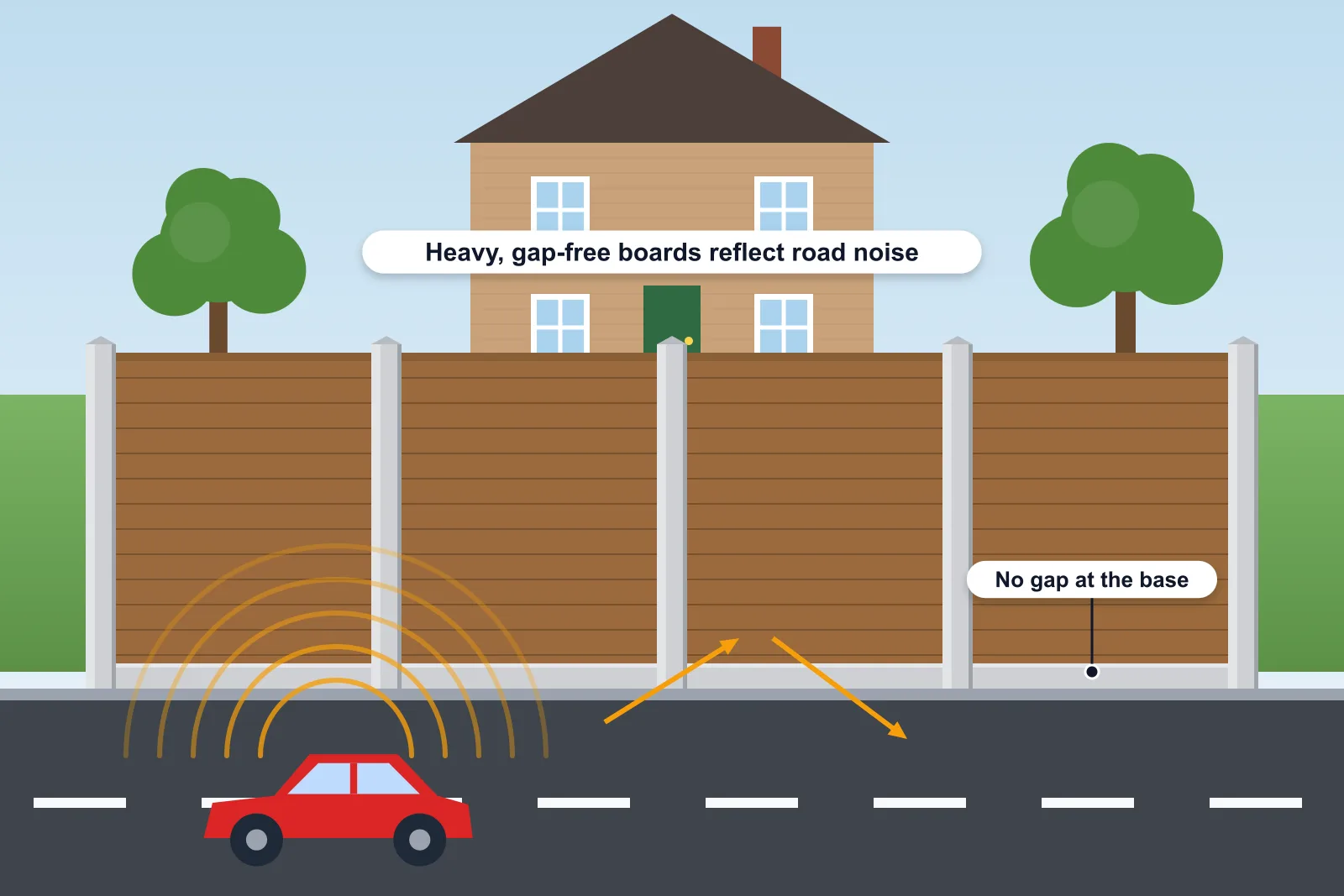
Yes – a solid, heavy fence with no gaps can noticeably reduce road noise, typically by around 10 decibels when it blocks the line of sight to the traffic. Acoustic fences use thick, dense tongue-and-groove boards and close the gap at the base. Ordinary lap panels make little difference because sound passes through thin boards and gaps.
Sound behaves a little like water: it gets through any gap it can find. A normal garden fence, with thin boards, shrinkage gaps and a space under the panel, does very little to block noise. An acoustic fence is designed differently – it is heavy enough to stop sound passing through and continuous enough to leave no gaps.
No fence can make a busy road silent, but a well-built acoustic barrier can make a garden much more pleasant to sit in.
What makes a fence acoustic
Many acoustic fences are reflective: they bounce sound back towards the road. Absorptive versions add a sound-absorbing layer on the road-facing side, which is useful where reflected noise would bother someone else.
- Mass – thick, dense boards, typically far heavier than standard panels
- No gaps – tongue-and-groove boards and a sealed base
- Height – the fence must block the line of sight between you and the noise source
- Length – sound travels around the ends, so the run should extend beyond the area you want to protect
How much difference will it make?
A barrier that blocks the line of sight to the traffic typically reduces noise by around 10 decibels, which most people perceive as roughly halving the loudness. Results depend on the height of the fence, how close it is to the road or to you, and whether the house is upstairs or downstairs – a ground-floor garden benefits much more than a first-floor bedroom.
Planning and practical points
Acoustic fences follow the same height rules as other fences: usually 2m in back gardens and 1m next to a road. Taller barriers need planning permission. Because the fence is heavy, posts are usually larger and set deeper, so it is a job for an experienced installer. Planting a hedge in front adds a little extra softening and makes the fence easier on the eye.