The short answer
For exposed gardens, choose a fence that lets some wind through – hit-and-miss, slatted or louvred designs – on concrete posts set at least 600mm deep. If you need a solid fence, closeboard built on site is far stronger than lightweight lap panels. Spacing posts closer together and using heavier posts adds strength.
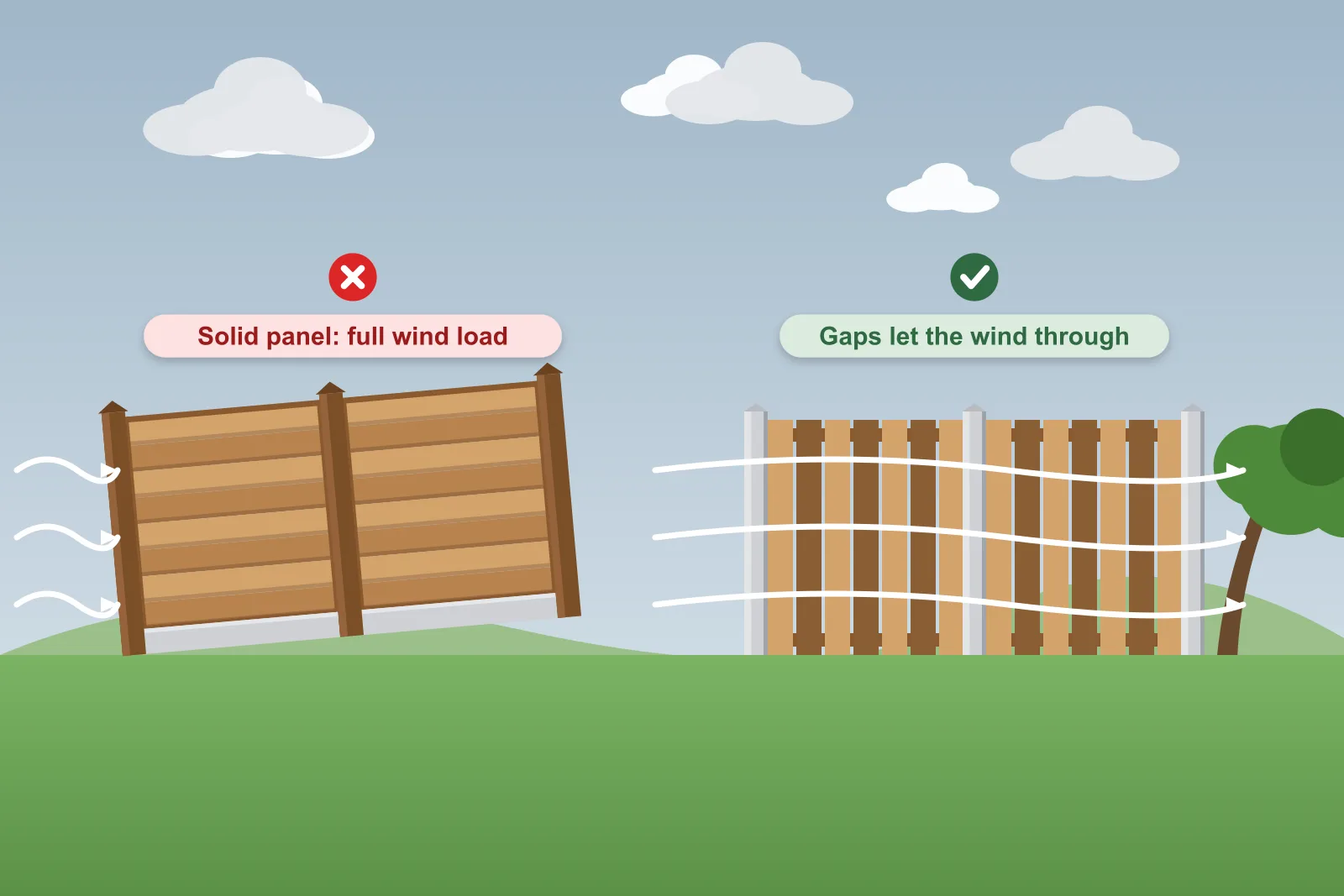
A solid 1.8m fence panel acts like a sail. In a strong gust the force on each panel can be enough to snap timber posts at ground level or lift a shallow footing out of the soil. That is why fences on coastal, hilltop and open-edge gardens fail so often – and why simply replacing like for like rarely solves the problem.
A wind-resistant fence works in two ways: it reduces the load by letting some air pass through, and it resists the load that remains with strong posts set deep in concrete.
Why fences blow down
Most storm damage starts at the posts. Timber posts rot at ground level over 10–15 years, losing much of their strength long before they look bad. Posts set too shallow can rock loose. Lightweight panels can also be sucked out of their slots or have their boards torn off.
- Rotten timber posts snapping at ground level
- Posts not set deep enough or in too little concrete
- Solid panels catching the full force of the wind
- Thin lap panels that cannot take the strain

Designs that cope best with wind
Hit-and-miss fencing, slatted fencing and louvred panels all let air pass through while still giving good privacy. Even a small gap between boards reduces the pressure on the fence considerably and helps reduce the turbulent eddies that form behind a solid barrier.
If you want a fully solid fence, closeboard built on site is the strongest timber option: the boards are nailed to rails along their length, so they cannot be pulled out as a single panel.
Posts and footings for exposed sites
Concrete posts do not rot, which removes the most common point of failure. For a 1.8m fence, posts are normally 2.4m long with 600mm in the ground; in very exposed spots contractors may go deeper or reduce the post spacing. Steel posts and heavy-duty timber posts are alternatives for some designs.
Ask your contractor how they plan to deal with the wind. A good answer will cover post type, depth and spacing, not just the panel.