The short answer
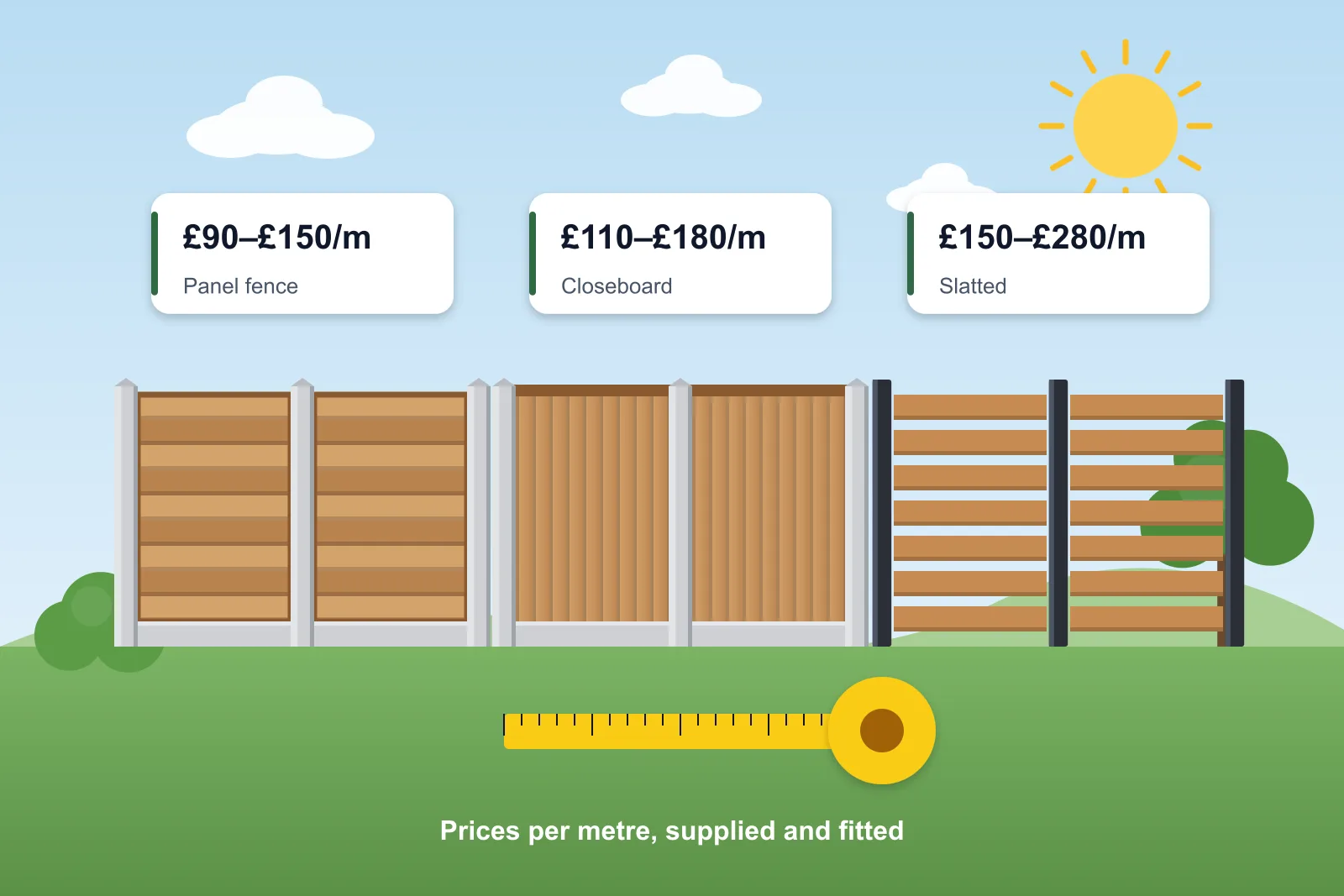
Most UK homeowners pay £90–£150 per metre for a standard 1.8m panel fence on concrete posts, supplied and fitted. Closeboard usually costs £110–£180 per metre, contemporary slatted fencing £150–£280 and composite fencing £180–£320. Removing the old fence typically adds £10–£25 per metre.
Fencing is usually quoted by the metre because almost every garden is a different length. The figure covers the posts, panels or boards, gravel boards, concrete and labour for a typical run – but contractors calculate it in different ways, so two quotes that look £20 a metre apart may actually describe quite different jobs.
This guide breaks down typical UK prices for each common fence type, explains what should be included in a per-metre figure and lists the extras that most often turn a simple quote into a bigger one. Use it to sense-check the quotes you receive rather than as a fixed price list.
Typical prices by fence type
The biggest single factor is the style of fence. Standard lap or overlap panels are the cheapest to buy and the quickest to fit. Closeboard fencing, built board by board on site, takes longer but lasts longer. Slatted, composite and metal fences cost more again because the materials are more expensive and the installation needs more care to look right.
Height matters too. Most back gardens use 1.8m (six-foot) fencing; dropping to 1.2m or 1.5m saves a little on materials but not much on labour, because the number of posts stays the same.
- Lap or overlap panels on concrete posts – £90–£150 per metre
- Closeboard (feather edge) on concrete posts – £110–£180 per metre
- Slatted or hit-and-miss timber – £150–£280 per metre
- Composite fencing with aluminium posts – £180–£320 per metre
- Low picket fence for a front garden – £60–£110 per metre
- Post and rail with stock mesh – £35–£70 per metre
What a per-metre price should include
A good quote spells out exactly what you are paying for. As a minimum, a supply-and-fit price for a new fence should include the posts set in concrete or post mix, the panels or boards, gravel boards, fixings and clips, and clearing up afterwards. Ask whether VAT is included – many sole traders are not VAT registered, while larger firms add 20%.
If a quote simply says “fence, 20 metres, £2,400”, ask for it to be itemised. You want to see the post type, the panel or board specification and whether removing the old fence is part of the price.
Extras that push the price up
Most of the difference between a cheap quote and an expensive one comes from the site rather than the fence. Contractors price in the time it will take, and anything that slows them down costs money.
- Taking down and disposing of the old fence – often £10–£25 per metre
- Breaking out old concrete footings, which can take longer than the new work
- Sloping ground that needs stepped panels or raked closeboard
- Restricted access, such as carrying everything through the house
- Tree roots, buried services or very hard ground
- Gates, which are priced separately – usually £300–£900 for a timber side gate
How to get an accurate price
Measure the length of each run of fence and note the height you want, then take photos of the existing fence, the ground and the access. With that information most contractors can give a reasonably firm price, and the quotes you receive will be easier to compare.
Getting three quotes is still the best way to find a fair price. If one is far below the others, check what has been left out – it is often the posts, the gravel boards or the removal of the old fence.