Skip to content
Choosing a fence

What Is the Difference Between Lap Panels and Overlap Fence Panels?

Lap, overlap, waney lap, straight-cut lap… fence panel names can be confusing. Here's what they actually mean.

Updated October 2026 · 3 min read

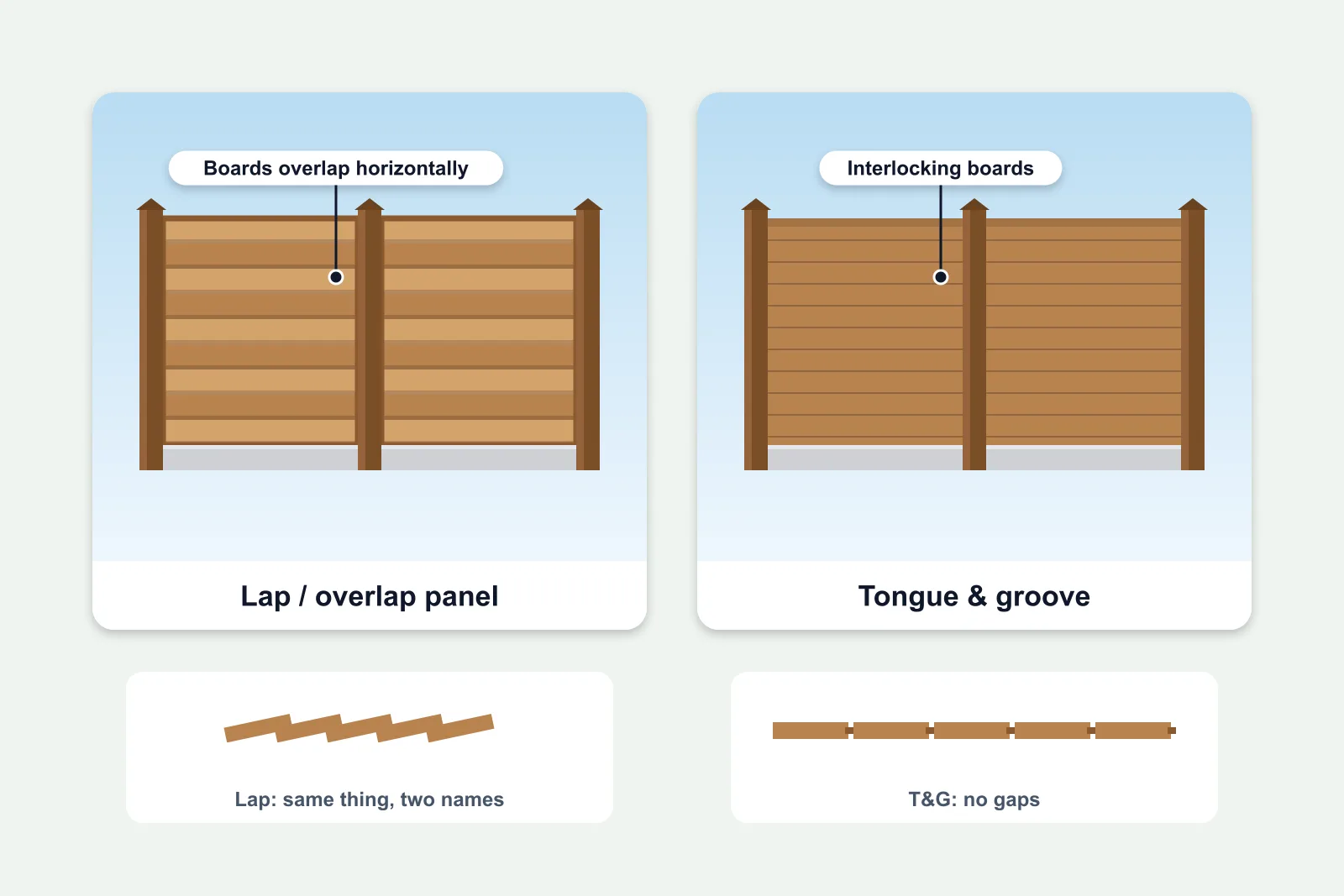
Illustration comparing a lap or overlap fence panel with a tongue and groove panel, including board cross-sections

The short answer

There's usually no difference: 'lap panel' and 'overlap panel' are two names for the same thing – a panel made of thin horizontal slats that overlap each other inside a timber frame. The real differences are between waney edge (bark-edged) and straight-cut slats, and between lap panels and stronger styles such as tongue and groove or closeboard.

Overlap panels are the most common fence panels in the UK. They're cheap, light and easy to fit. 'Lap' is just a shortened version of 'overlap', and 'waney lap' or 'waney edge' describes slats with a natural wavy edge.

Lap and overlap: the same panel

Each slat overlaps the one below by a few centimetres, shedding rain like roof tiles. The slats are stapled or nailed to a frame. Most are 1.83m wide and come in heights from 0.9m to 1.8m.
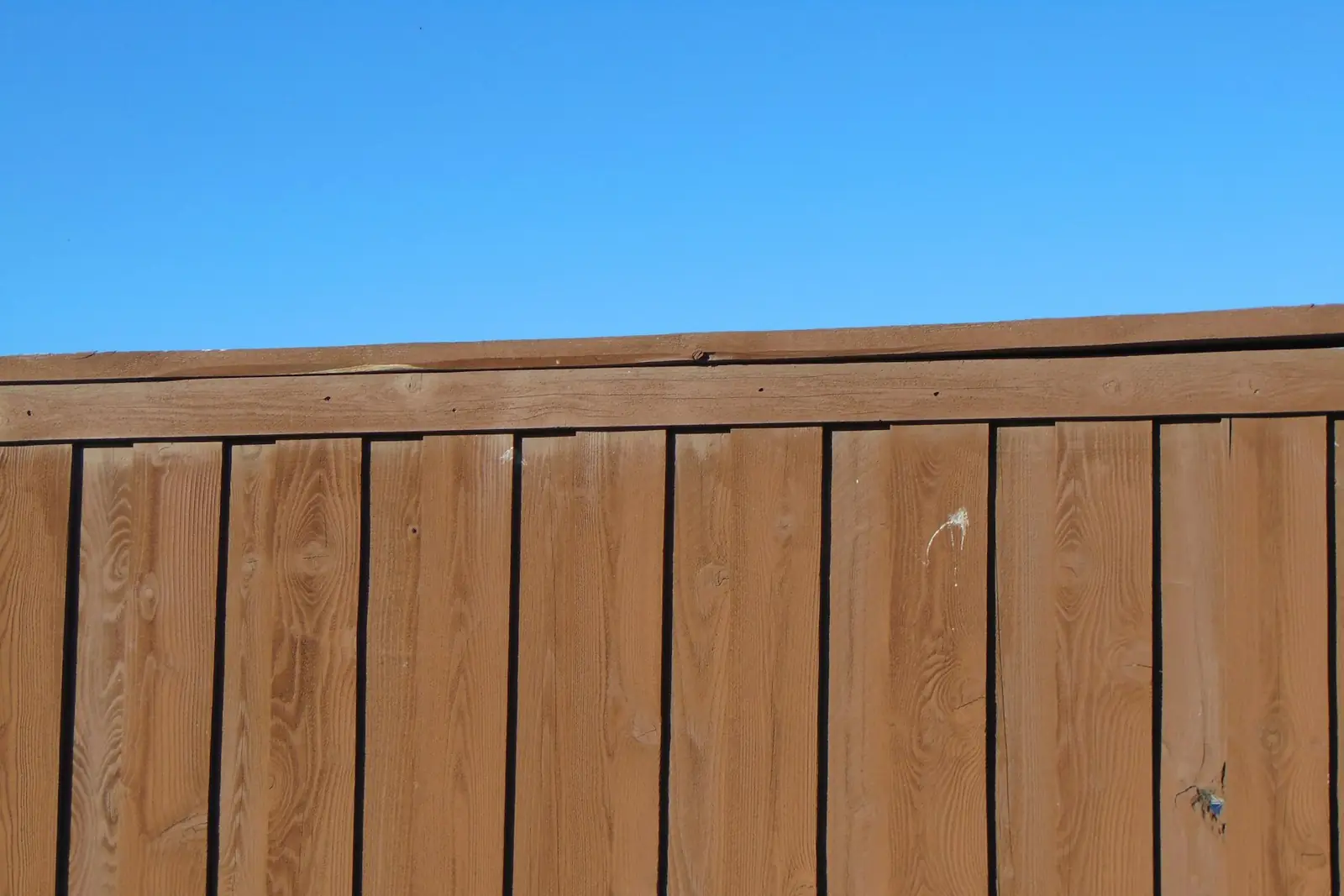
Timber fence panels against a blue sky

Waney edge vs straight cut

Waney edge slats keep the natural wavy profile of the tree, giving a rustic look. Straight-cut or 'square lap' slats are cut straight for a neater appearance. Both are built the same way.

Lap panels vs tongue and groove

Tongue and groove panels have slats that slot into each other, leaving no gaps. They're stronger, more private and look smarter, but cost more. Lap panels can develop small gaps as the timber shrinks.

Lap panels vs closeboard

Closeboard panels (or closeboard fences built on site) use vertical feather edge boards on rails. They're much stronger than lap panels. See feather edge vs closeboard fencing.

  • Lap/overlap – cheapest, lightest, least durable
  • Tongue and groove – no gaps, smarter, mid-price
  • Closeboard – strongest, best in wind, longest-lasting
  • Slatted – modern look, lets light through

Which to choose

Lap panels suit sheltered gardens and tight budgets. In exposed gardens, or if you want the fence to last, step up to tongue and groove or closeboard – see wind-resistant fencing. Get quotes for fence panels from local installers.

Related serviceFence Panel InstallationPrices and quotes →

Typical costs for fence panel types (1.8m)

Typical costs for fence panel types (1.8m)
JobTypical UK price
Lap/overlap panel (materials)£25–£50
Tongue and groove panel (materials)£50–£100
Closeboard panel (materials)£45–£90
Lap panel fence, supplied and fitted£90–£150 per metre

Indicative UK prices for 2026.

Rather leave it to a professional?

Describe your fence once – the length, height and style, or just the problem – and compare quotes from fencing contractors near you.

Get free fencing quotes

Describe your job once and compare quotes from local tradespeople who cover your area.

  • Free to use
  • No obligation
  • Compare local tradespeople
  • Quick online form
Get Free Quotes

You'll continue to our quotes partner, MyJobQuote, to describe your job.

Lap vs overlap panels: common questions

Is a lap panel the same as an overlap panel?

Yes. 'Lap' is short for 'overlap'. Both describe panels with overlapping horizontal slats.

What is a waney edge panel?

A lap panel with slats that keep the natural wavy edge of the tree.

Are lap panels strong?

They're the lightest type and the least wind-resistant. Tongue and groove or closeboard are stronger.

How long do lap panels last?

Typically 10–15 years, depending on quality, treatment and exposure.

Which side of a lap panel faces out?

By convention, the smooth side faces the neighbour, but there's no legal rule.

Ready to compare fencing quotes?

Free, no-obligation quotes from local fencing contractors.

Get Free Quotes