The short answer
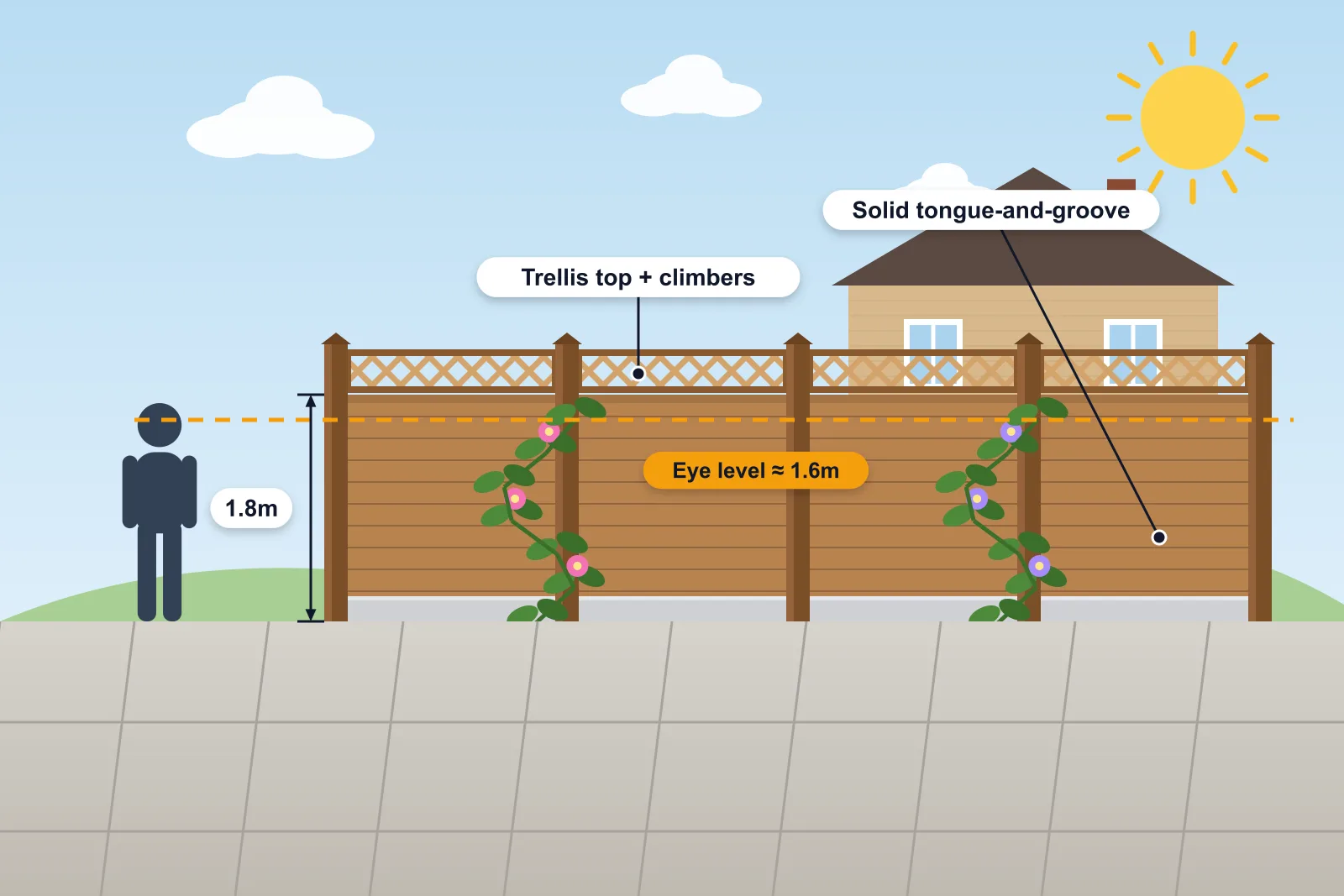
For maximum privacy choose a solid fence with no gaps between the boards – tongue-and-groove panels, closeboard or hit-and-miss fencing – at the full 1.8m to 2m height allowed without planning permission. A trellis topper with climbing plants adds a softer screen above eye level, as long as the total stays within 2m.
Privacy is the most common reason people replace a fence. A standard 1.8m fence is already above most people's eye level, but gaps between boards, shrinking timber and low sections near a patio can still leave you feeling exposed.
The best privacy fence combines a solid face, enough height and good placement. This guide explains which styles work best and how to add privacy where the rules stop you building higher.
Fence styles that give the most privacy
Look for designs where the boards overlap or interlock so you cannot see through them, even after the timber dries and shrinks in summer.
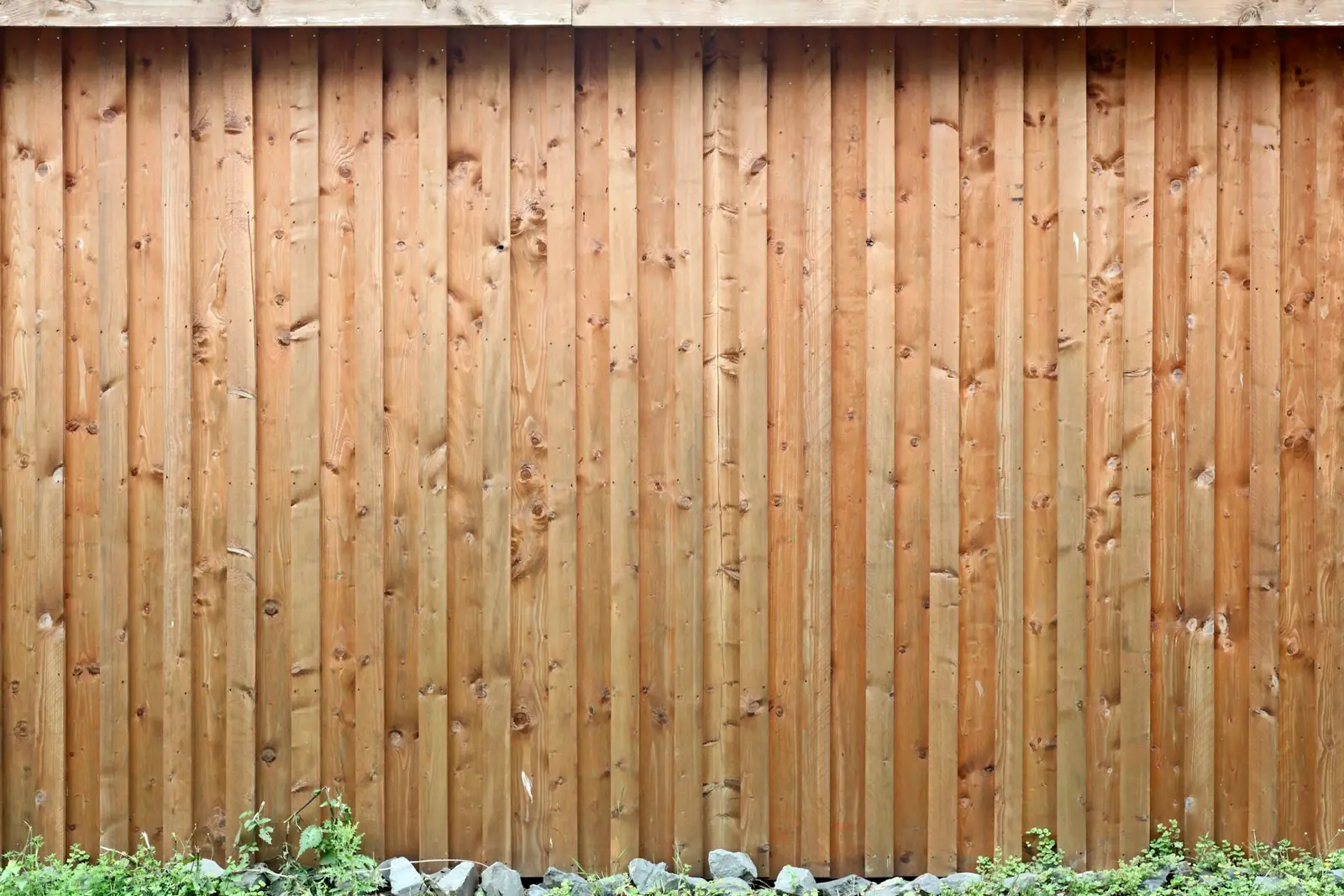
- Tongue-and-groove panels – interlocking boards with no gaps at all
- Closeboard – overlapping feather edge boards that stay private as they move
- Hit-and-miss – boards on both sides of the rails, so gaps on one side are covered on the other
- Composite fencing – solid boards that do not shrink or warp
How tall can a privacy fence be?
In most back gardens you can build a fence up to 2m high without planning permission, including any trellis on top. Next to a road used by vehicles, or the footpath beside one, the limit is usually 1m. Listed buildings, some conservation areas and estates with planning conditions have tighter rules.
If you need more height than that, you will need to apply for planning permission – or look at screening closer to the area you want to hide, such as a pergola, a freestanding screen or tall planting beside the patio.
Trellis, planting and screens
A 300mm trellis topper on a 1.5m or 1.7m fence gives a softer look than a solid 2m wall of timber and lets climbing plants fill the gap. Evergreen climbers such as star jasmine or ivy keep their leaves through the winter.
Privacy often matters most in one spot – the patio, a hot tub or a window that faces the neighbours. A freestanding slatted screen, a pleached tree or a pergola with a slatted roof can solve the problem without changing the whole boundary.