The short answer
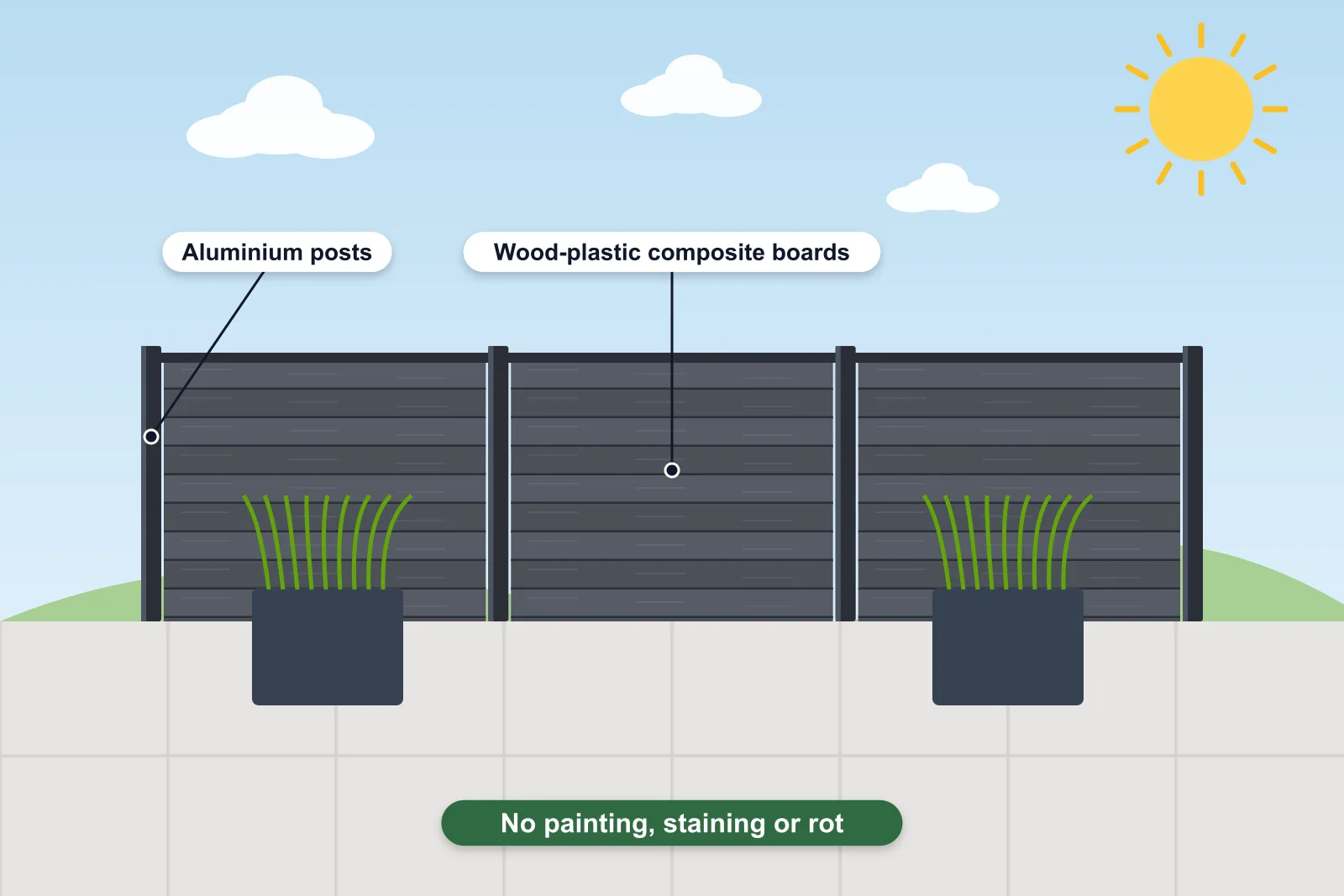
Composite fencing is made from wood fibres and recycled plastic, usually fitted between aluminium posts. It costs roughly twice as much as standard timber panels – about £180–£320 per metre fitted – but it does not rot, split or need treating, and it can last 25 years or more. It suits people who want a modern look and minimal maintenance.
Composite has moved from decking into fencing over the last decade. The boards slot into aluminium posts to form a smooth, solid screen, usually in grey, anthracite, brown or a timber-effect finish. For many homeowners, the appeal is simple: once it is up, there is nothing to do but give it an occasional wash.
It is not the right choice for every garden, though. This guide sets out the real advantages and drawbacks, so you can decide whether the extra cost is worth it for you.
Advantages of composite fencing
Because the boards are solid and do not shrink, composite fences stay private and look the same year after year. The aluminium posts are slim and do not rot, which removes the weak point of most timber fences.
- Does not rot, warp, split or attract insects
- No painting, staining or preserver – just an occasional wash
- Consistent colour and a neat, contemporary finish
- Long lifespan, often with manufacturer guarantees of 10–25 years
- Made partly from recycled materials

Disadvantages to consider
The main drawback is cost: composite fencing typically costs around twice as much as a good timber panel fence. Repairs need matching boards from the same system, so it is worth choosing an established brand that is likely to be available for years to come.
Composite can feel less natural than real wood, and darker colours get noticeably warm in strong sun. Cheaper boards may fade slightly in the first year. Like any solid fence, it also catches the wind, so the posts must be properly set.
Installation tips
Composite systems are designed around their own posts, brackets and caps, and the boards expand slightly in hot weather, so they must be fitted to the manufacturer's instructions to keep the guarantee valid. Aluminium posts are usually set in concrete or bolted to a concrete base; ask your installer which method they will use.