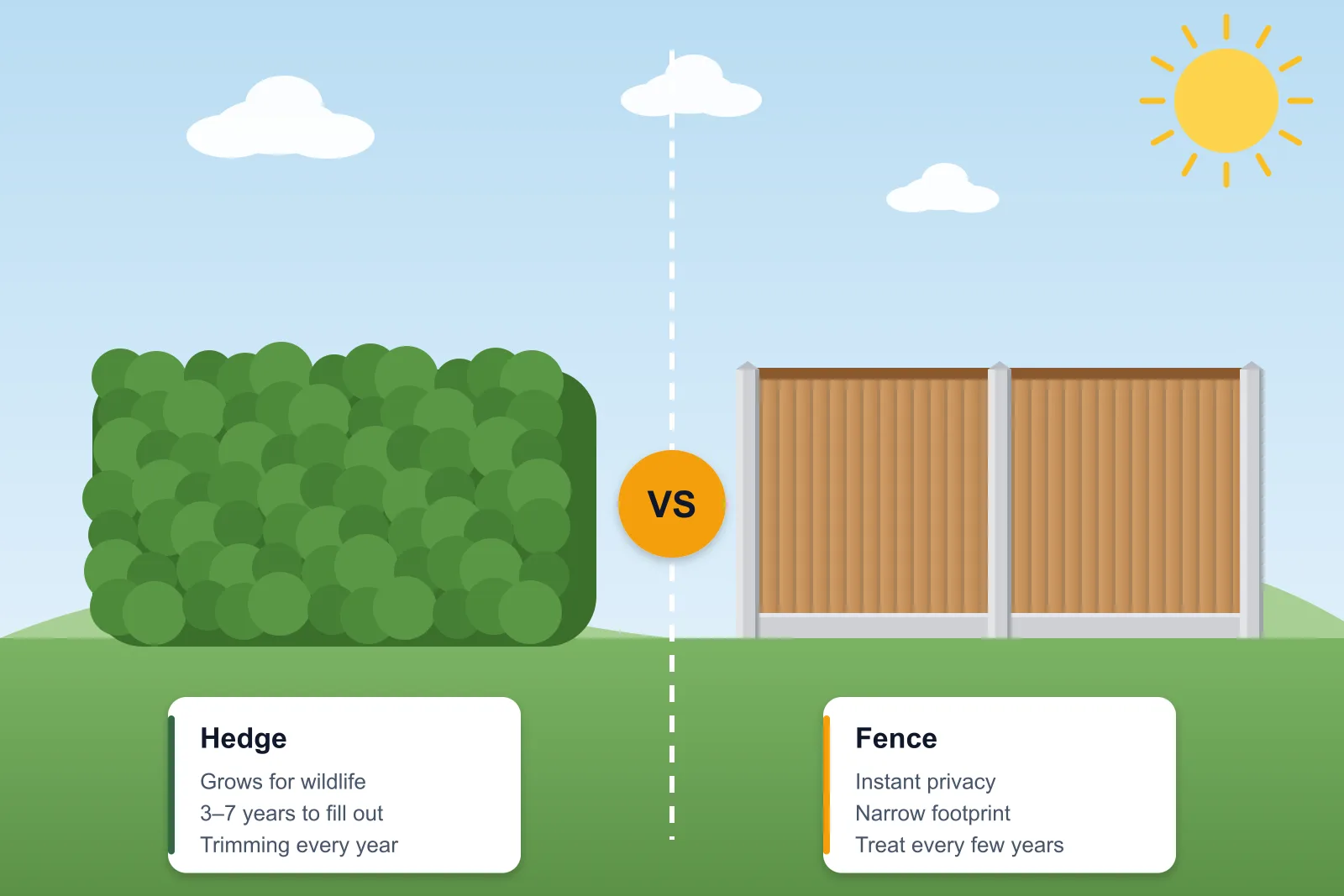
The short answer
Choose a fence if you need instant privacy, a secure boundary for pets or a narrow footprint. Choose a hedge if you want a natural look, shelter from wind and a home for wildlife, and you can wait 3–7 years for it to fill out and trim it each year. A low fence with a hedge planted in front gives you security now and greenery later.
The choice between a hedge and a fence often comes down to patience. A fence goes up in a day or two and does its job immediately. A hedge takes years to establish, but once it does it is softer, more forgiving in the wind and full of birds and insects.
Cost, space and maintenance all play a part too. This guide compares the two side by side.
Where a fence wins
Fences are also the only practical option where there is no soil to plant into, such as along a patio or a concrete path.
- Instant privacy and security from day one
- Narrow – takes up only the width of a post
- Keeps dogs and children in reliably
- Predictable height and a neat, defined line
- Little maintenance beyond treatment every few years
Where a hedge wins
The downsides are time and space. A hedge typically needs 60–100cm of width when mature, has to be trimmed at least once a year and takes several years to become a proper screen unless you buy expensive mature plants.
- Filters wind instead of blocking it, so it is a far better windbreak
- Food and shelter for birds, hedgehogs and insects
- Softens the garden and changes with the seasons
- Can last for generations
- Native hedging is often cheaper per metre to plant than a fence is to build
Rules for hedges and fences
Fences are limited to 2m in most back gardens without planning permission (1m next to a road). Hedges do not need planning permission, but evergreen hedges over 2m high can be the subject of a high hedge complaint to the council if they affect a neighbour's enjoyment of their home. Avoid cutting hedges during the bird nesting season, broadly March to August, and always check for active nests first.