The short answer
Bamboo, willow, reed and heather screening come in rolls that are fixed to an existing fence, mesh, railing or a simple timber frame. They typically cost £5–£25 per metre to buy and last 3–10 years depending on the material. They add privacy and character, but have no structural strength of their own.
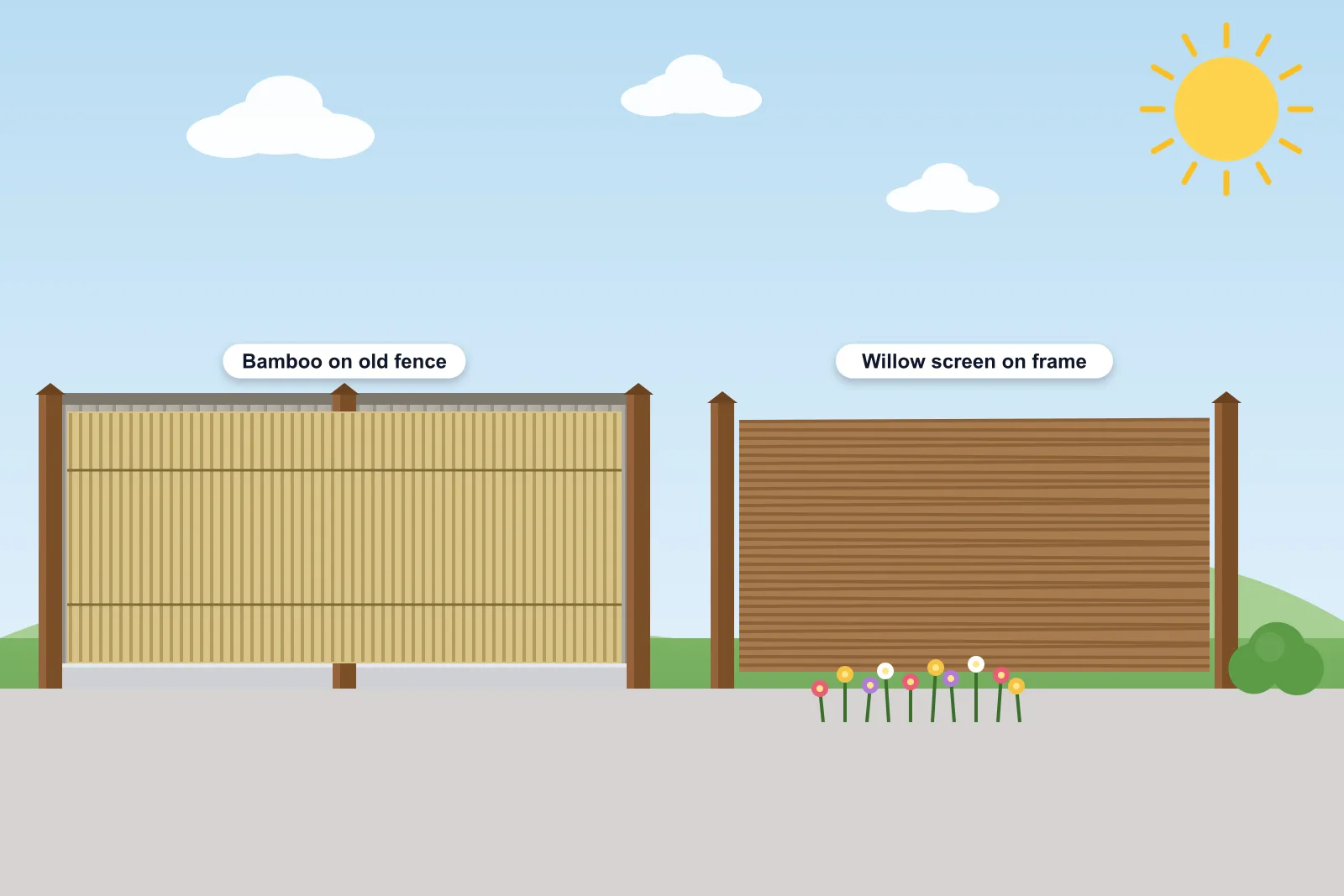
Screening rolls are woven or wired bundles of natural material. They roll out flat and are cut to length. They've become popular for covering ageing panels, adding privacy to balconies and railings, and creating a relaxed, natural look around seating areas and hot tubs.
They're often sold as a quick fix, and that's fair – but it's worth knowing how long each one lasts and how to fix them properly so they don't end up in your neighbour's garden after the first gale.
Materials compared
Each material looks different and ages differently. Split bamboo is the cheapest but weathers fastest. Whole-cane bamboo is far more durable. Willow and reed give a rustic, cottage-garden look. Heather is dense and gives excellent privacy. Artificial screens imitate natural materials and last longer, but some look obviously plastic.
- Split bamboo – cheap, light, 2–4 years
- Whole bamboo cane – sturdy, modern look, 7–10 years
- Willow – rustic, warm colour, 4–7 years
- Reed – light and natural, 3–5 years
- Heather – dense, very private, 5–8 years
- Artificial (PVC) – very long-lasting, varies in realism

Where screening works best
Screening is at its best covering an existing structure: a tired but sound fence, a mesh or chain link boundary, a metal railing, or a balcony. It's also good for freestanding screens around seating areas, compost bins and hot tubs, fixed to a simple frame of timber posts and rails.
It isn't a good choice on exposed, windy boundaries on its own, because dense screens catch a lot of wind and need strong support. On those sites, see wind-resistant fencing.
How to fix screening
The most reliable method is to fix the screen to horizontal battens or rails at top, middle and bottom, using galvanised wire, cable ties or screws through small washers. On an existing fence, screw battens to the posts rather than the panels, so the load goes into the posts.
Keep the bottom of the screen just off the ground, so it doesn't sit in wet soil and rot. A gravel board or a strip of gravel helps.
Covering an old fence – or replacing it?
Screening can hide tired panels for a few years, but it won't stop a rotten post from failing. Check posts before covering. If the fence is leaning or the posts are soft at ground level, see how to fix a leaning fence or consider replacing it. Remember that if the fence belongs to your neighbour, you'll need their agreement before fixing anything to it. See which side of the fence is mine.