The short answer
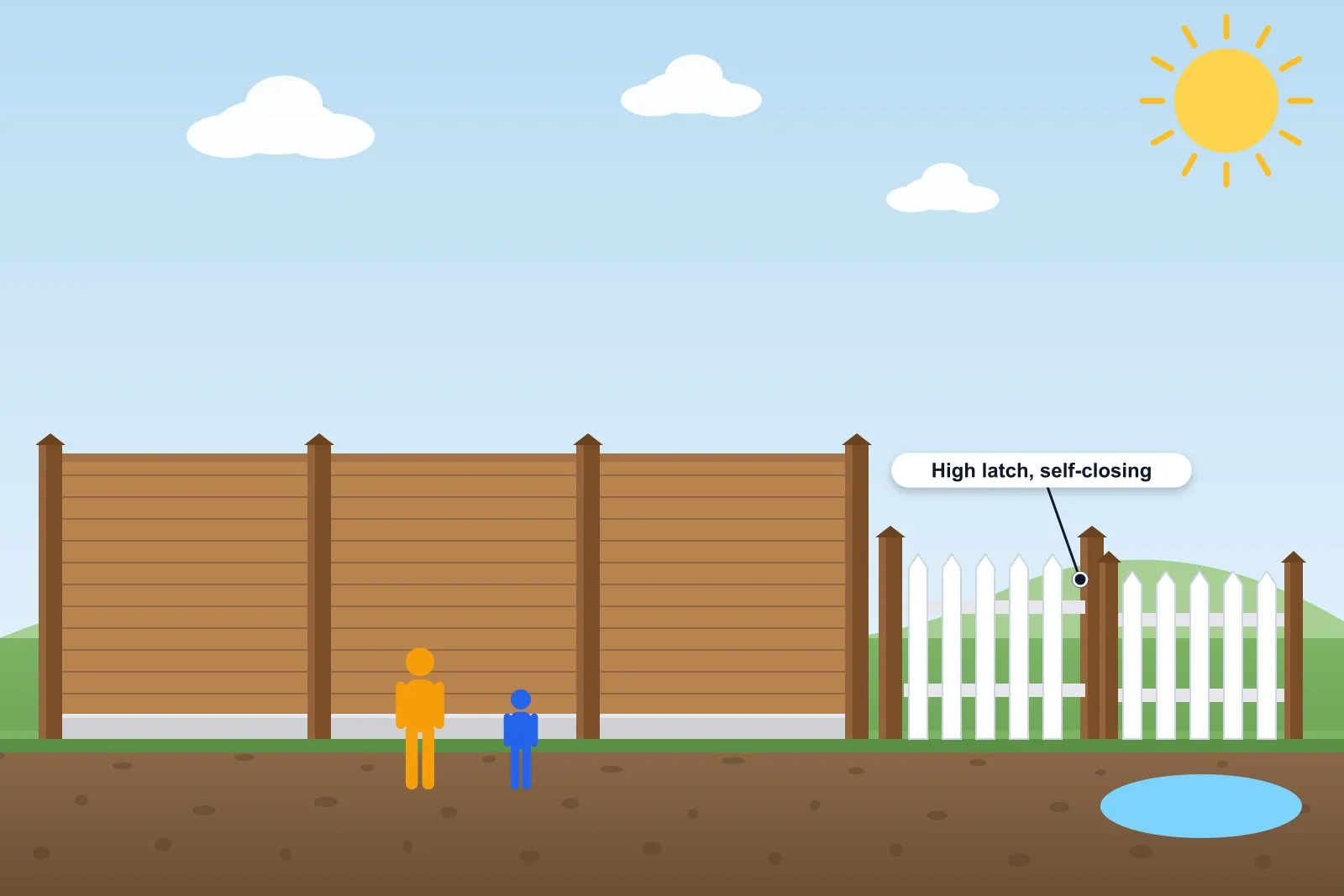
A child-safe garden fence should be at least 1.2m high (1.8m on boundaries), have no gaps wider than about 100mm, and have no horizontal rails or footholds on the child's side. Gates should be self-closing with a latch out of reach. Ponds, pools and driveways should be fenced off separately, as they are the biggest risks.
Most garden fences are designed to keep things out or provide privacy, not to keep small children in. A lap panel fence with rails on your side is effectively a ladder for a determined three-year-old. A picket fence with wide gaps can trap heads and limbs. A gate that swings open onto a driveway is a hazard.
None of this means you need a fortress – just thought about a few details.
The key safety features
- Height – 1.2m minimum for internal barriers, 1.8m on boundaries
- Gaps – no more than about 100mm between boards, bars or under the fence
- No footholds – rails, gravel boards and trellis on the outside, not the play side
- Smooth tops – avoid pointed pickets or sharp finials at child height
- Self-closing gates – with latches mounted high or on the outside
- Sturdy posts – children push, lean and swing on fences
Choosing a fence style
Vertical-board styles such as closeboard, tongue and groove or vertical slats are the hardest to climb. Horizontal slatted fences look great but can act like a ladder, so choose narrow gaps and keep the slats on the outside face if possible. Picket fences are fine as low internal barriers as long as gaps are narrow and the tops rounded.
See types of garden fence and slatted fencing.
Ponds, pools and water features
Young children can drown in a few centimetres of water. If you have a pond, fence it off, cover it with a strong mesh grid, or consider filling it in while children are small. Swimming pools and hot tubs should be fenced with a self-closing, self-latching gate, and hot tubs should have a locked cover.
Gates and driveways
Gates are where most escapes happen. A gate spring or hydraulic closer makes it swing shut automatically, and a latch positioned high or operated from the outside stops small hands opening it. Driveway gates should be kept closed when children are playing, and electric gates must have proper safety sensors. See garden gate cost.
Pets, play areas and plants
Many families combine child-safety and pet-safety. See dog-proof fencing. A dedicated, fenced play area near the house is an easy way to give toddlers independence. Avoid poisonous plants such as foxgloves, laburnum and yew near the play zone, and check that fence treatments are dry and suitable for use around children.