The short answer
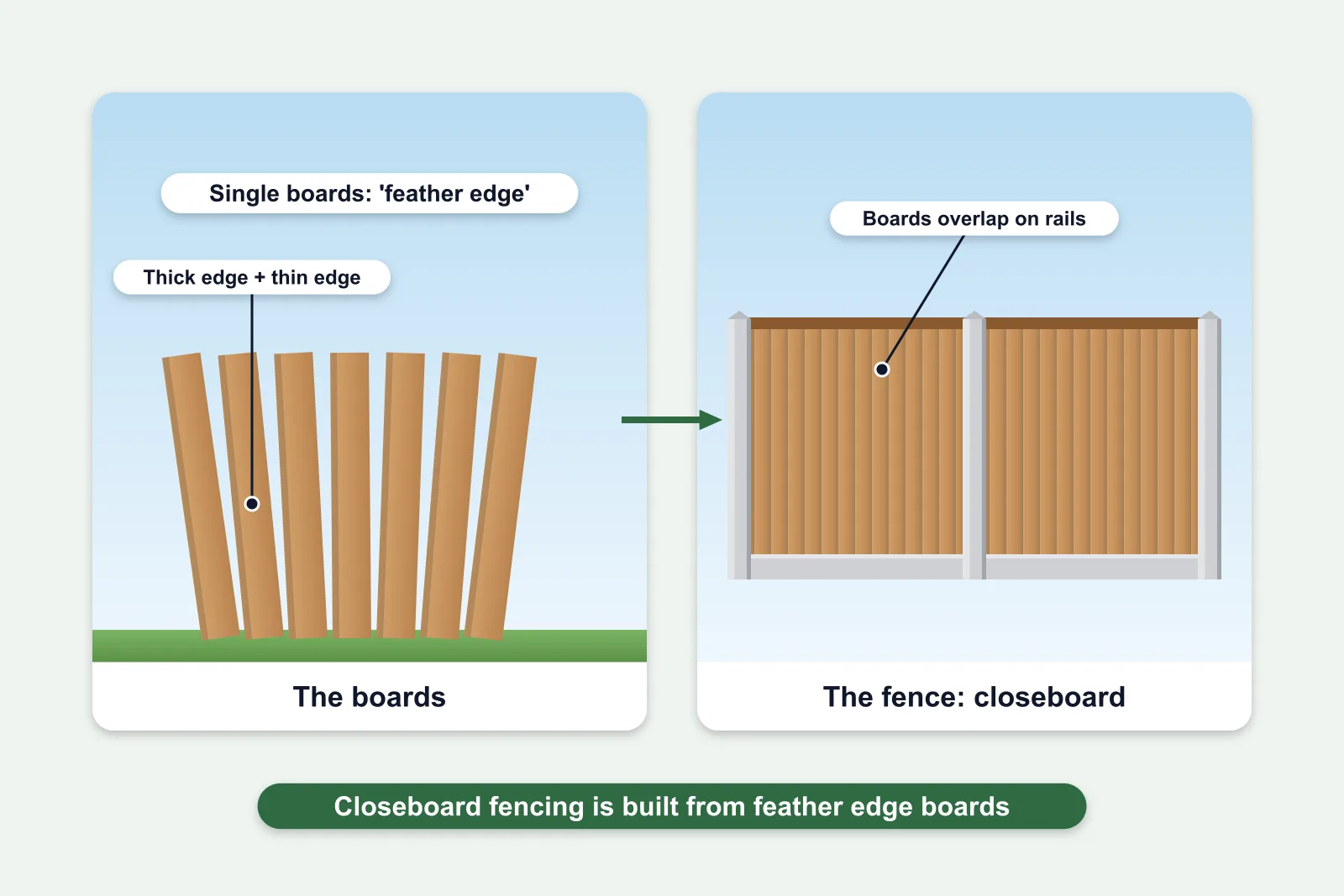
Feather edge is the board; closeboard is the fence built from it. A closeboard fence uses vertical feather edge boards nailed to horizontal rails between posts, so most of the time you're choosing between closeboard and panel fencing rather than between two different products. Closeboard is stronger, copes better with slopes and wind, and lasts longer than standard panels, but costs more to install.
If you've been getting fencing quotes, you've probably seen 'feather edge' and 'closeboard' used almost interchangeably. That's because they describe the same system from different angles. Feather edge boards are wedge-shaped timber boards – thick on one edge and thin on the other. Overlap them vertically on rails and you have a closeboard fence.
Some fencers also use 'feather edge fencing' for a lighter, cheaper version with fewer rails, while 'closeboard' means a heavier specification with three arris or cant rails and gravel boards. So it pays to check exactly what's included in each quote.
How closeboard fencing is built
A traditional closeboard fence is built on site rather than arriving as ready-made panels. Posts – timber or concrete – are set in the ground every 2.4–3m. Two or three horizontal rails run between them, and feather edge boards are nailed vertically to the rails, each one overlapping the next by around 20–25mm. A gravel board runs along the bottom to keep the boards off the soil, and a capping rail often finishes the top.
Because each board is fixed individually, the fence is much stiffer than a panel fence and can follow the ground on a gentle slope instead of stepping down.
- Posts: timber or slotted concrete, usually 2.4m long for a 1.8m fence
- Rails: two for low fences, three for 1.8m and above
- Boards: 100–150mm wide feather edge, overlapped
- Gravel board: timber or concrete along the base
- Optional: capping rail and counter rail along the top
Closeboard vs ordinary fence panels
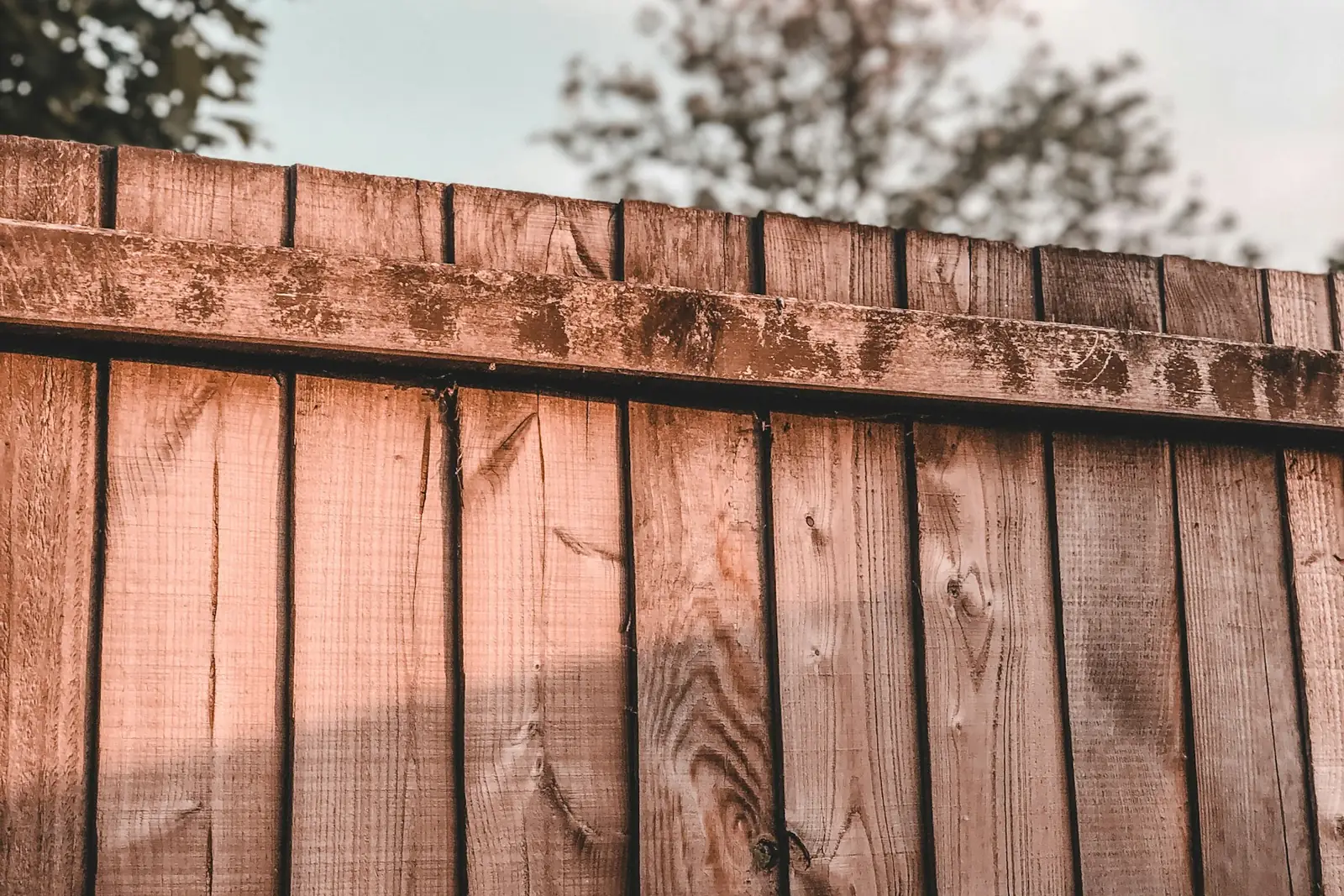
The real comparison most homeowners face is closeboard against lap or overlap panels. Panels are cheaper and quicker to fit, but they're lighter, they catch the wind like a sail and the thin slats can split. A well-built closeboard fence is heavier, more rigid and easier to repair one board at a time.
If you're also weighing up panel styles, our guide to lap vs overlap fence panels explains the terminology, and types of garden fence compares the wider options.
- Strength: closeboard is noticeably stronger
- Wind: closeboard copes better, especially on concrete posts
- Lifespan: often 20–25 years for closeboard vs 10–15 for budget panels
- Repairs: closeboard boards can be replaced individually
- Cost: panels are cheaper to install
Which is better for your garden?
Choose closeboard if your garden is exposed, sloping, or if you want the fence to last as long as possible. It's also a good choice for long boundaries where you'd rather not see the repeating joints of panels. Lap panels are fine for sheltered gardens, short runs and tighter budgets.
One practical point: a closeboard fence has a 'good' side (the smooth boards) and a 'rail' side. Convention is that the good side faces the neighbour, though there's no legal rule. Our guide to the good side of a fence explains more.
Treatment and maintenance
Most feather edge boards are pressure-treated. They'll weather to a silvery grey if left, or can be stained or painted. Keep the bottom of the boards off the soil – that's what the gravel board is for – and check for loose nails every year or two. See our guide to stopping fence posts rotting for the details that make a timber fence last.
If you want a quote, our closeboard fencing page lets you compare local installers.