The short answer
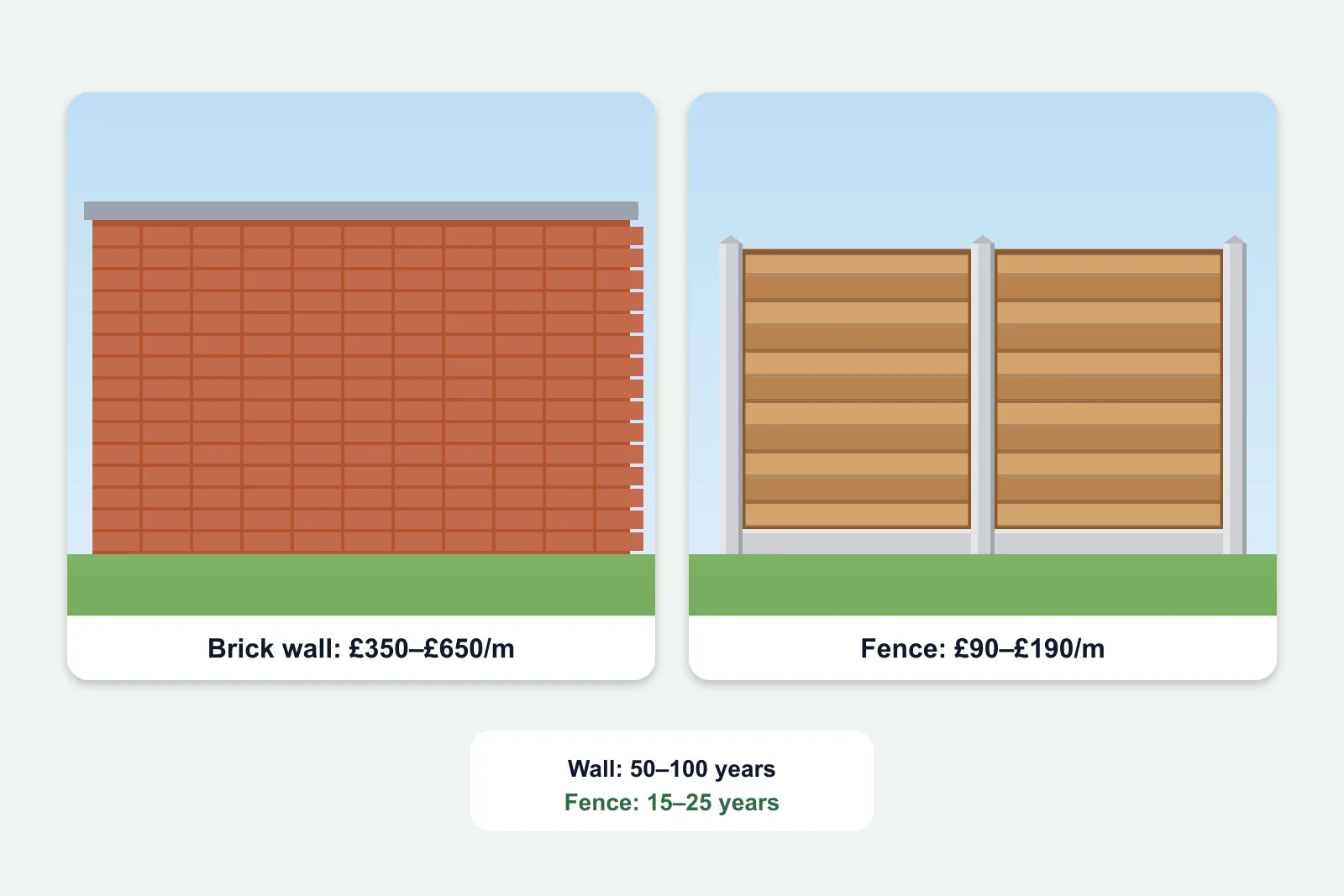
A timber fence typically costs £80–£190 per metre fitted and lasts 15–25 years. A brick garden wall typically costs £250–£600+ per metre at 1.8m high and can last 50–100 years. Walls are stronger, quieter and more secure; fences are far cheaper, quicker and easier to change. Many gardens use both – a low wall with fence or railings above.
When an old fence blows down, it's natural to wonder whether a wall would be a better long-term investment. Sometimes it is. Often, especially on long boundaries, a well-built fence is better value. And sometimes a hybrid – a low brick wall with fence panels or railings above – gives the best of both.
How they compare
- Cost: fences are much cheaper, often a third or less of the cost of a wall
- Lifespan: brick walls can last generations; timber fences 15–25 years
- Privacy: both give full privacy at 1.8m
- Noise: walls block noise far better than fences
- Security: walls are harder to break through
- Wind: well-built walls don't blow down, but tall walls need proper foundations and piers
- Maintenance: walls need occasional repointing; timber fences need treatment and repairs
- Speed: fences go up in a day or two; walls take a week or more
What makes walls expensive
A garden wall needs a concrete foundation, typically 450–600mm wide and at least 450mm deep, more on clay or near trees. Walls over about 1m usually need piers at intervals or a double-skin construction for stability. Coping on top keeps rain out. Bricks, mortar, foundations and a skilled bricklayer's time all add up – and you'll need somewhere for the spoil to go.
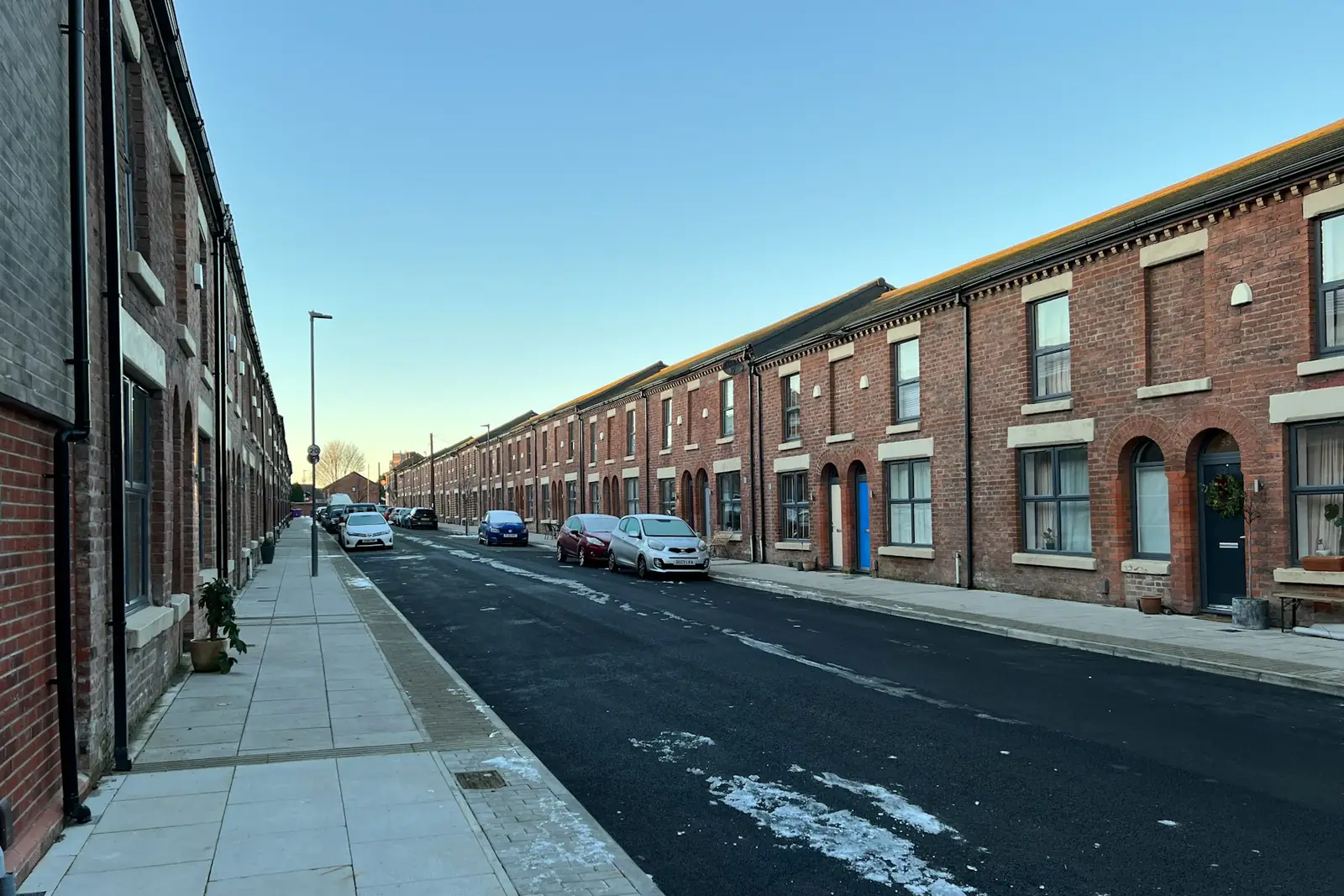
Rendered blockwork is cheaper than facing brick, but needs painting every few years. Reclaimed or handmade bricks to match a period house are more expensive still.
Planning and party walls
The same height limits apply to walls as to fences: generally 1m next to a highway and 2m elsewhere without planning permission. If the property is listed, any new boundary wall may need consent. Building a new wall on the boundary line, or close to a neighbour's foundations, may also fall under the Party Wall Act, which requires notice to your neighbour.
The hybrid option
A low brick wall of 450–900mm with fence panels, slats or railings above gives a solid, durable base, keeps timber off the ground and looks smart on front and side boundaries. It costs less than a full-height wall and lasts longer than a fence alone. Some fencers can fix panels to brick piers or fit posts behind a low wall – see fixing a fence to the top of a wall.
Which should you choose?
Choose a fence if you have a long boundary, a modest budget, or you want flexibility to change it later. Choose a wall for short front boundaries, period homes where brick suits the house, busy roads where noise matters, or where you want something you'll never need to replace. On many back gardens, a well-built fence on concrete posts with concrete gravel boards is the best value. See how long fences last.