The short answer
Metal fencing comes in three main types: steel railings (strong and secure, ideal for front boundaries), wrought or cast iron (traditional, for period homes) and aluminium slatted panels (light, modern and rust-free). Galvanised and powder-coated steel lasts 20–30 years or more with little upkeep. Expect around £150–£400 per metre fitted.
Metal fencing has a long history on British streets – Victorian and Georgian terraces were lined with cast iron railings long before timber panels existed. Today steel and aluminium fencing is popular for front gardens, driveways and modern back gardens because it is strong, slim and needs very little maintenance.
The choice comes down to the look you want, how much privacy you need and how much you are willing to spend.
Types of metal fencing
Railings give security without blocking the view, which is why they are so common on front boundaries. Aluminium slatted panels look similar to timber slatted fencing but will not rot or need staining.
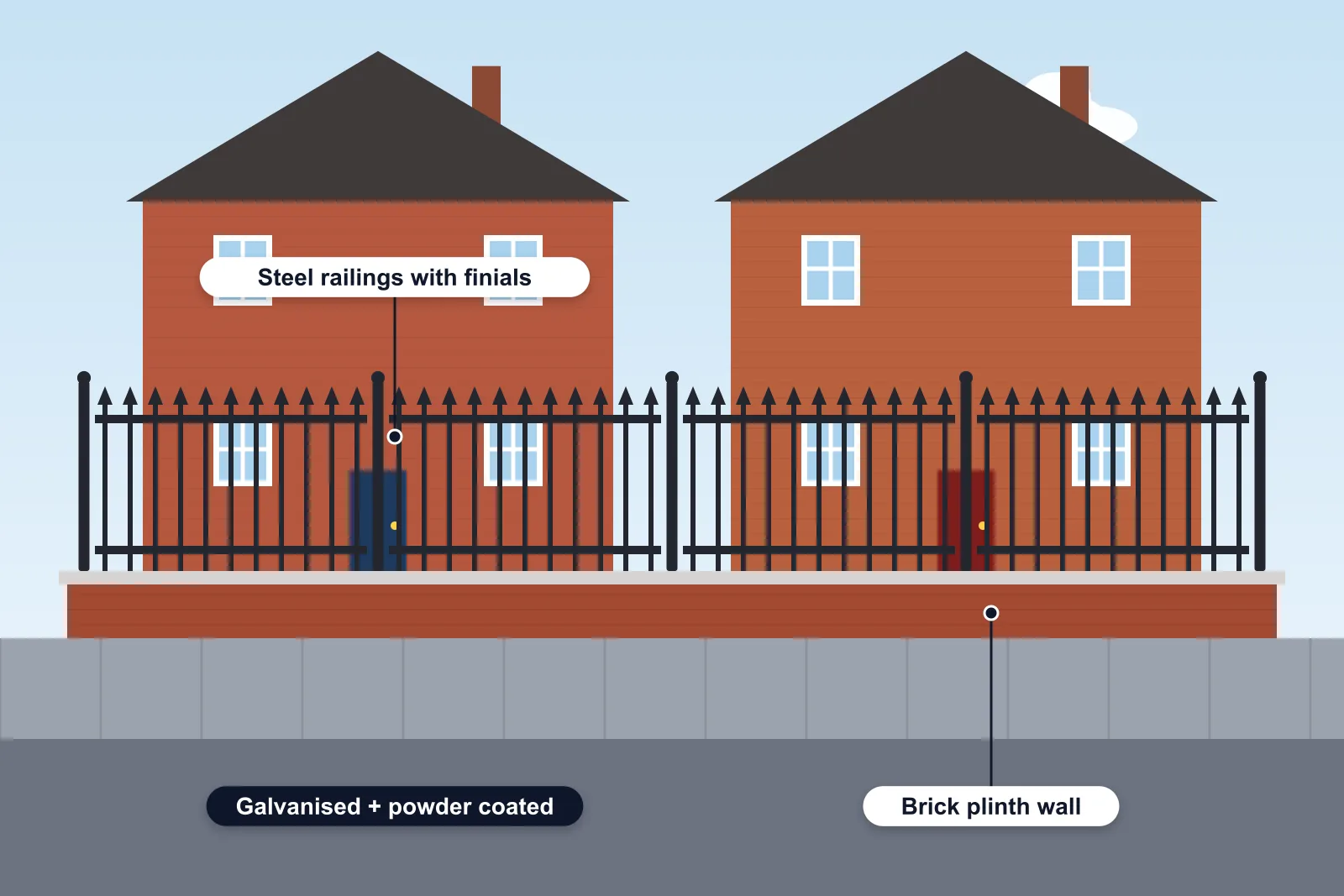
- Steel railings – vertical bars with rails, often with spear or ball finials
- Wrought or cast iron – ornate, traditional and usually made to order
- Aluminium slatted panels – horizontal slats for a modern, private screen
- Steel mesh and bar panels – practical and secure, common for side and rear boundaries
Protecting metal from rust
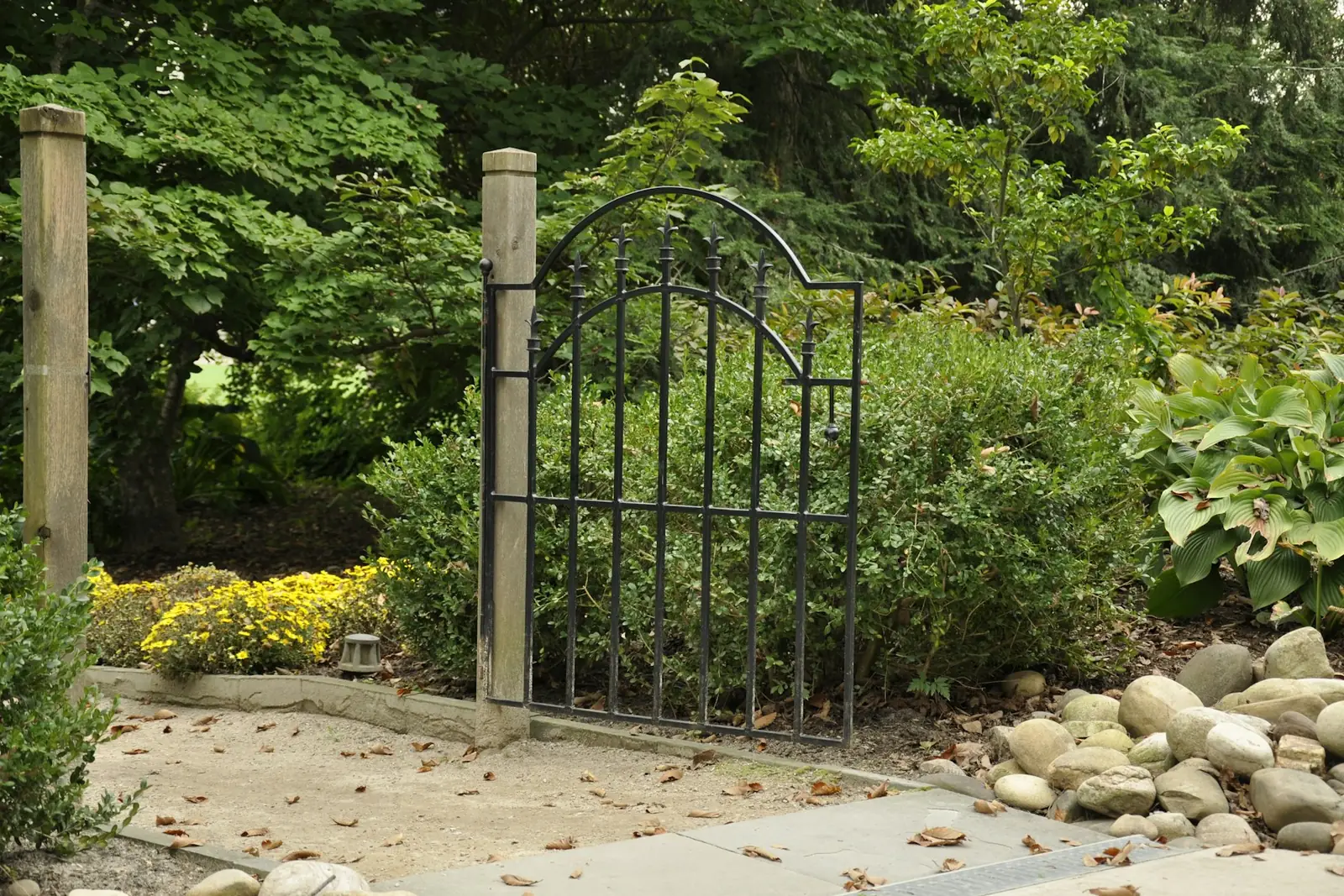
Steel will rust if the coating is damaged, so the finish matters as much as the design. The best protection is hot-dip galvanising followed by powder coating, which can last for decades. Painted steel without galvanising needs repainting every few years. Aluminium does not rust, which makes it a good choice near the coast.
Railings on walls and planning
Railings are often fixed on top of a low brick plinth wall. The height limit for permitted development includes the wall, so on a front boundary next to a road the wall and railings together are normally limited to 1m. Listed buildings and conservation areas often have specific requirements for railing designs, so check with your council first.