The short answer
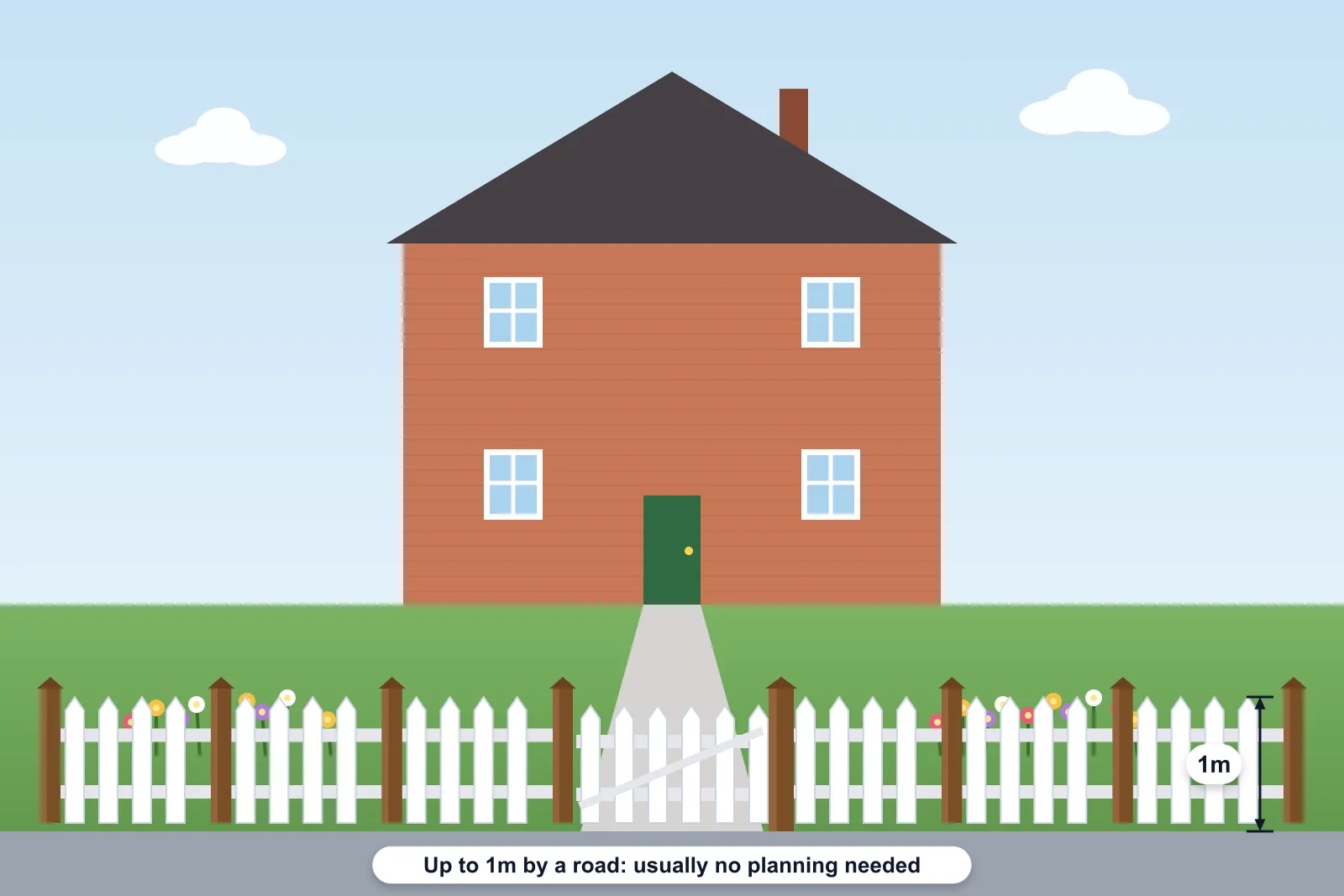
Front garden fences next to a road or the pavement beside it are usually limited to 1m high without planning permission. Popular choices are picket fencing, low slatted or hit-and-miss fencing, metal railings on a brick plinth and hedges. Match the style to the house, and include a gate across the path if you have children or pets.
The front boundary is the first thing visitors see, and it sets the tone for the whole house. Unlike a back fence, it is not usually about privacy – it is about defining the space, keeping children and pets safe and making the house look cared for.
This guide covers the main styles, the height rules that apply at the front of a property and a few practical points that are easy to overlook.
Popular front garden fence styles
Look at the street before choosing. Matching the materials and height of neighbouring boundaries usually looks best, and in conservation areas it may be expected.
- Picket fencing – classic for cottages and Victorian terraces, painted or natural
- Low slatted or hit-and-miss fencing – clean and modern, suits newer homes
- Metal railings on a brick plinth – traditional for period terraces and townhouses
- Post and rope or sleeper edging – informal, for open-plan frontages
- Hedges such as box, privet, beech or yew – softer, and good for wildlife
The 1 metre rule
Under permitted development rules, a fence, wall or gate next to a highway used by vehicles – or the footpath beside it – can usually be up to 1m high without planning permission. That includes any wall the fence sits on and any finials or trellis. Some newer estates also have open-plan covenants or planning conditions that prevent front fences altogether, so check your deeds.
Keep sight lines clear where a driveway meets the pavement. A tall fence or hedge here can make reversing out dangerous for pedestrians and drivers.
Gates, bins and practical details
Plan where the bins, bikes and deliveries will go before the fence goes up. A front gate should open inwards so it does not swing over the pavement, and should be wide enough for a pushchair or wheelie bin – around 900mm to 1m. A latch that children cannot reach and self-closing hinges are worth adding if you have young children or a dog.