The short answer
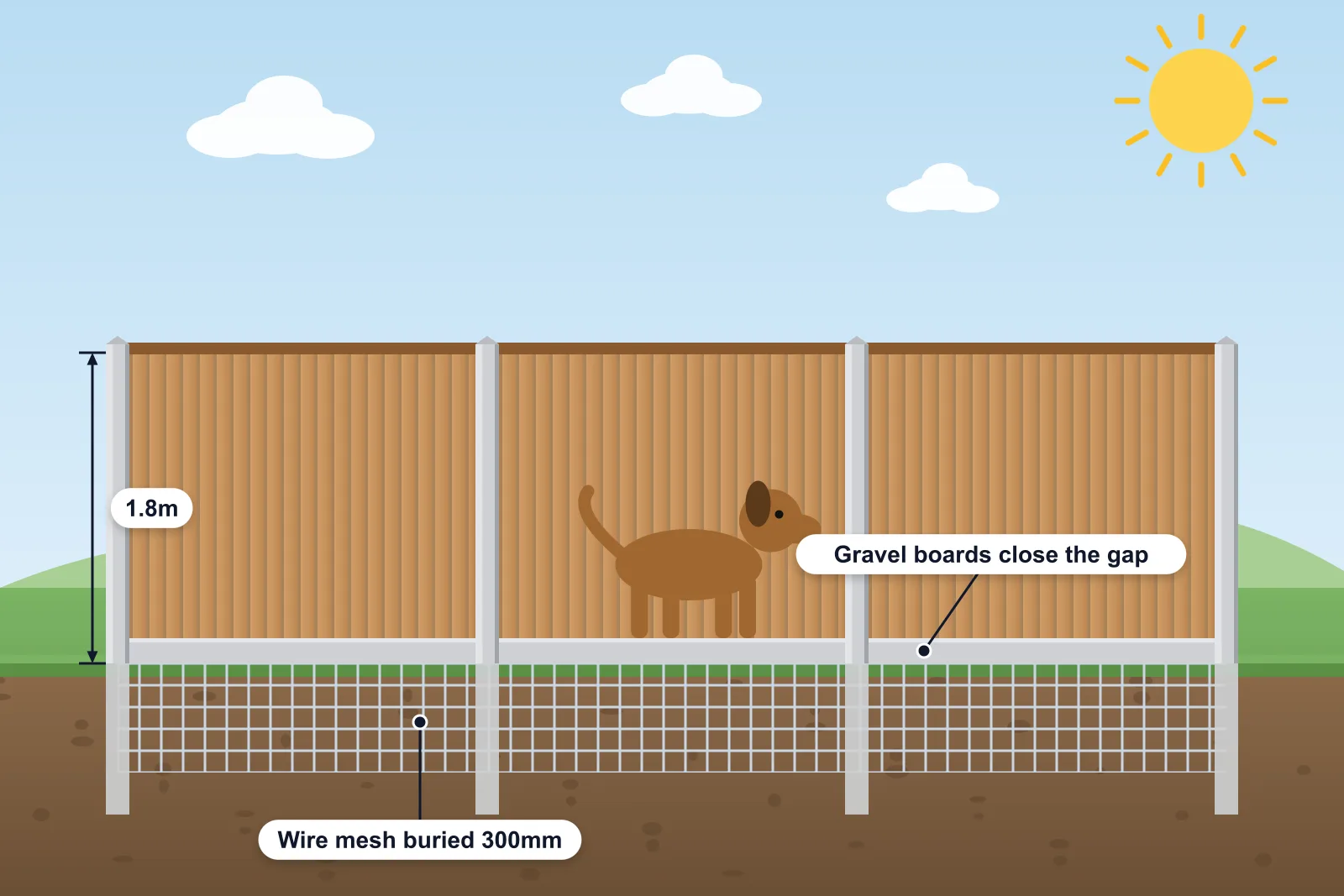
For most dogs a solid 1.8m fence with gravel boards and no gaps at the bottom is enough. Small dogs need gaps under 50mm; diggers need wire mesh buried 300mm below the fence line; strong jumpers may need extra height or an inward-angled topper. Gates are the most common escape route, so fit self-closing hinges and a secure latch.
Most dogs that escape do not jump the fence – they find a gap. A missing gravel board, a panel that has shrunk away from a post, the space under a gate or a section of hedge that has thinned out is all it takes. A dog-proof fence is really a fence without weak spots.
The right height and design depend on your dog: a terrier that digs needs a different solution from a lurcher that can clear six feet.
How high should a fence be for a dog?
Around 1.2m is often enough for small, calm breeds, but 1.8m is the safest standard for medium and large dogs and for anything that jumps. Solid fences also stop dogs seeing passers-by, which reduces barking and the urge to get out. Avoid horizontal rails on the inside that act as a ladder for climbers.
Stopping diggers and squeezers
Concrete gravel boards are particularly good because they cannot be chewed or scratched through.
- Fit gravel boards so there is no gap under the panels
- Bury galvanised wire mesh 300mm deep along the base, or lay it flat on the inside under the soil
- Keep gaps between posts, gates and walls under 50mm for small dogs
- Check panels after hot weather, when timber shrinks and gaps open up
- Choose closeboard or tongue-and-groove rather than thin lap panels, which some dogs can push through
Gates: the weak point
Most escapes happen when someone leaves a gate open. Self-closing gate hinges and a gravity latch make sure the gate shuts behind visitors and delivery drivers. Keep the gap under the gate small and fit a bolt that sits out of reach of a determined nose. A sign asking people to close the gate helps too.