The short answer
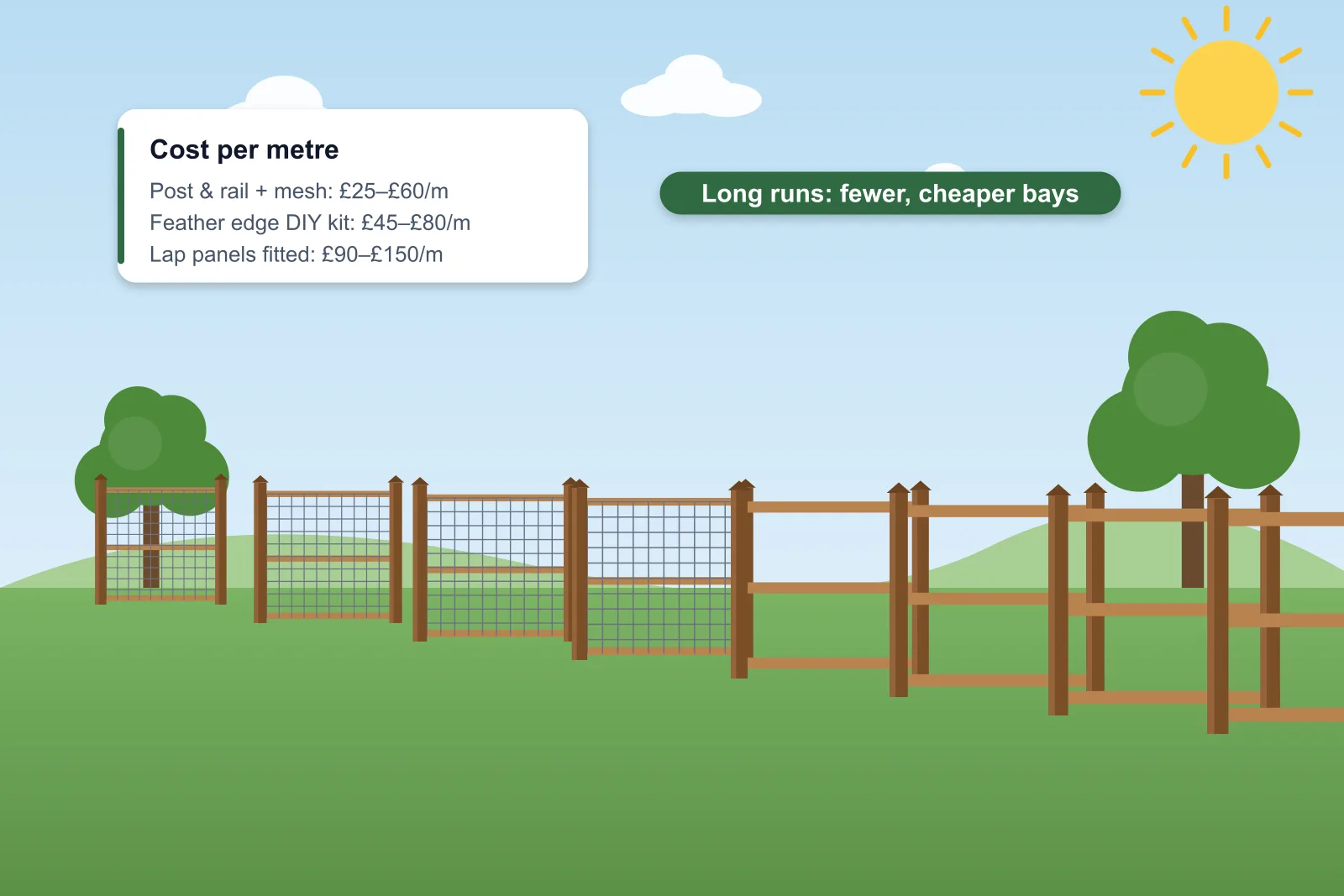
The cheapest way to fence a large garden is post and rail with wire mesh, at roughly £25–£60 per metre installed – but it gives no privacy. For a solid fence, feather edge boards on rails are usually cheaper per metre than panels over long runs, especially if you do some of the work yourself. Mixing styles – solid near the house, open further away – is a common way to save.
Large gardens often have very different needs along different parts of the boundary. Near the house you might want full privacy; at the far end, a simple stock fence or hedge might be all you need. Fencing every metre to the same high specification is the fastest way to blow the budget.
Budget options compared
Open fences use far less timber and are much quicker to install. If privacy isn't essential along the whole boundary, they're the obvious place to save.
- Post and rail – timber posts with two or three rails; cheap, quick, open
- Post and rail with stock mesh – keeps dogs and livestock in or out
- Chain-link or welded mesh on posts – practical and long-lasting
- Feather edge on rails – solid and cheaper than panels on long runs
- Lap panels – cheap to buy but posts every 1.83m add up
- Hedging – cheapest per metre if you can wait for it to grow
Why panels aren't always cheapest
Lap panels look cheap per panel, but on a long boundary you need a post every 1.83m, and posts plus concrete are a large part of the cost. A feather edge fence can have posts every 2.4–3m, so over 80 or 100 metres it often works out cheaper and stronger.
Our guide to feather edge vs closeboard fencing explains how that type of fence is built.
Where not to cut corners
On a large boundary, failures multiply. Saving £5 per post on cheaper timber can mean replacing dozens of posts in ten years. Spend on the parts that determine lifespan:
- Posts – pressure-treated, set to the right depth, or concrete
- Gravel boards – keep timber off the soil
- Fixings – galvanised nails and screws
- Installation – posts set properly in concrete or well-compacted ground
Mixing styles
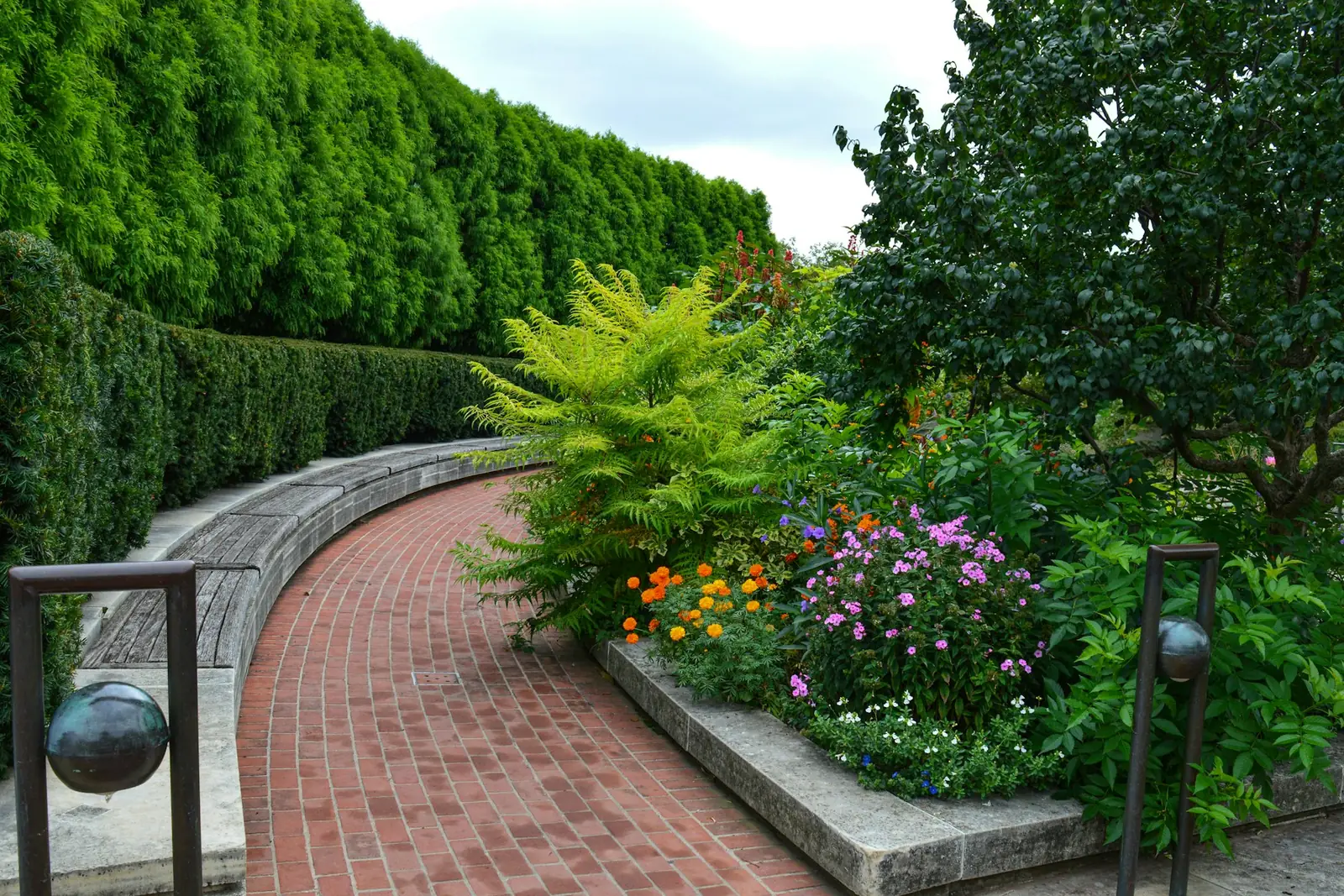
A common approach is to put a solid fence around the patio and seating area, then switch to post and rail or mesh further down the garden, perhaps with a hedge planted alongside to soften it. A native hedge can be one of the cheapest boundaries of all over time – see hedge vs fence.
Our guide to fencing a 50ft or 100ft garden shows typical totals for longer gardens.
DIY or professional?
Post and rail and stock fencing are well within reach of a competent DIYer, and labour is a big share of fencing costs. Solid fences on long runs are harder, and getting the posts in line and level matters. Many people pay a fencer to set the posts and then fit boards or mesh themselves. Get quotes from fencing contractors to see where the balance lies.