The short answer
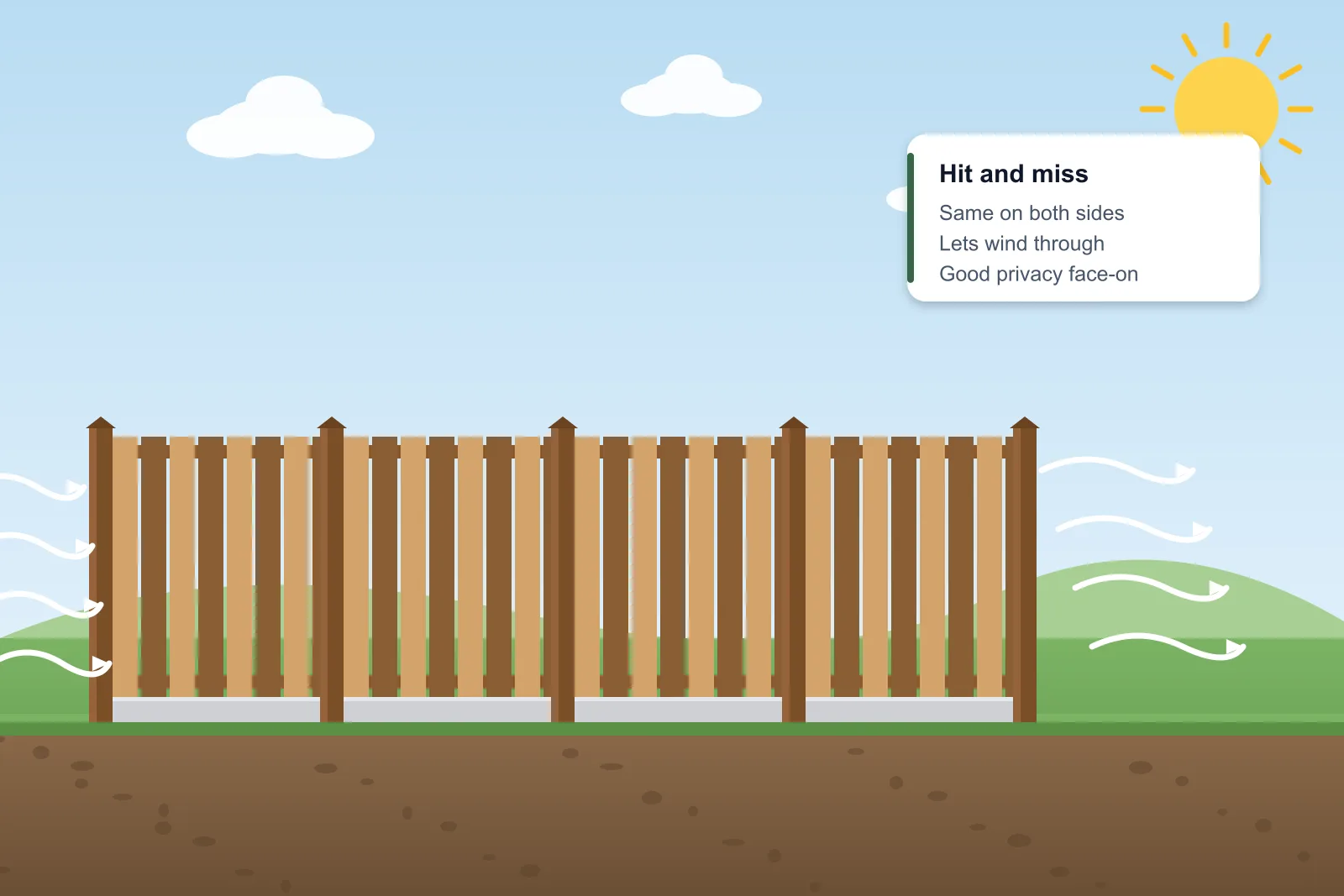
Hit and miss fencing fixes boards alternately to each side of the rails, so there are small staggered gaps between them. It looks identical from both sides, lets wind filter through and gives good, though not total, privacy. Supplied and fitted, it typically costs £110–£180 per metre at 1.8m high – a little more than standard panels.
Most fences have a good side and a rail side. Hit and miss doesn't – which is one reason it's popular on shared boundaries. Boards are fixed to one side of the rails, then the next board is fixed to the other side, overlapping the gap slightly. From straight on, you can't see through; from an angle, you catch glimpses.
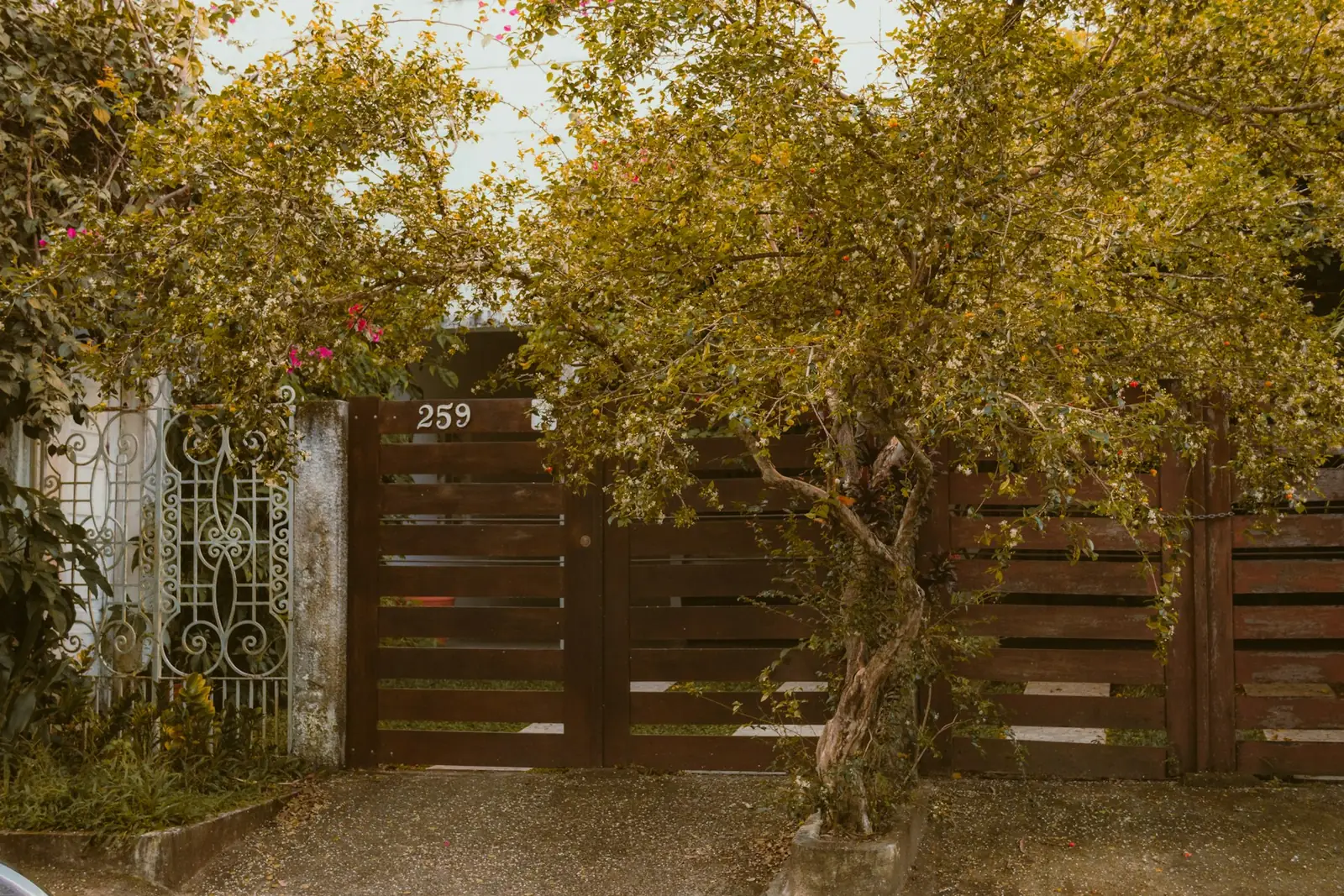
It can be built with vertical boards, like a closeboard fence, or horizontal boards for a more contemporary look. It's also available as ready-made panels.
Why people choose hit and miss
The main advantages are looks and wind. Because air can pass through the gaps, the fence isn't acting as a solid sail, which reduces the load on posts. That makes hit and miss a good choice for exposed, coastal and hilltop gardens where solid fences tend to blow down. See wind-resistant fencing for other options.
Being the same on both sides also avoids the question of who gets the good side – useful if you're sharing the cost with a neighbour. Our guide to the good side of a fence explains why that's sometimes a sticking point.
- Looks the same from both sides
- Lets wind through, reducing stress on posts
- Good privacy from straight on
- Lets some light and air through to plants
- Suits both traditional and modern gardens
The downsides
It isn't fully private – people can see through at an angle, especially close to the fence. It uses more timber than a standard panel because boards overlap on both sides, so it costs more. And because there are more exposed edges, it needs good-quality treated timber and occasional checks for loose boards.
If total privacy is the priority, a closeboard or tongue-and-groove fence is better. See the best fence for privacy.
Vertical or horizontal?
Vertical hit and miss is traditional and suits cottage and country gardens. It's built on posts with two or three rails, much like a closeboard fence. Horizontal hit and miss has a more contemporary feel and works well in modern gardens, often with slim posts and smooth planed boards. Horizontal boards need posts at closer spacings or intermediate supports to stop them sagging.
For a fully contemporary look with even gaps, see our guide to slatted fencing.
Posts and installation
Because the boards are fixed on both sides of the rails, the posts need to be centred carefully, and concrete posts with slots aren't always compatible. Many hit and miss fences are built on timber posts, or on concrete posts with timber rails bolted to them. A gravel board at the base keeps the boards off the soil.
Ready-made hit and miss panels are quicker to fit and slot into standard concrete posts, though they're usually lighter than a fence built on site.