The short answer
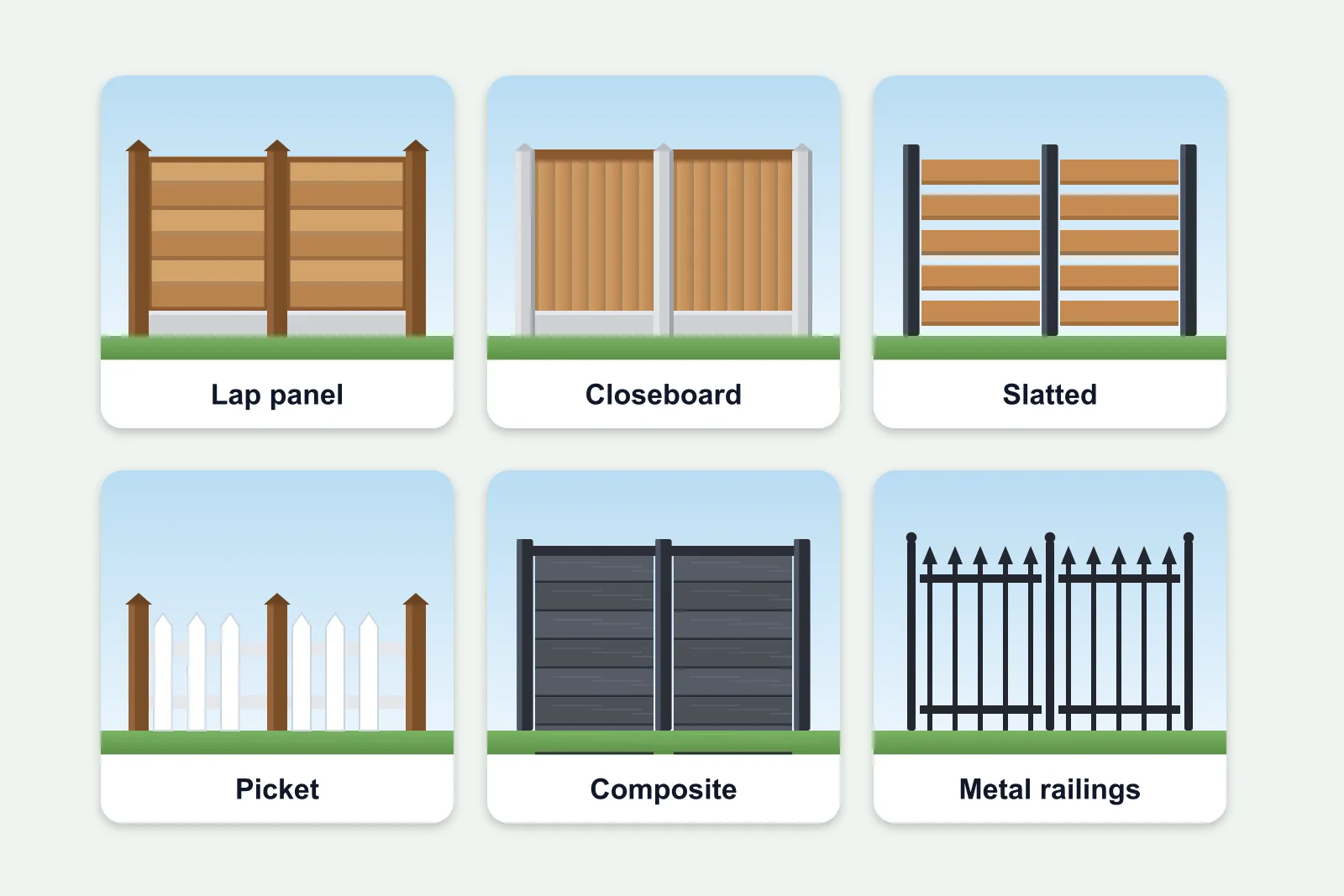
The most common garden fences in the UK are lap or overlap panels (cheapest), closeboard built from feather edge boards (strongest timber option), tongue-and-groove panels (smooth and private), slatted or hit-and-miss fencing (modern and wind-friendly), picket fencing (low, for front gardens), composite fencing (low maintenance) and metal railings (secure and long-lasting).
Walk down any British street and you will see the same handful of fence types again and again. Each one is a trade-off between price, privacy, strength and looks, and the right choice depends on what the fence needs to do: screen a patio, keep a dog in, stand up to a coastal gale or simply mark a boundary.
This guide runs through the main options in plain English, so you know what to ask for when you request quotes.
Timber panel fencing
Pre-made panels, usually 1.83m wide, are fitted between posts. They are quick to install and widely available, which keeps the cost down. Lap and overlap panels use thin horizontal boards and are the budget choice; tongue-and-groove panels interlock for a smooth, solid face; closeboard-style panels have vertical feather edge boards on a frame.
Panels are only as good as the posts they sit between. Slotted concrete posts with concrete gravel boards make panel fencing far more durable and make it easy to swap a damaged panel later.
- Lap or overlap – cheapest, lightest, most likely to be damaged in high winds
- Tongue-and-groove – smooth, private and noticeably sturdier
- Closeboard-style panels – the look of closeboard at panel prices
Closeboard (feather edge) fencing
Closeboard is built on site: posts, two or three horizontal rails and overlapping vertical feather edge boards. It is heavier and stronger than panel fencing, follows slopes easily and can be repaired one board at a time. It is the fence many contractors recommend for exposed gardens and long boundaries.
Slatted and hit-and-miss fencing
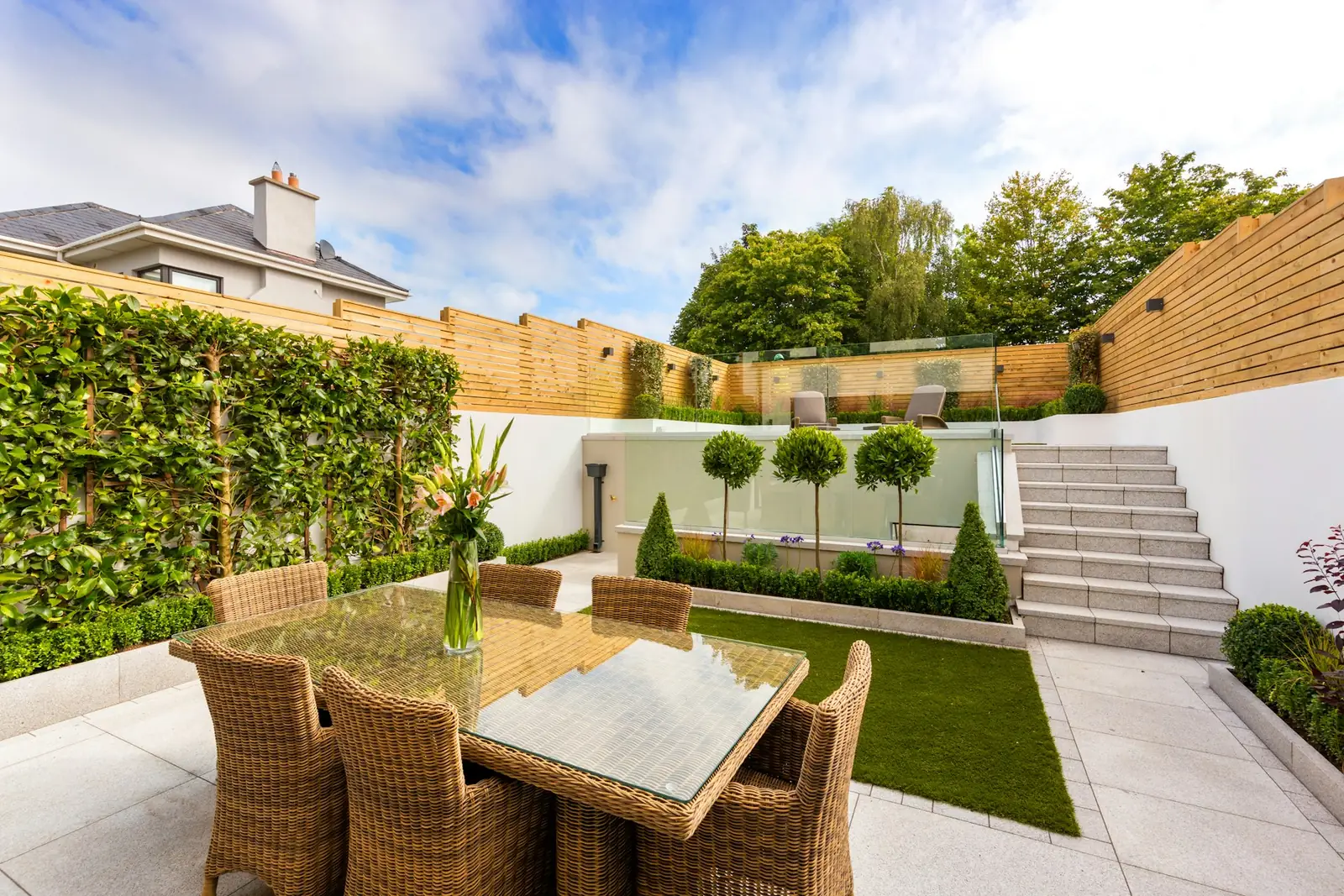
Horizontal slats with small gaps give a contemporary look that suits modern houses and garden designs. Hit-and-miss fencing alternates boards on each side of the rails, so it looks the same from both sides and still gives good privacy. Both let some wind through, which reduces the load on the posts – a real advantage in exposed gardens.
Picket, composite and metal fencing
Picket fencing is low and decorative, ideal for front gardens where you want to mark the boundary without hiding the house. Composite fencing, made from wood fibre and recycled plastic, does not rot or need painting, though it costs more up front. Metal railings and steel panels are strong, secure and long-lasting, and are often used on front boundaries and period properties.