The short answer
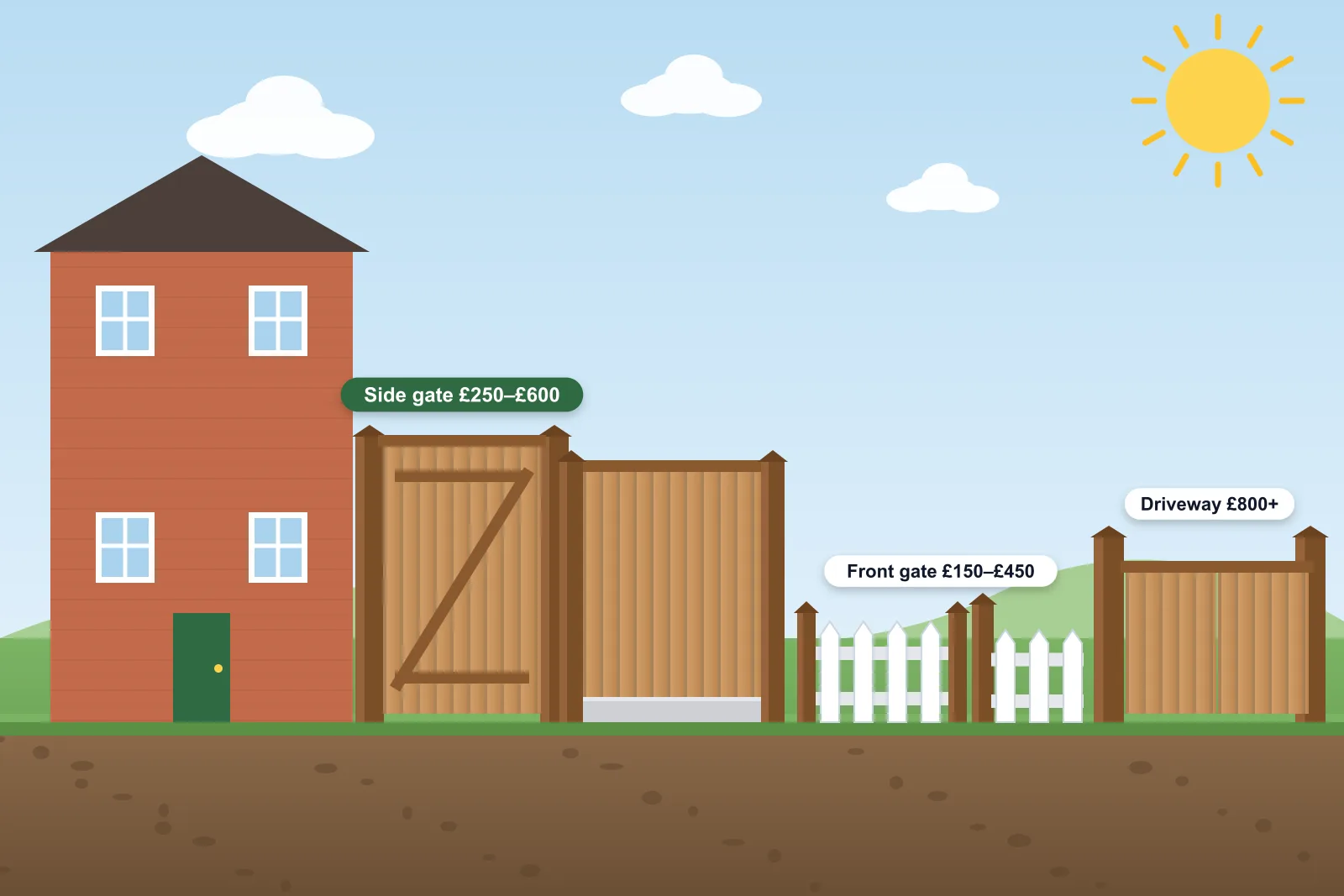
A timber side gate typically costs £250–£600 supplied and fitted, a metal side gate £300–£800, a low front garden gate £150–£450 and a pair of timber driveway gates £800–£2,500. Electric driveway gates start at around £3,500 fitted. Strong posts, quality hinges and a good latch make more difference to a gate's life than the gate itself.
Gates are deceptively complicated. A fence panel just has to stand still; a gate has to swing, close, latch and lock, thousands of times a year, often in the wind. That's why a cheap gate on weak posts sags within a couple of years, while a well-made one on solid posts can last decades.
This guide covers the common types of garden gate in the UK, what they cost to buy and install, and the details worth paying for.
The main types of garden gate
Most gates fall into one of four groups. Side gates sit between the house and a fence or wall and are usually tall – 1.8m is common – for security and privacy. Front gates are usually lower, matching a front wall, hedge or picket fence. Driveway gates are wide, often in pairs, and may be manual or electric. Field and estate gates are used on rural properties and paddocks.
Materials matter too. Timber is the most popular for side gates and can be matched to your fence. Metal gates – usually steel or wrought iron – are strong, secure and suit period homes. Composite and aluminium gates are low-maintenance but cost more.
- Ledged and braced timber – simple, sturdy and affordable
- Framed timber – stronger and less prone to sagging
- Feather edge or closeboard style – matches closeboard fences
- Slatted and contemporary – horizontal slats, often in hardwood or composite
- Metal – steel, wrought iron or aluminium, from simple bars to ornate designs
Why posts and hinges matter most
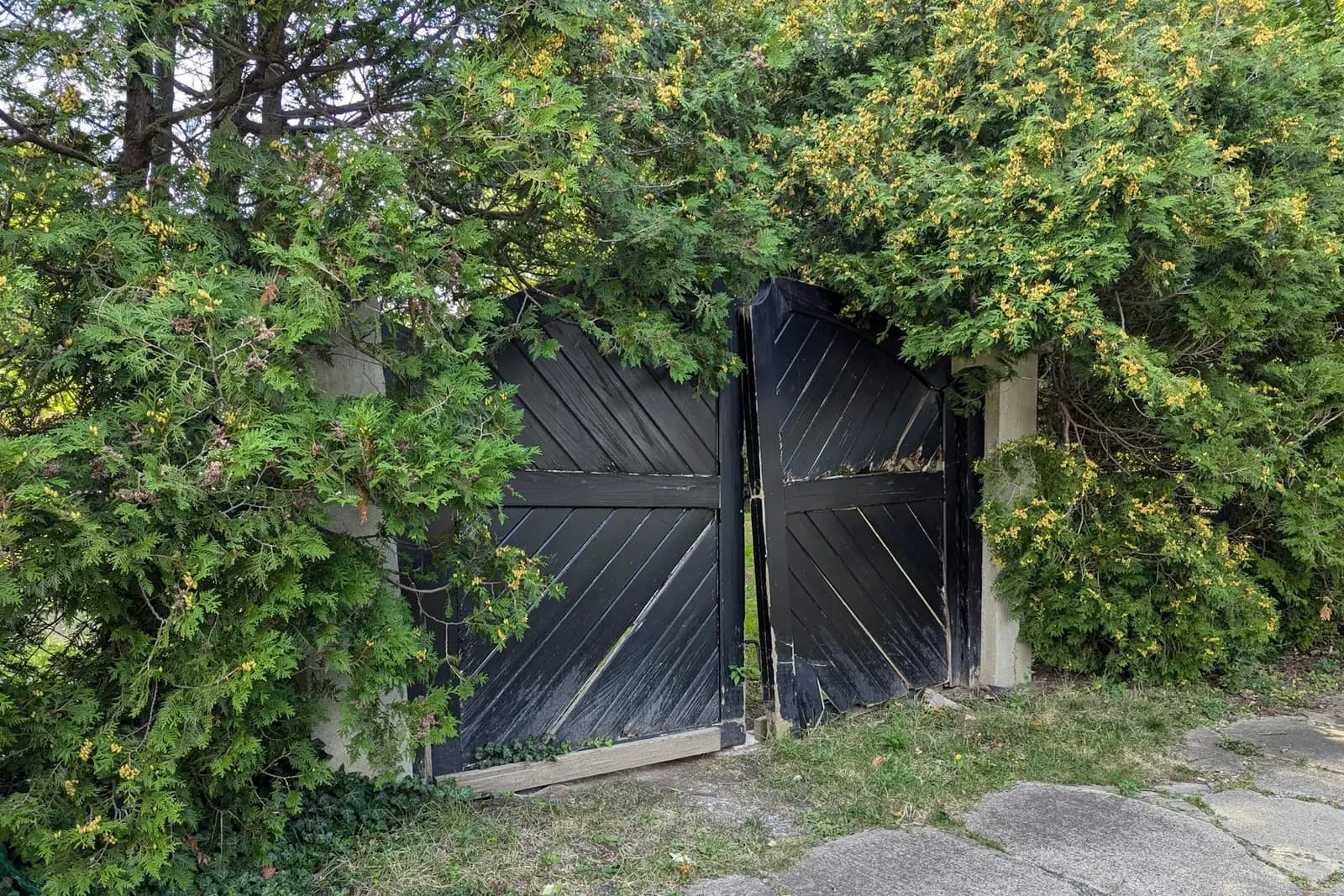
The number one cause of a sagging gate is a weak hinge post. A gate acts like a lever, putting a lot of force on the post at the top hinge. For timber side gates, fencers usually recommend 100mm or 125mm square posts at least, set deep in concrete. Wider or heavier gates may need 150mm posts, steel posts or brick piers.
Hinges should be sized for the gate – heavy-duty T-hinges or adjustable hook-and-band hinges are common. A diagonal brace on a ledged and braced gate must run upwards from the bottom hinge side to the top latch side, otherwise it does nothing to stop sagging. See our guide to how deep fence posts should be for the groundwork side.
Security for side gates
Side gates are a common route for burglars into back gardens. A tall, solid gate with no footholds on the outside, a lockable bolt or gate lock fitted on the inside, and hinges that can't be lifted off from outside all help. Some insurers ask about side gate security, so it's worth checking your policy.
Our guide to security fencing for homes covers the wider boundary.
Driveway gates
Driveway gates are a much bigger job. Openings of 3–4m need heavy posts or brick piers, and the drive surface has to allow for the swing. Gates that open inwards are the norm, because outward-opening gates over a pavement or road are generally not allowed. Electric gates need power, safety sensors and regular servicing, and should meet current safety standards.
Sliding gates suit drives that slope up towards the house, where a swinging gate would hit the ground.