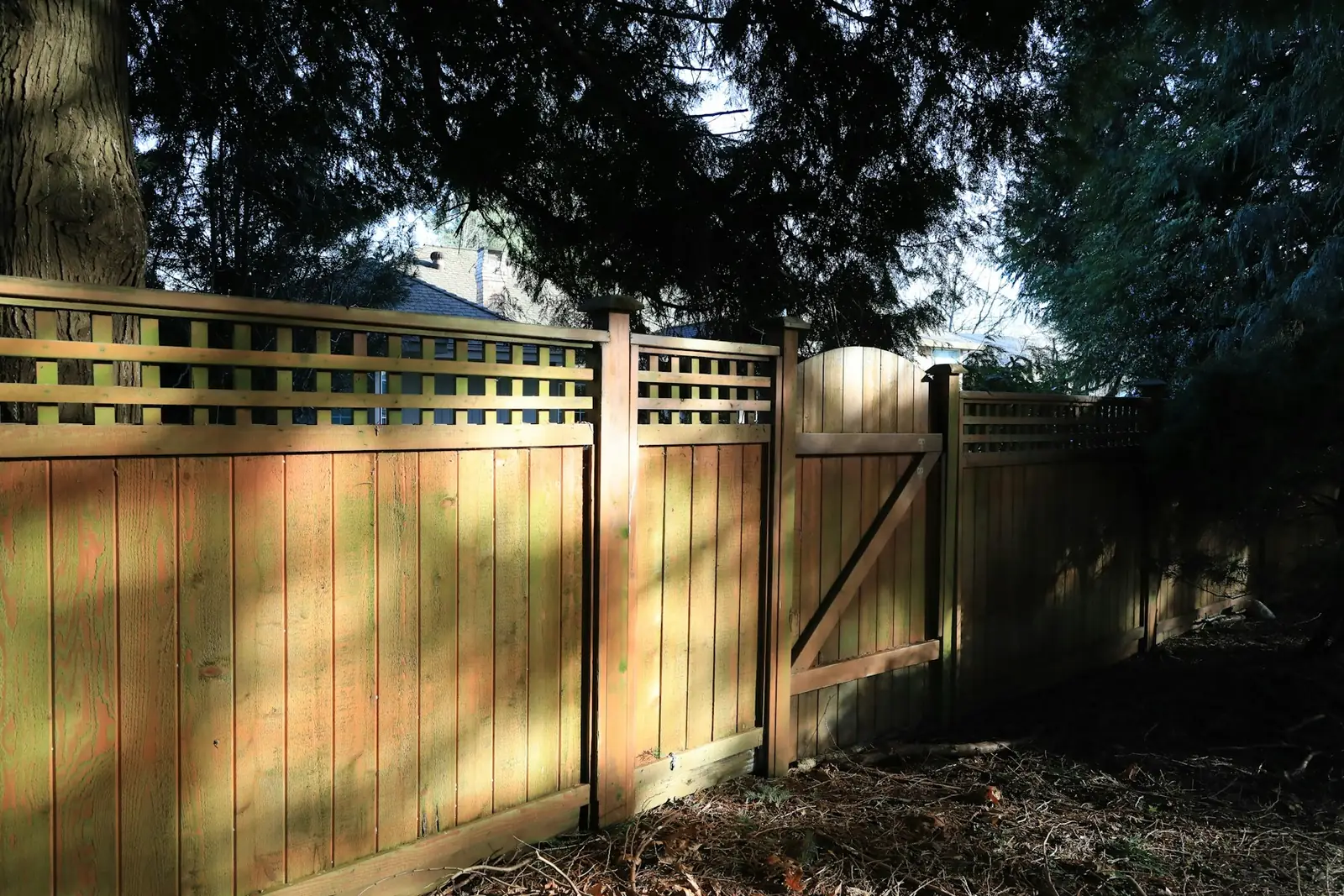
Garden Fencing Quotes
New fence, replacement panels, rotten posts or a gate that has seen better days – describe the job once and compare quotes from fencing contractors who work in your area.
- Fence installation
- Fence replacement
- Fence repairs
- Concrete posts
- Garden gates
- Driveway gates
Get free fencing quotes
Describe the fence, gate or repair once and compare quotes from fencing contractors who cover your postcode.
- Free to use
- No obligation
- Compare local tradespeople
- Quick online form
You'll continue to our quotes partner, MyJobQuote, to describe your job.
Fencing quotes from local contractors
A garden fence does more than mark where your land ends. It keeps children and pets in, gives you privacy from the neighbours, shelters planting from the wind and makes the whole garden look finished. When it fails – and in the British climate, fences do fail – it is one of those jobs that is hard to ignore.
Fencing Quotes puts you in touch with local fencing contractors who can quote for the job you actually need: a full new boundary, a replacement run along one side, a handful of new posts after a storm, or a gate. You describe the work once, contractors who cover your postcode receive it, and they come back to you with prices.
Before you compare those quotes, it helps to understand the options. The rest of this guide covers the main types of garden fencing, what makes a fence last, what installation involves, typical UK prices and the rules on height and boundaries.
Types of garden fencing
Most UK gardens use one of a handful of fence styles. The right choice depends on privacy, exposure to wind, budget and how the fence needs to look from the house.

Closeboard (feather edge)
Overlapping feather edge boards nailed to rails, built on site. The strongest timber fence and the easiest to repair board by board.
Read the guide →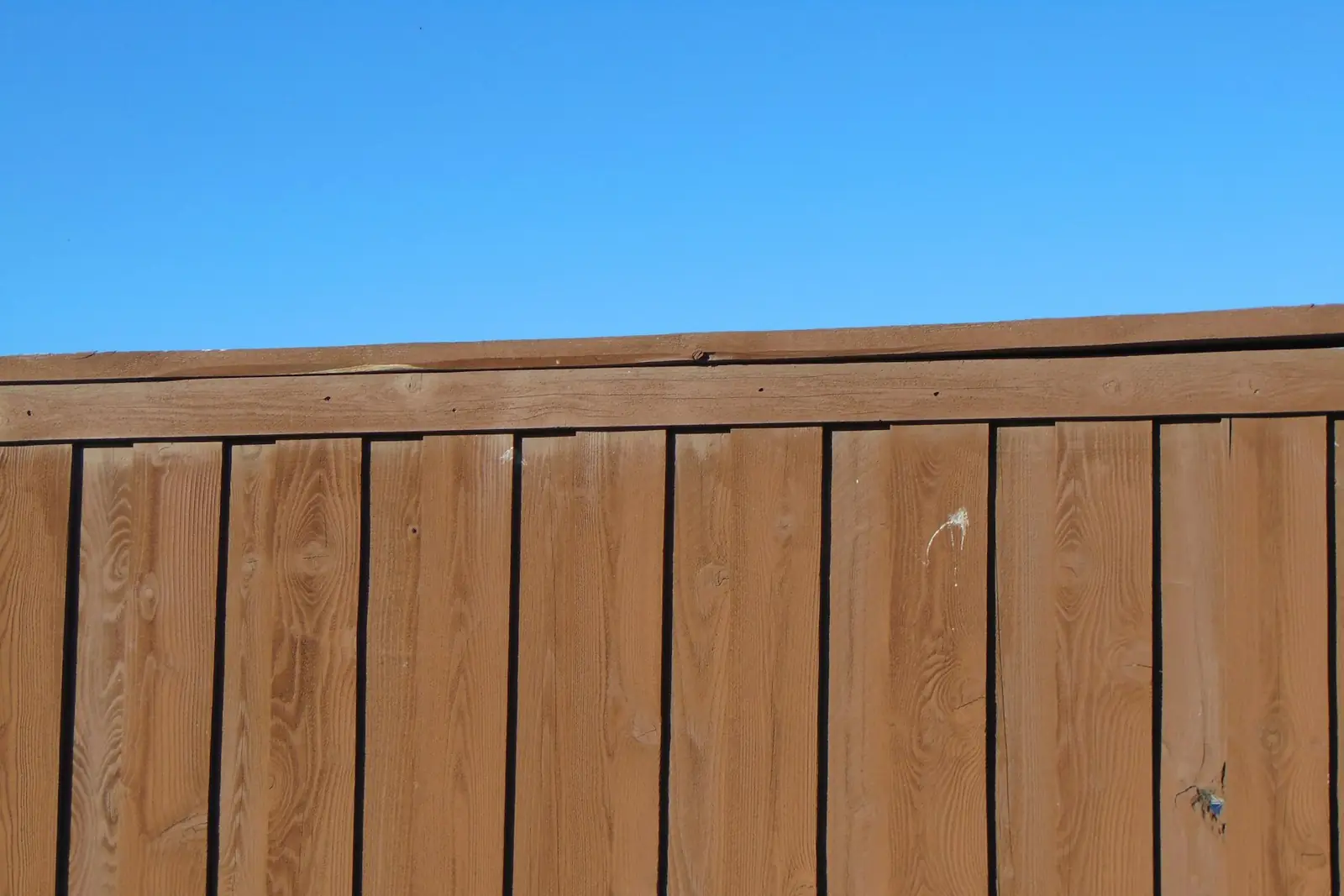
Fence panels
Pre-made lap, overlap or tongue-and-groove panels between posts. Quick to fit and good value, especially on concrete posts.
Read the guide →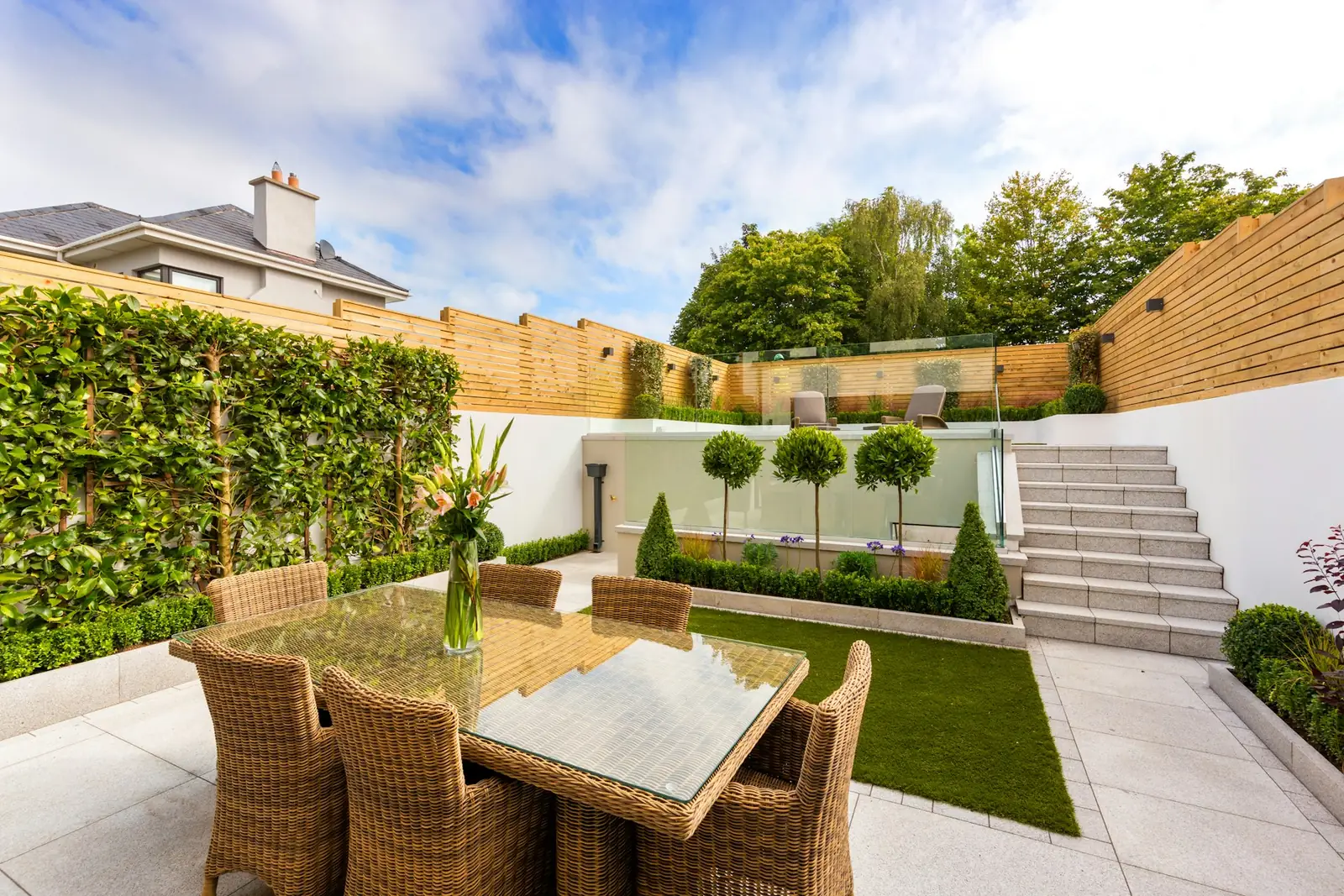
Slatted and hit-and-miss
Horizontal or vertical slats with small gaps. A contemporary look that lets wind through – ideal for exposed and coastal gardens.
Trellis and decorative toppers
Lattice or square trellis above a solid fence adds height and privacy while giving climbers something to grow on.
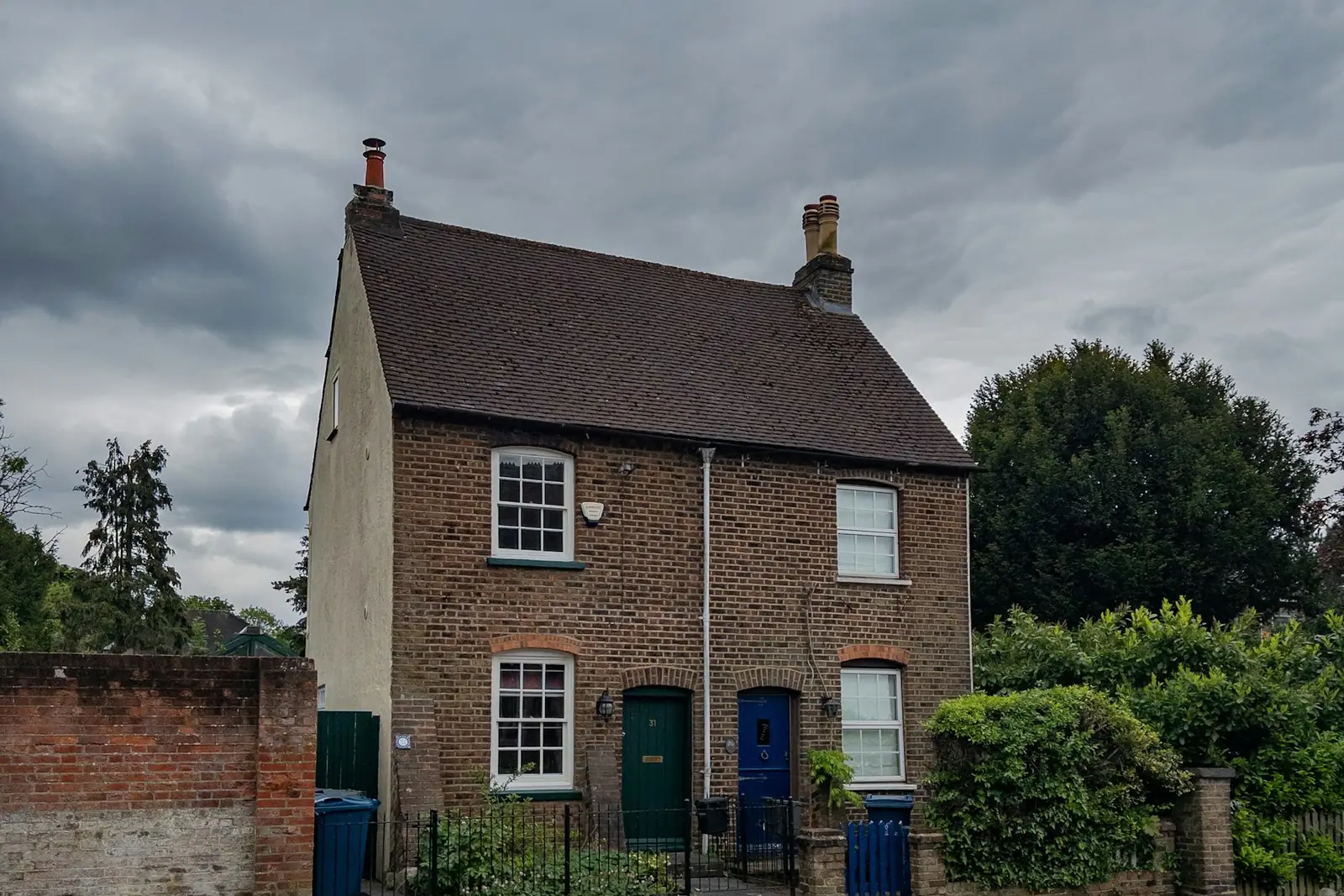
Picket and front garden fencing
Low, open fencing that marks a front boundary without hiding the house. Typically around 0.9m–1.2m high.
Post and rail
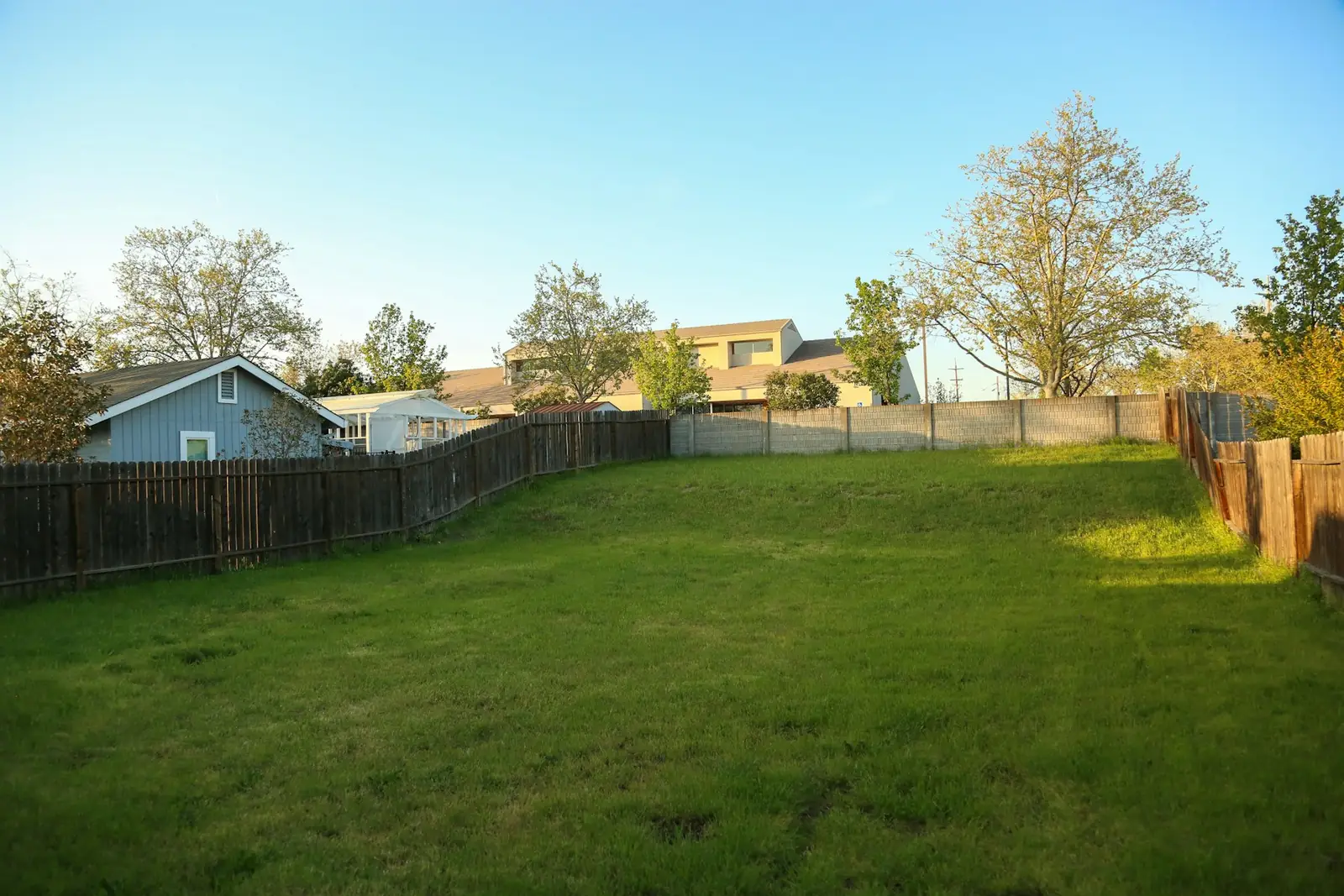
Two or three horizontal rails on posts, often with stock mesh. Used for rural boundaries and gardens backing onto fields.
Timber fencing: what makes it last
The vast majority of garden fencing in the UK is timber, usually pressure-treated softwood such as spruce, pine or larch. Pressure treatment forces preservative deep into the wood, and it is the single most important factor in how long a wooden fence lasts.
Treatment is graded by Use Class. Boards, rails and panels above ground should be at least Use Class 3; posts and gravel boards in contact with the soil should be Use Class 4. If a quote does not say, ask. Cheap panels that have only been dipped or sprayed may look similar on the day but will not last as long.
Hardwoods such as oak and iroko are occasionally used for premium fences and gates. They are more expensive but very durable and weather to an attractive silver-grey. Whatever timber you choose, a gravel board along the bottom, a capping rail along the top and a coat of preserver every few years will add years to its life.

Concrete fence posts, timber or metal?
When a fence fails, it is usually the posts that go first. Choosing the right post is the best way to avoid paying for the same fence twice.
| Post type | Typical life | Advantages | Drawbacks |
|---|---|---|---|
| Concrete (slotted) | 25+ years | Will not rot; panels slide in and out for easy replacement; very stable in wind | Heavy to install; utilitarian look (can be hidden by planting) |
| Pressure-treated timber (UC4) | 10–20 years | Natural look; suits closeboard and bespoke designs; easy to cut and fix to | Eventually rots at ground level, especially in wet clay |
| Metal or composite systems | 20+ years | Slim profile; low maintenance; suits modern slatted designs | Higher cost; fewer contractors specialise in them |
For panel fencing, most UK contractors recommend slotted concrete posts with concrete gravel boards. For closeboard, concrete morticed or recessed posts work well, as do heavy UC4 timber posts where a softer look is wanted. See our guide to fence panel installation for more on posts and gravel boards.
Fence installation: what to expect
A professional fence installation follows the same basic sequence whatever the style. Knowing what should happen makes it easier to compare quotes and spot corners being cut.
- 1
Survey and measuring
The contractor checks the boundary line, ground levels, access and anything underground – drains, cables or old concrete footings.
- 2
Removing the old fence
Old panels, boards and posts are taken down and taken away. Breaking out old concrete is often the slowest part of the job.
- 3
Setting the posts
Post holes are dug to around a quarter of the post length, usually 600mm for a 1.8m fence, and posts are set plumb in concrete or post mix.
- 4
Gravel boards and panels or rails
Gravel boards go in first to keep timber off the soil, followed by panels, or rails and feather edge boards for closeboard.
- 5
Gates and finishing
Gates are hung on heavier posts, caps and capping rails are fitted, and the site is cleared. Some contractors also apply a treatment or stain.

Fence replacement or repair?
If a storm has taken out a panel or two and the rest of the fence is sound, a repair makes sense. Many contractors can replace a post or refit panels in a couple of hours.
If posts are leaning all along the run, panels are soft or split, and the fence has been patched more than once, full fence replacement is usually the better investment. It is also the moment to upgrade to concrete posts, so the next fence lasts much longer.
Fence and gate installation
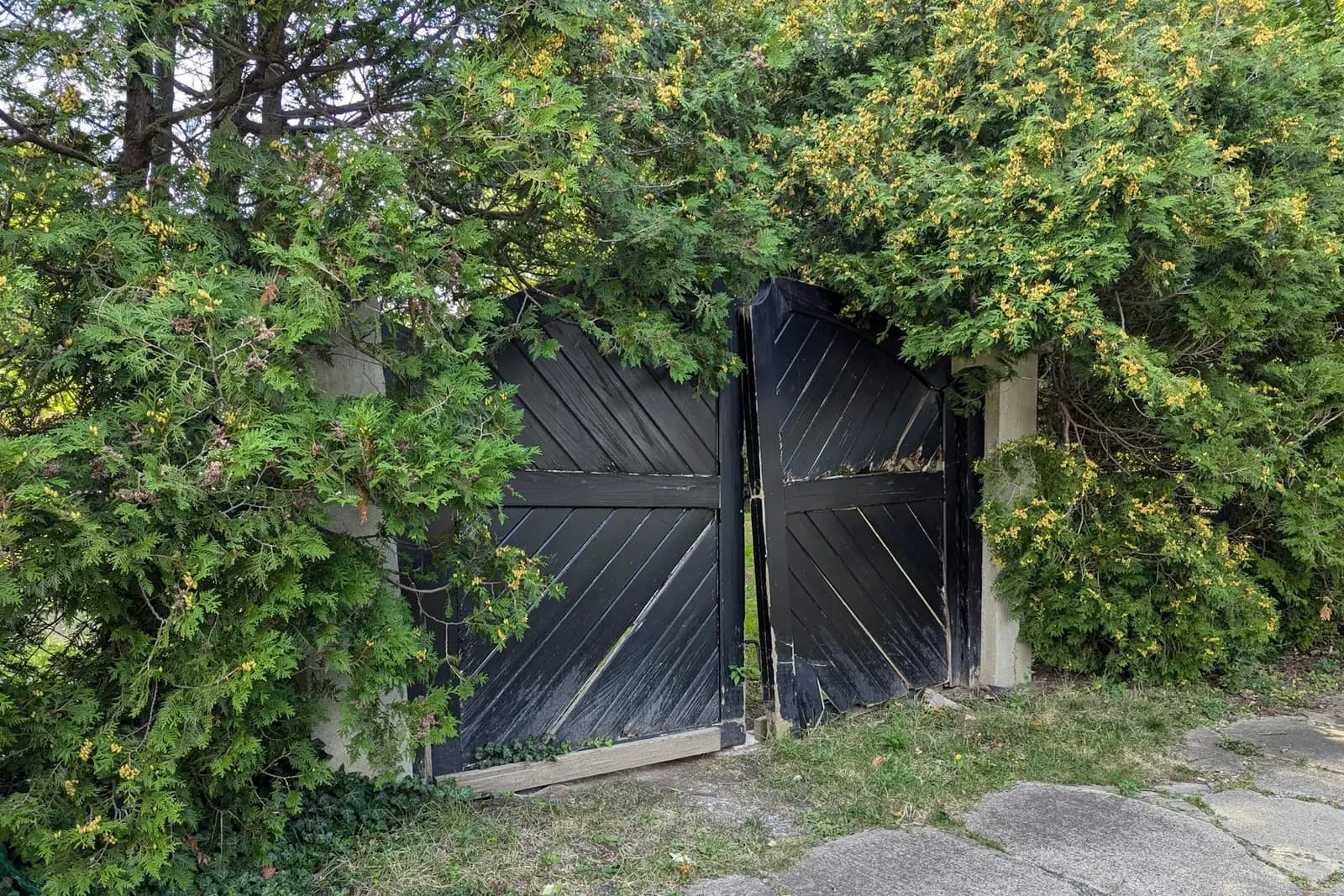
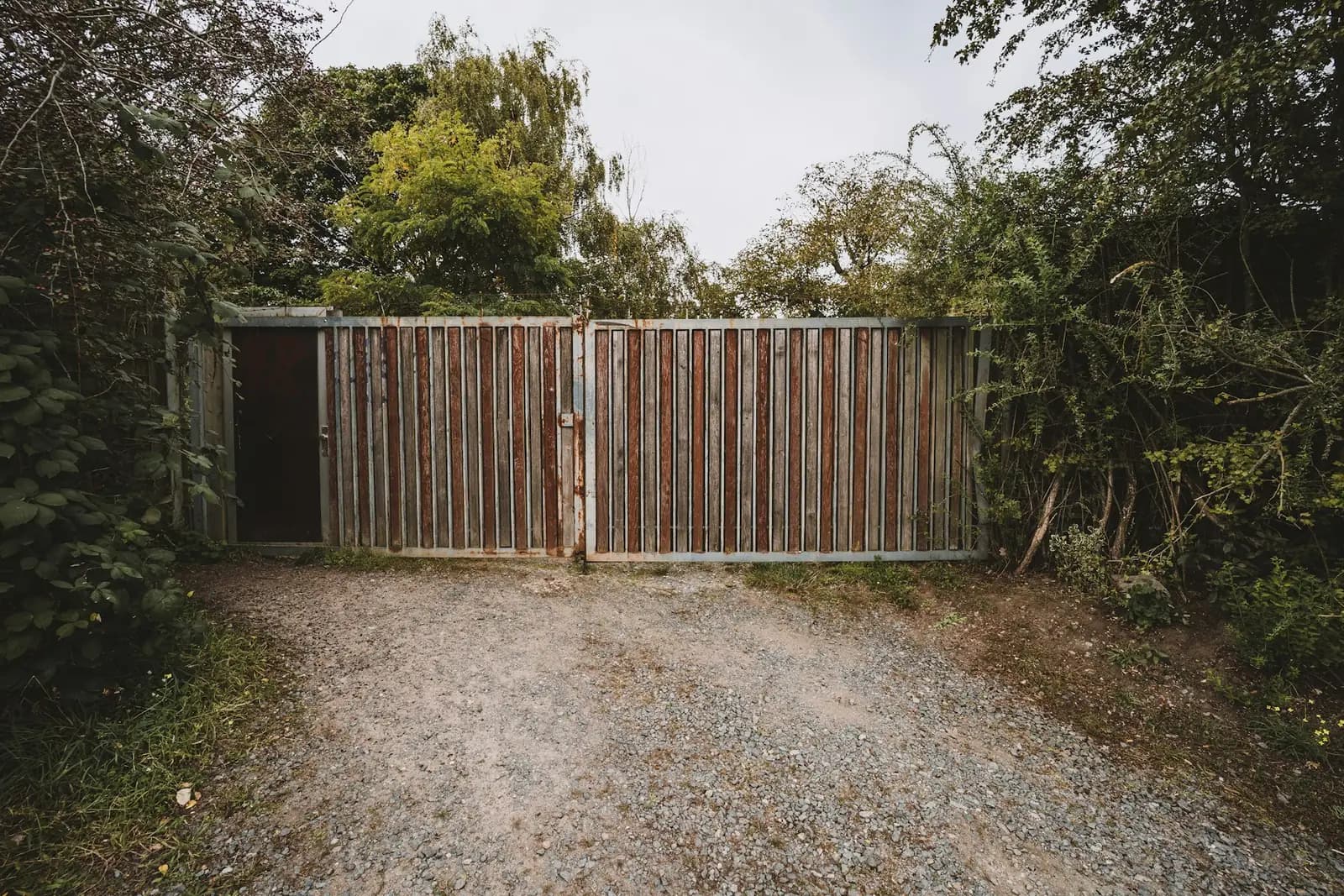
A gate is the part of a boundary that works hardest. It is usually cheaper and neater to have the gate quoted alongside the fence, so the posts are set at the right width and everything matches.
How much does garden fencing cost?
These indicative ranges reflect typical supply-and-fit prices across the UK. Use them to sense-check the quotes you receive rather than as a fixed price list.
| Job | Typical UK price |
|---|---|
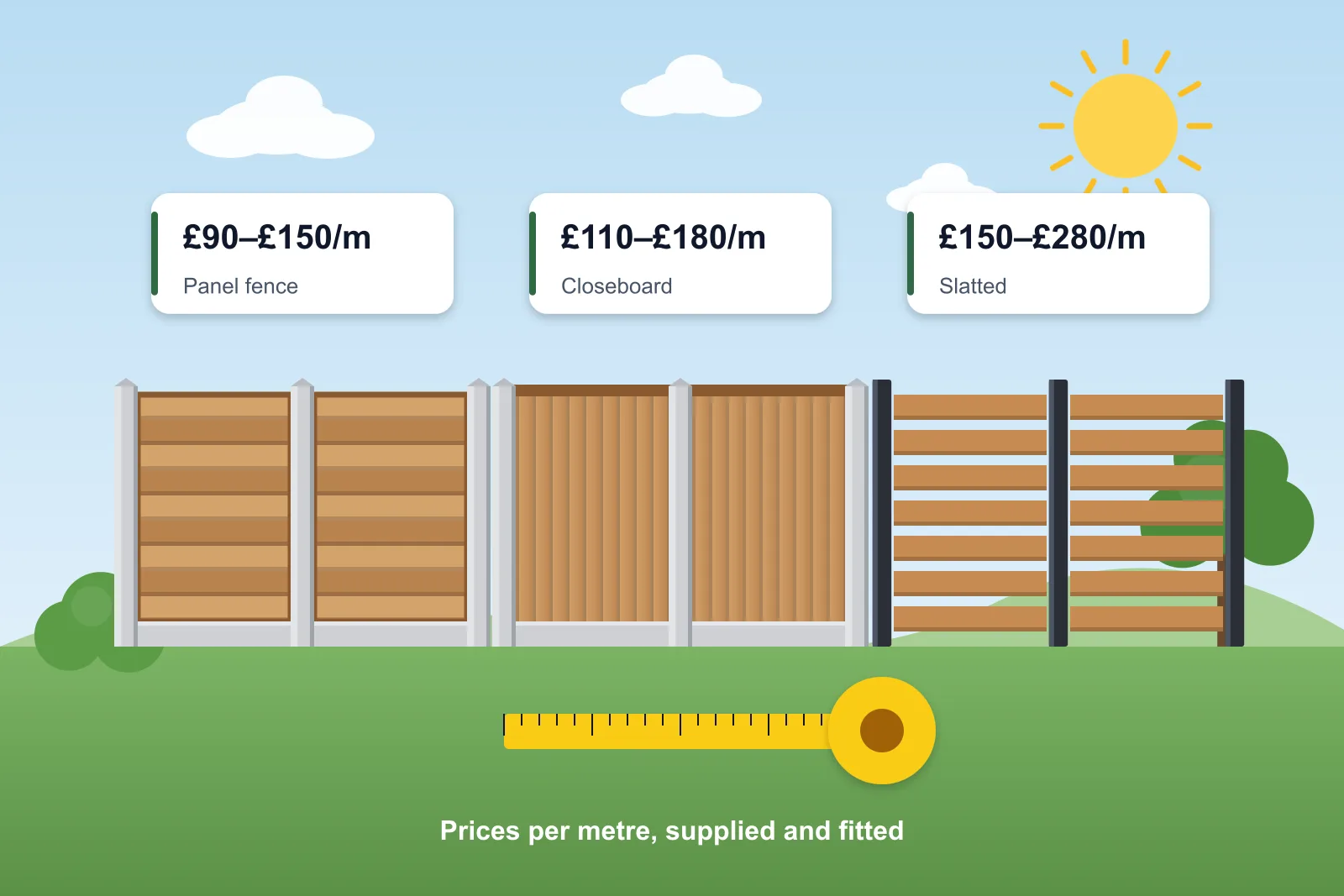
| Fence panels with concrete posts and gravel boards (1.8m high, supply and fit) | £90–£150 per metre |
| Closeboard (feather edge) fence with concrete posts (1.8m high) | £110–£180 per metre |
| Contemporary slatted or hit-and-miss fencing | £150–£280 per metre |
| Low picket fence for a front garden | £60–£110 per metre |
| Post and rail fencing with stock mesh | £35–£70 per metre |
| Replacing a single fence panel | £120–£250 |
| Replacing a single fence post | £150–£300 |
| Timber garden gate, supplied and fitted | £300–£900 |
| Pair of driveway gates, supplied and fitted (manual) | £1,200–£5,500 |
| Removing and disposing of an old fence | £10–£25 per metre |
Indicative UK prices including VAT where applicable. London and the South East are often at the top of these ranges or above. Always get written quotes for your garden.
What affects the price of a fence
- Length and height
- Fencing is priced by the metre. Going from 1.2m to 1.8m high increases materials and wind load, so posts need to be stronger too.
- Style of fence
- Standard lap panels are the cheapest; closeboard, tongue-and-groove and slatted designs cost progressively more.
- Post type
- Concrete posts cost a little more upfront than timber but typically last much longer and make repairs cheaper.
- Access
- If panels, posts and concrete have to go through the house, or up steps, the job takes longer.
- Ground conditions
- Clay, chalk, flint, rock, tree roots and old concrete footings all make post holes slower to dig.
- Slopes
- Stepped or raked fencing on a sloping garden needs more setting-out and extra gravel boards.
- Removal of the old fence
- Taking down and disposing of an old fence is usually priced separately, sometimes with a skip.
- Location and season
- Prices are higher in London and the South East, and demand spikes after storms and in spring.
Fence height, planning and neighbours
Across the UK, a garden fence, wall or gate up to 2 metres high generally does not need planning permission. Where the boundary is next to a road used by vehicles, or the footpath beside one, the limit is usually 1 metre. Height is measured from the ground on your side, and trellis counts towards the total.
There are exceptions. Listed buildings need consent for boundary changes, and some conservation areas and new housing estates have rules that remove these permitted development rights. England, Scotland, Wales and Northern Ireland each have slightly different regulations, so if you are planning anything unusual, check with your local planning authority first.
Before replacing a shared fence, talk to your neighbour. Check your title plan to see who owns the boundary, agree the style and height, and put any cost-sharing arrangement in writing. Keeping the new fence on your side of the boundary line avoids most disputes.
Choosing a fencing contractor
When the quotes come in, compare these points as well as the price:
- A written, itemised quote showing the fence style, post type, height and length
- Whether removal of the old fence and waste disposal are included
- How deep posts will be set and what they will be set in
- Public liability insurance – ask to see the certificate
- Photos or addresses of recent, similar fencing jobs
- A guarantee on workmanship, and what it covers
- An agreed start date and how long the job should take
- Payment terms – avoid paying the full amount before work starts
Fencing guides and advice
Answers to the questions homeowners ask most, from fence heights and boundaries to post depths and storm damage.
How Much Does a New Fence Cost per Metre?
Realistic supply-and-fit prices for panel, closeboard, slatted and composite fencing, and what pushes a quote up.
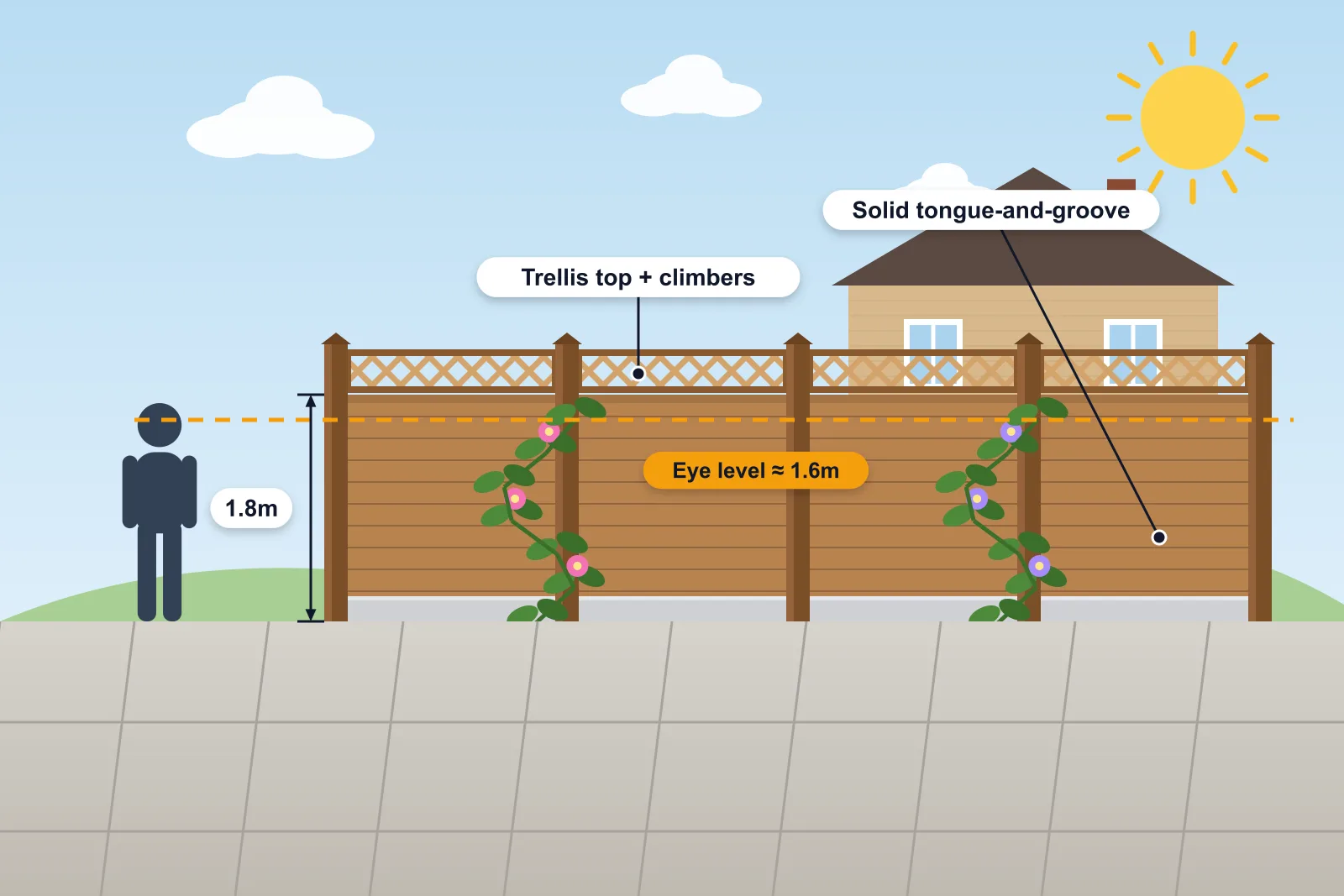
The Best Fence for Privacy in a UK Garden
Which fences block the view best, how tall they can be, and how trellis and planting add privacy without planning issues.
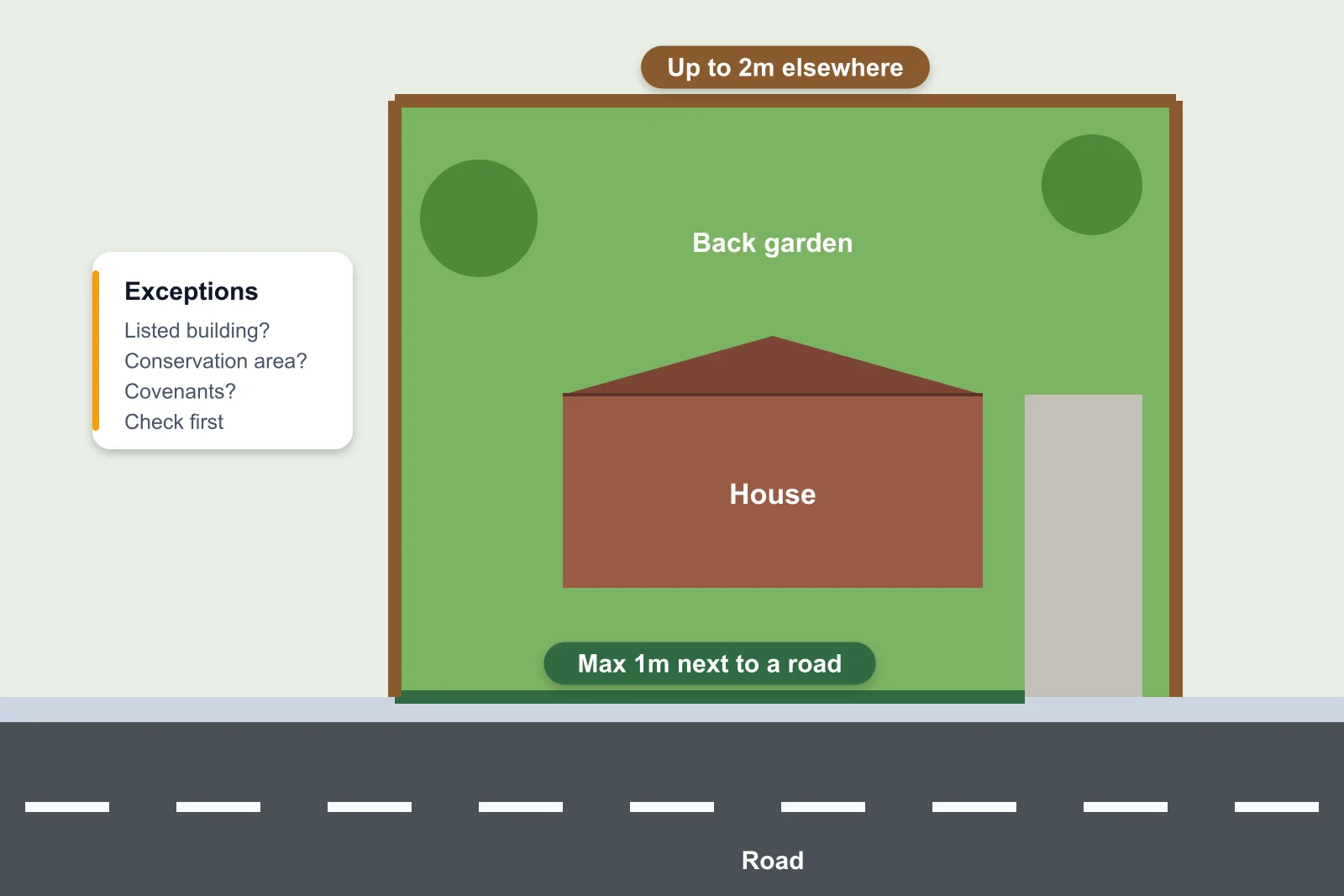
Do I Need Planning Permission for a Fence?
The 1m and 2m rules, when they do not apply, how height is measured and what to do if you need a taller fence.
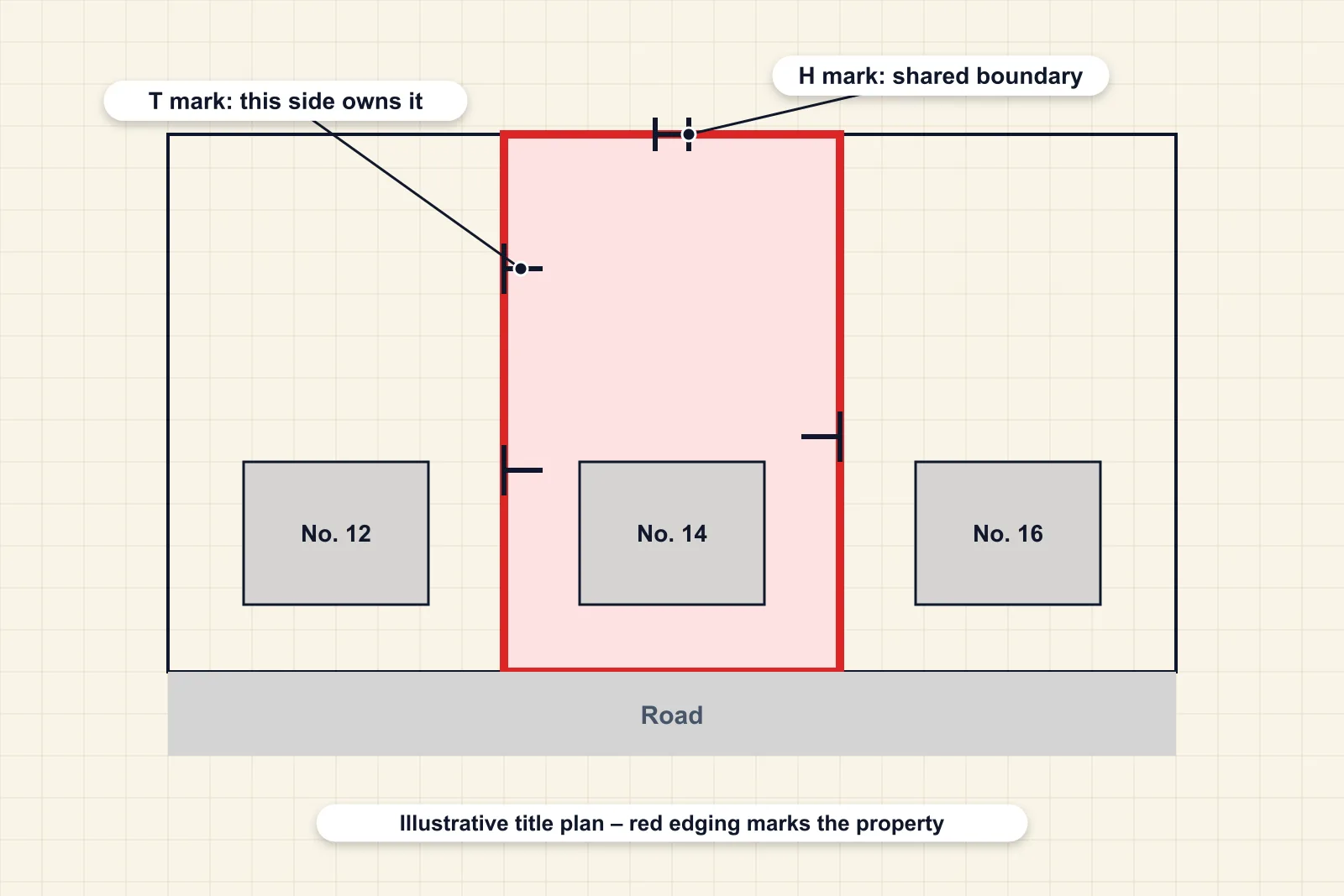
Which Fence Is Mine? Boundary Ownership Explained
How to find out who owns a boundary fence: deeds, title plans, T marks – and the common myths about left and right.
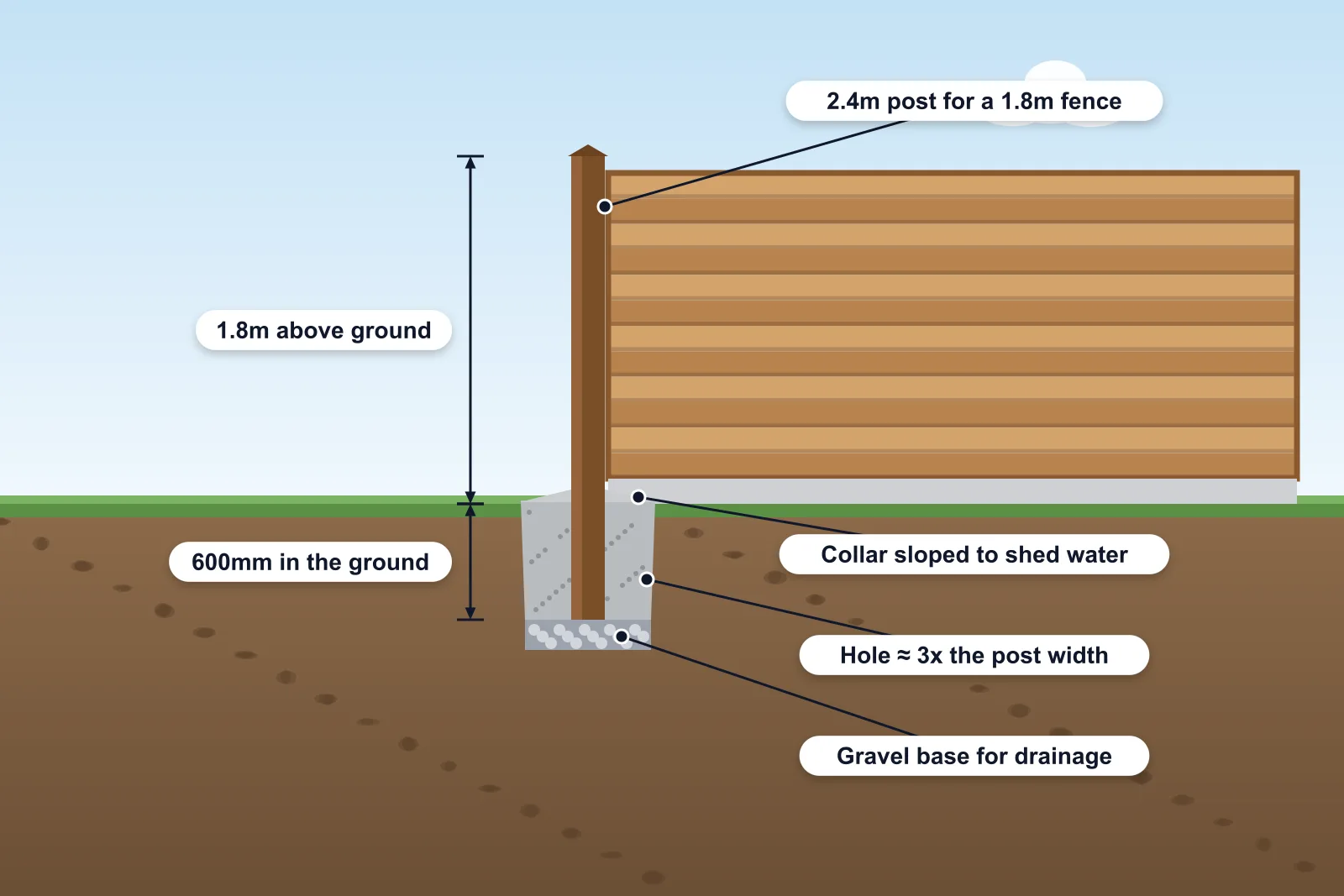
How Deep Should Fence Posts Be?
The quarter rule, post lengths for each fence height, hole sizes and how to set posts so they do not lean.
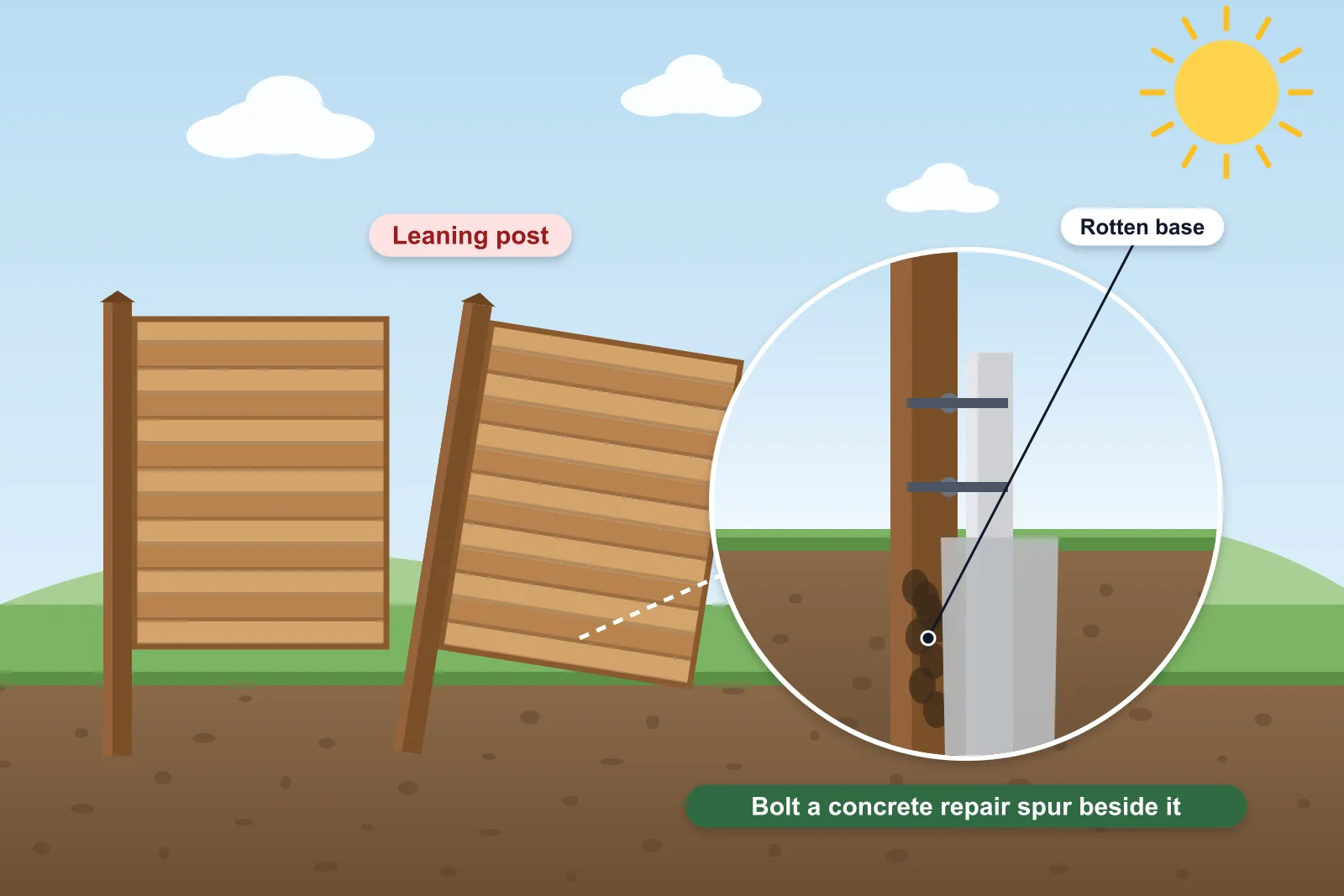
How to Fix a Leaning Fence Post
Why posts lean, when they can be straightened and when they need a repair spur or replacing.
Local fencing contractors near you
We have local fencing guides for 110 towns and cities, covering the homes, gardens and conditions in each area. Choose yours for local advice and quotes.
Fencing in England
- Barnsley
- Basingstoke
- Bath
- Bedford
- Birkenhead
- Birmingham
- Blackburn
- Blackpool
- Bolton
- Bournemouth
- Bradford
- Brighton
- Bristol
- Bromley
- Cambridge
- Canterbury
- Carlisle
- Chelmsford
- Cheltenham
- Chester
- Chesterfield
- Colchester
- Coventry
- Crawley
- Croydon
- Darlington
- Derby
- Doncaster
- Durham
- Ealing
- Eastbourne
- Enfield
- Exeter
- Gateshead
- Gloucester
- Guildford
- Harrogate
- Harrow
- High Wycombe
- Huddersfield
- Hull
- Ipswich
- Kingston upon Thames
- Lancaster
- Leeds
- Leicester
- Lincoln
- Liverpool
- London
- Luton
- Maidstone
- Manchester
- Mansfield
- Middlesbrough
- Milton Keynes
- Newcastle upon Tyne
- Northampton
- Norwich
- Nottingham
- Oldham
- Oxford
- Peterborough
- Plymouth
- Poole
- Portsmouth
- Preston
- Reading
- Romford
- Rotherham
- Salford
- Sheffield
- Shrewsbury
- Slough
- Solihull
- Southampton
- Southend-on-Sea
- St Albans
- Stevenage
- Stockport
- Stoke-on-Trent
- Sunderland
- Swindon
- Taunton
- Telford
- Torquay
- Wakefield
- Walsall
- Warrington
- Watford
- Wigan
- Winchester
- Wolverhampton
- Worcester
- Worthing
- York
Fencing in Northern Ireland
Garden fencing FAQs
How much does a new garden fence cost in the UK?
Most UK homeowners pay roughly £90–£150 per metre for a standard 1.8m panel fence on concrete posts, supplied and fitted, and £110–£180 per metre for closeboard. A typical 20-metre back garden boundary therefore often costs somewhere between £1,800 and £3,600, depending on style, access and location.
What is the longest-lasting type of garden fence?
A closeboard or heavy-duty panel fence on concrete posts, with concrete gravel boards, typically lasts longest. The timber itself should be pressure-treated, and a preserver every few years helps it look good for longer.
Do I need planning permission for a garden fence?
Usually not, as long as the fence is no more than 2 metres high, or 1 metre where it is next to a road used by vehicles. Listed buildings, some conservation areas and properties with restricted permitted development rights are exceptions, so check with your council if you are unsure.
Which side of the fence should face my neighbour?
By convention, the 'good' side – the smooth face without posts and rails – faces outwards towards the neighbour or the road. It is not a legal requirement, but it is good practice and avoids disagreements.
Who is responsible for the fence between two gardens?
Responsibility is often shown on the title plan or in the deeds, sometimes with a 'T' mark on the side of the owner responsible. If the deeds say nothing, most neighbours agree to share the cost of a shared fence.
Should I repair or replace my fence?
If only one or two posts or panels have failed and the rest are sound, a repair is usually the sensible choice. If several posts are leaning or rotten, or the fence is more than 15 years old, replacing the whole run is often better value.
How long does it take to install a garden fence?
A typical back garden fence of 15–30 metres usually takes one to three days, depending on the style, post type, access and how much old fencing has to be removed first.
When is the best time of year to replace a fence?
Fences can be installed all year round, but late summer and autumn are a good time to get ahead of winter storms. Contractors are often busiest in spring and straight after major storms.
Other home improvement quotes
Get your free fencing quotes
Local fencing contractors, one short form. Get Free Quotes today – there's no obligation.
Get Free Quotes