The short answer
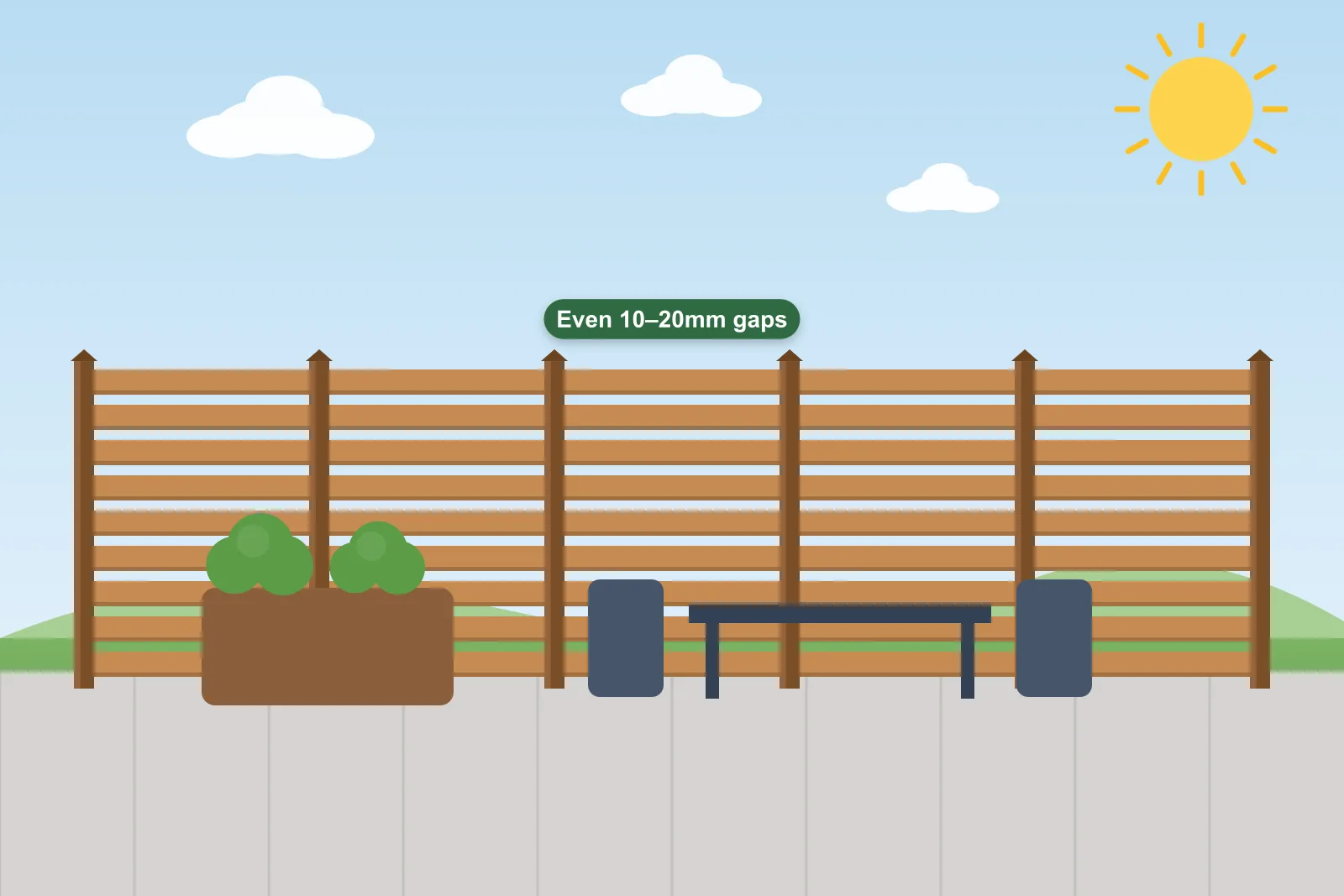
Slatted fencing uses narrow horizontal boards fixed with even gaps between them. In pressure-treated softwood it typically costs £120–£200 per metre at 1.8m high, fitted; in hardwood, composite or aluminium, £200–£400+ per metre. Gaps of 10–20mm give partial privacy and let light and wind through.
Slatted fencing has become one of the most popular contemporary styles in UK gardens. It works as a boundary fence, a privacy screen around a seating area, a bin store or a backdrop for planting. The horizontal lines make small gardens look wider and pair well with modern paving and decking.
It's usually more expensive than standard panels, because the slats are planed, the gaps need to be even and the posts must be set accurately.
Materials compared
Pressure-treated softwood is the most affordable option and can be stained or painted. Hardwoods such as cedar or iroko look beautiful and are naturally durable but cost more. Composite slats don't need painting and don't rot, but they are heavy and pricier. Powder-coated aluminium slats are light, very low-maintenance and come in modern colours, often anthracite or black.
- Softwood – affordable, easy to work, needs treatment every few years
- Western red cedar – lightweight, naturally durable, weathers silver
- Composite – very low maintenance, heavier, more expensive
- Aluminium – light, slim, modern, among the most expensive
- Painted softwood – a budget way to get a dark contemporary look
Gap widths and privacy
The gap between slats decides how private the fence is. Tight gaps of 5–10mm give close to full privacy and still look slatted. Gaps of 15–25mm let in more light and air, and suit screens rather than boundaries. Wider gaps feel open but give little privacy.
Spacers – small offcuts or plastic gauges – keep gaps consistent during installation. Inconsistent gaps are the most noticeable sign of a rushed job.
Posts, spans and sagging
Horizontal slats can sag if they span too far between posts. Most slatted fences use posts at 1.2–1.8m centres, rather than the 1.83m or more you'd see with standard panels. Some systems use slim metal posts with channels that the slats slot into. Others hide the posts behind the slats so the fence reads as one smooth surface.
If you want a slatted look on an existing panel fence, you can sometimes clad over the existing posts, but check the posts are sound first. See concrete vs timber fence posts.
Finishing and maintenance
Planed softwood slats look best stained or painted, often in dark greys, black or natural tones. A good exterior stain needs refreshing every few years. Cedar can be left to silver or oiled to keep its colour. Composite and aluminium just need an occasional wash.
See fence treatment and preservatives and how to paint a fence for finishing options.