Skip to content
Care and repairs

How Long Does a Fence Last?

From under ten years to more than thirty – the lifespan of a fence depends far more on how it is built than on how it looks.

Updated October 2026 · 3 min read

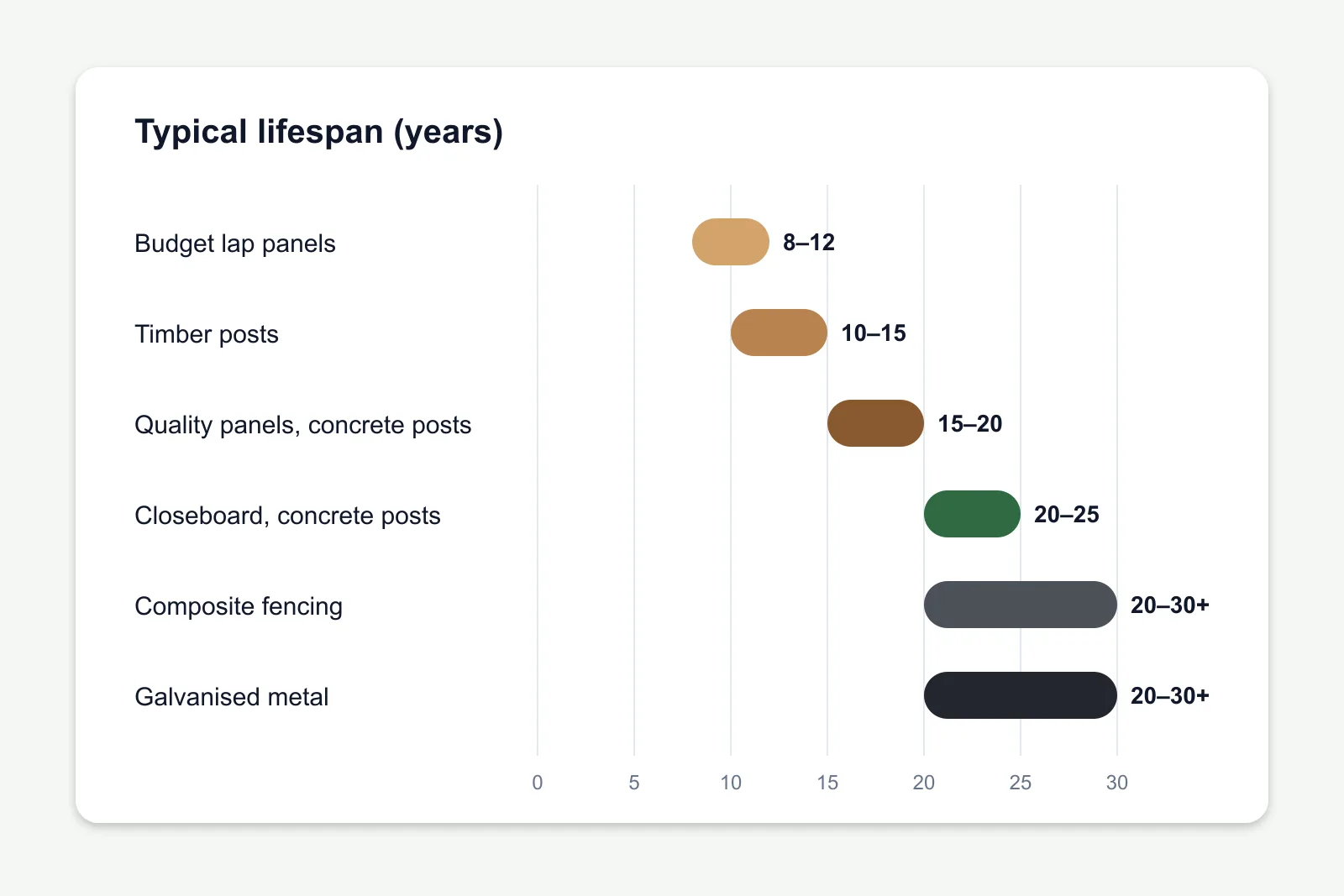
Chart illustration of typical lifespans for budget panels, timber posts, quality panels, closeboard, composite and galvanised metal fencing

The short answer

Budget lap panels typically last 8–12 years, timber posts 10–15 years, quality panels on concrete posts 15–20 years and closeboard on concrete posts 20–25 years or more. Composite and galvanised metal fencing can last 20–30 years or longer. Good installation, concrete posts and regular treatment all extend the life of a fence.

When people ask how long a fence will last, the honest answer is “it depends” – mainly on the materials, the posts and how well it was put up. Two fences that look identical on day one can have very different lives.

This guide gives typical figures and explains what makes the difference.

Typical lifespans

These are typical ranges for fences that are reasonably well installed and maintained. Exposed coastal sites, wet soil and neglect can shorten them considerably.

  • Budget lap or overlap panels: 8–12 years
  • Timber posts (pressure-treated): 10–15 years, sometimes longer
  • Quality panels on concrete posts with gravel boards: 15–20 years
  • Closeboard on concrete posts: 20–25 years or more
  • Composite fencing: 20–30 years
  • Galvanised and powder-coated metal: 20–30 years or more
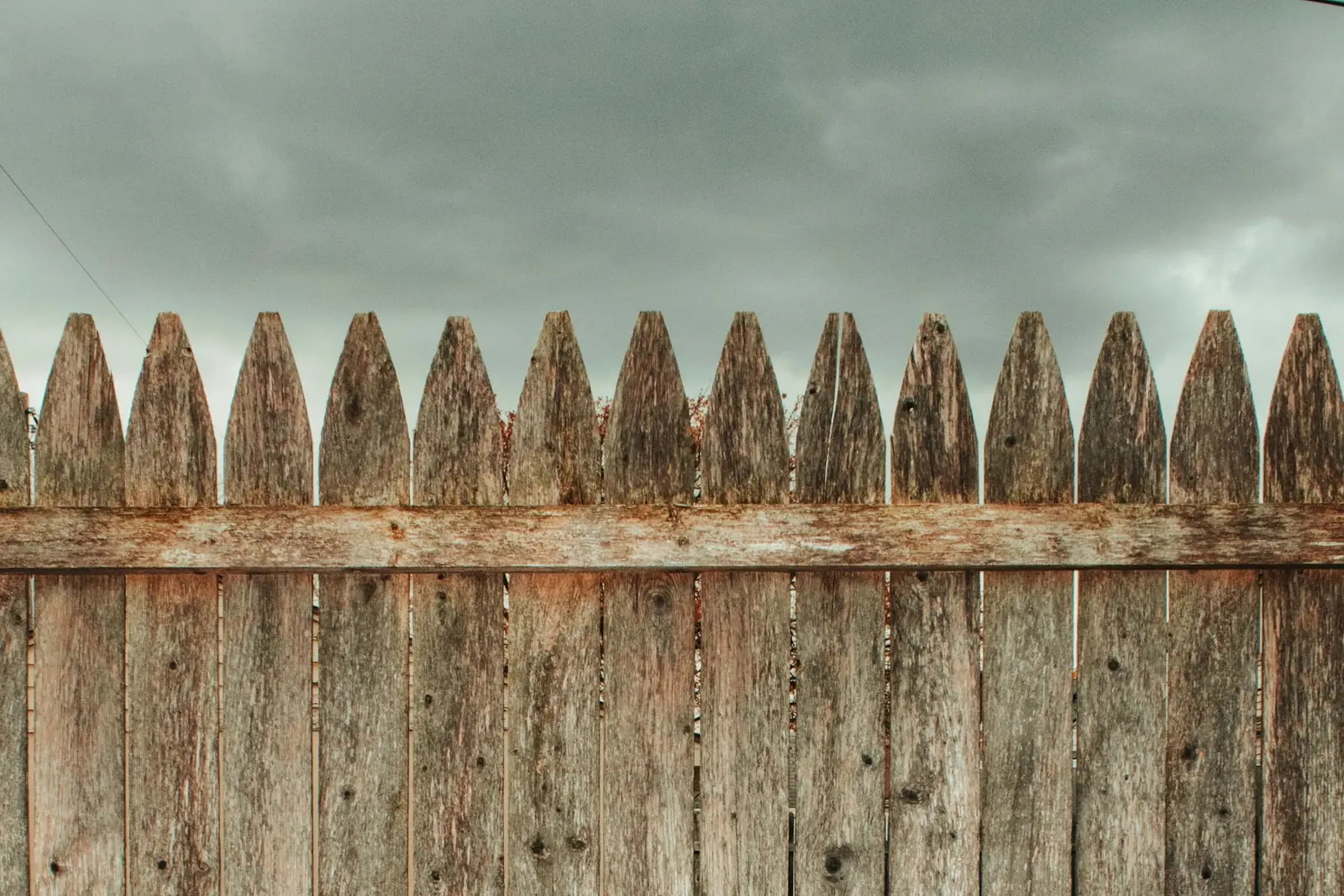
Old weathered wooden fence boards

What makes a fence last

Posts are the most important factor. A fence with rotten posts has to be replaced even if the panels are fine – which is why concrete posts can more than double the life of a panel fence.

  • Concrete posts, or Use Class 4 timber posts set properly
  • Gravel boards keeping timber off the soil
  • Pressure-treated rather than dip-treated timber
  • Capping rails and post caps to shed rain
  • Regular treatment every few years
  • Keeping soil, leaves and plants off the boards

Signs a fence needs replacing

Leaning posts along the run, soft or crumbling timber at the base, panels that flex or have lost boards, and repeated repairs are all signs the fence is near the end of its life. If more than a few posts have failed, replacement is usually better value than patching.

Related serviceFence Repair & ReplacementPrices and quotes →

Replacement costs to plan for

Replacement costs to plan for
JobTypical UK price
Replacing a single panel£120–£250
Replacing a single post£150–£300
New panel fence, 1.8m, concrete posts£90–£150 per metre
New closeboard fence, 1.8m, concrete posts£110–£180 per metre

Indicative UK supply-and-fit prices.

Rather leave it to a professional?

Describe your fence once – the length, height and style, or just the problem – and compare quotes from fencing contractors near you.

Get free fencing quotes

Describe your job once and compare quotes from local tradespeople who cover your area.

  • Free to use
  • No obligation
  • Compare local tradespeople
  • Quick online form
Get Free Quotes

You'll continue to our quotes partner, MyJobQuote, to describe your job.

Fence lifespan: common questions

How long should a new fence last?

A good-quality panel fence on concrete posts should last 15–20 years; closeboard on concrete posts often lasts 20–25 years or more.

Why has my fence rotted so quickly?

Usually because of dip-treated panels, timber in contact with the soil, posts set without drainage or a lack of maintenance.

Is it worth replacing just the posts?

If the panels are in good condition, replacing timber posts with concrete ones can give the fence many more years.

Does painting a fence make it last longer?

A good paint or stain helps by keeping water out and protecting against UV, especially if reapplied every few years.

Ready to compare fencing quotes?

Free, no-obligation quotes from local fencing contractors.

Get Free Quotes