The short answer
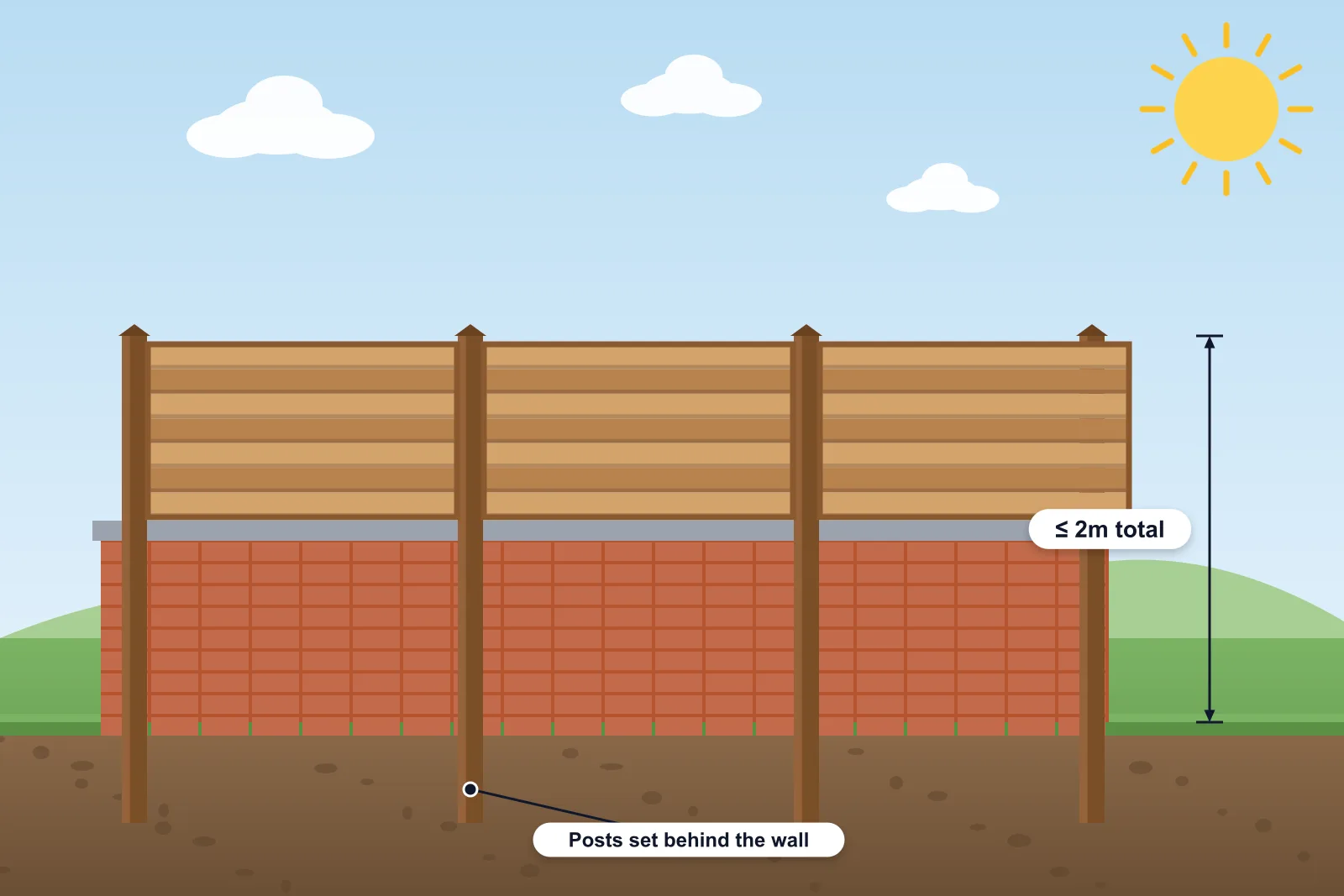
The safest way to add a fence above a garden wall is to set new posts in the ground behind the wall and fix panels to them, so the wall carries no load. Bolt-down post brackets on top of the wall only suit short, low panels on solid walls. Total height – wall plus fence – usually needs to stay under 2m (or 1m next to a road) to avoid needing planning permission.
Many gardens have a low brick or block wall along one boundary – often 600mm to 1.2m high. It marks the boundary but gives little privacy. Putting a fence on top seems the obvious answer. The catch is wind: a 1m-high fence panel catches a surprising amount of force, and that force acts as a lever on whatever it's fixed to.
Older garden walls are often single-skin brick with shallow foundations and no reinforcement. Bolting a fence to the top can crack the mortar, loosen the coping or, in a gale, push the wall over.
Option 1: posts behind the wall (best)
Set timber or concrete posts in the ground on your side of the wall, tight against the back of it, and fix panels or boards to the posts above the wall. The posts carry the wind load, not the wall. This is the most reliable method and works for most heights.
The posts need to be long enough to go 600mm or more into the ground and rise above the wall to the height you want. Check where the wall foundation is before digging – you may need to dig slightly away from the wall. See how deep fence posts should be.
Option 2: panels between brick piers
If the wall has solid brick piers, panels can sometimes be fixed between them with heavy-duty brackets or slotted into U-channels bolted to the piers. This only works if the piers are well built, tall enough and in good condition. It's common on newer houses where the wall and piers were designed for it.
Option 3: bolt-down post brackets (with caution)
Bolt-down post shoes or base plates can be fixed to the top of a solid wall with resin anchors, then short posts fitted into them. This method should only be used for low additions – a trellis or a panel of up to around 600mm – on a sound, double-skin or reinforced wall. It isn't suitable for single-skin walls, crumbling mortar, or exposed windy sites.
- Check the wall is solid, plumb and not cracked
- Use resin anchors rather than expanding bolts near the edge of brickwork
- Keep the addition low and open – trellis catches less wind than solid panels
- Fix to piers rather than the middle of the wall where possible
Height limits and planning
Planning rules look at the total height of the boundary – wall plus fence. In England, permitted development allows up to 2m in back gardens and 1m next to a road or footpath used by vehicles. Going higher normally needs planning permission. Listed buildings and conservation areas have extra rules. See fence planning permission and our fence height guide.
Whose wall is it?
If the wall belongs to your neighbour, or is a shared party wall, you'll need their agreement before fixing anything to it. Posts on your own side of the wall avoid that problem. See which side of the fence is mine and neighbour fence disputes.