The short answer
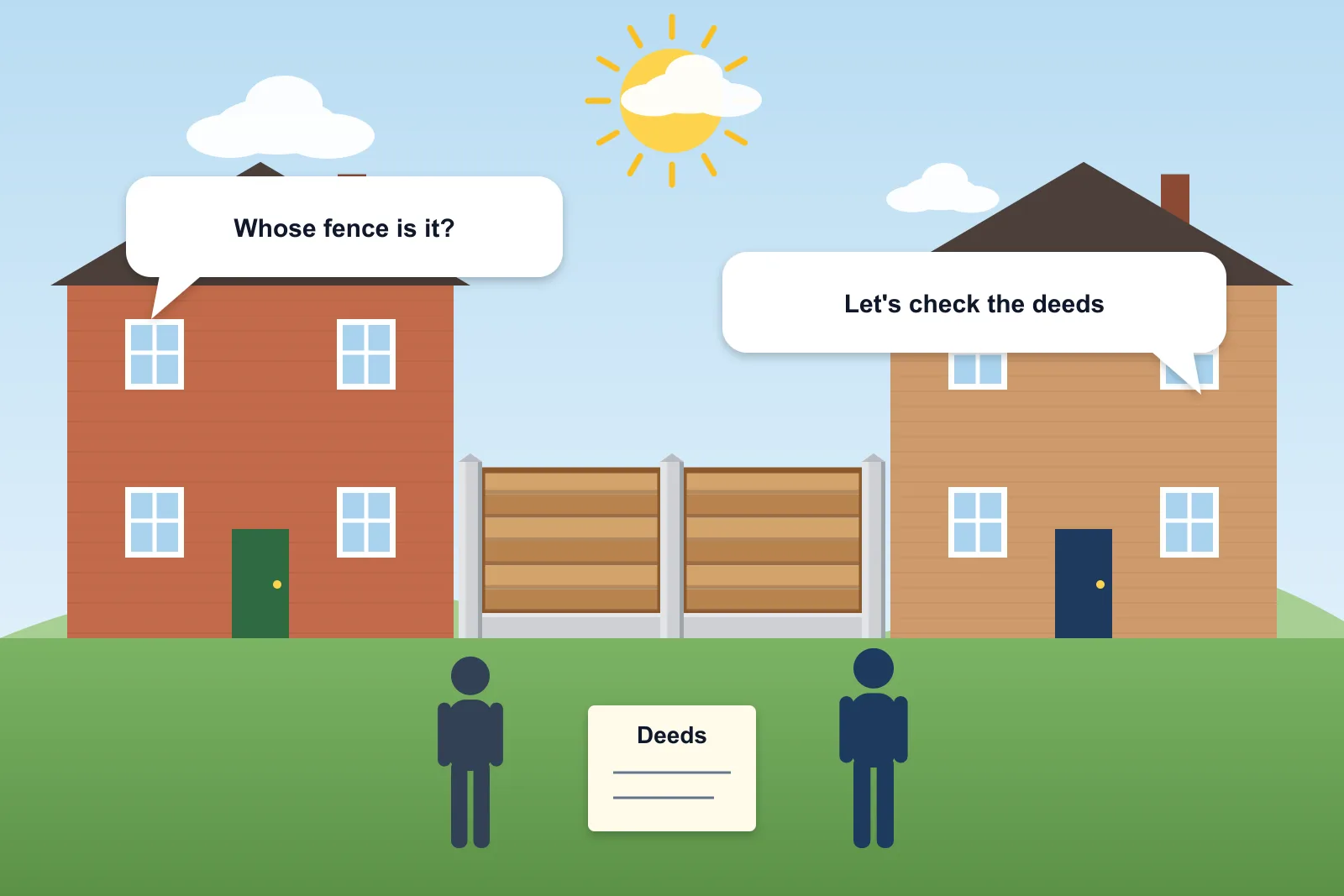
Start by checking your deeds to see who owns the boundary, then talk to your neighbour before doing any work. Agree the style, height, position and how the cost will be shared, and put it in writing. If you cannot agree, try community mediation before involving solicitors – boundary disputes that go to court can cost far more than the fence.
Fences sit exactly where two households meet, so it is no surprise they cause friction. The most common disagreements are about who should pay for a replacement, what the new fence should look like, where exactly it should go and whether a neighbour can attach things to it.
The good news is that the vast majority are settled informally. A little preparation makes that conversation much easier.
Before you talk to your neighbour
Approach it as a shared problem rather than a demand. Most neighbours are happy to contribute to a fence that benefits both gardens, especially if they have a say in what it looks like.
- Check your deeds and title plan for T marks or boundary covenants
- Take photos of the fence's current condition
- Get one or two quotes so you can discuss real figures
- Decide what you are happy to compromise on – style, height or cost
Common points of disagreement
Who pays: if the fence belongs to one property, that owner is responsible, but there is usually no legal duty to replace it at all. Sharing the cost of a shared boundary is common and sensible.
Position: the new fence should go on the same line as the old one, or just inside the owner's land. Moving a fence, even by a few centimetres, can turn into a boundary dispute.
Things attached to the fence: a neighbour should not fix trellis, plants, sheds or lights to a fence they do not own without permission. Climbing plants that damage the fence can be cut back to the boundary.
If you cannot agree
If talking does not work, community mediation services can help neighbours reach an agreement for a small fee or for free. For disagreements about where the boundary actually is, a chartered surveyor who specialises in boundaries can give an expert opinion.
Court should be the last resort. Legal costs in boundary disputes routinely run into thousands of pounds, which is many times the cost of a new fence. Putting up your own fence just inside your boundary is often the quickest way to move on.