The short answer
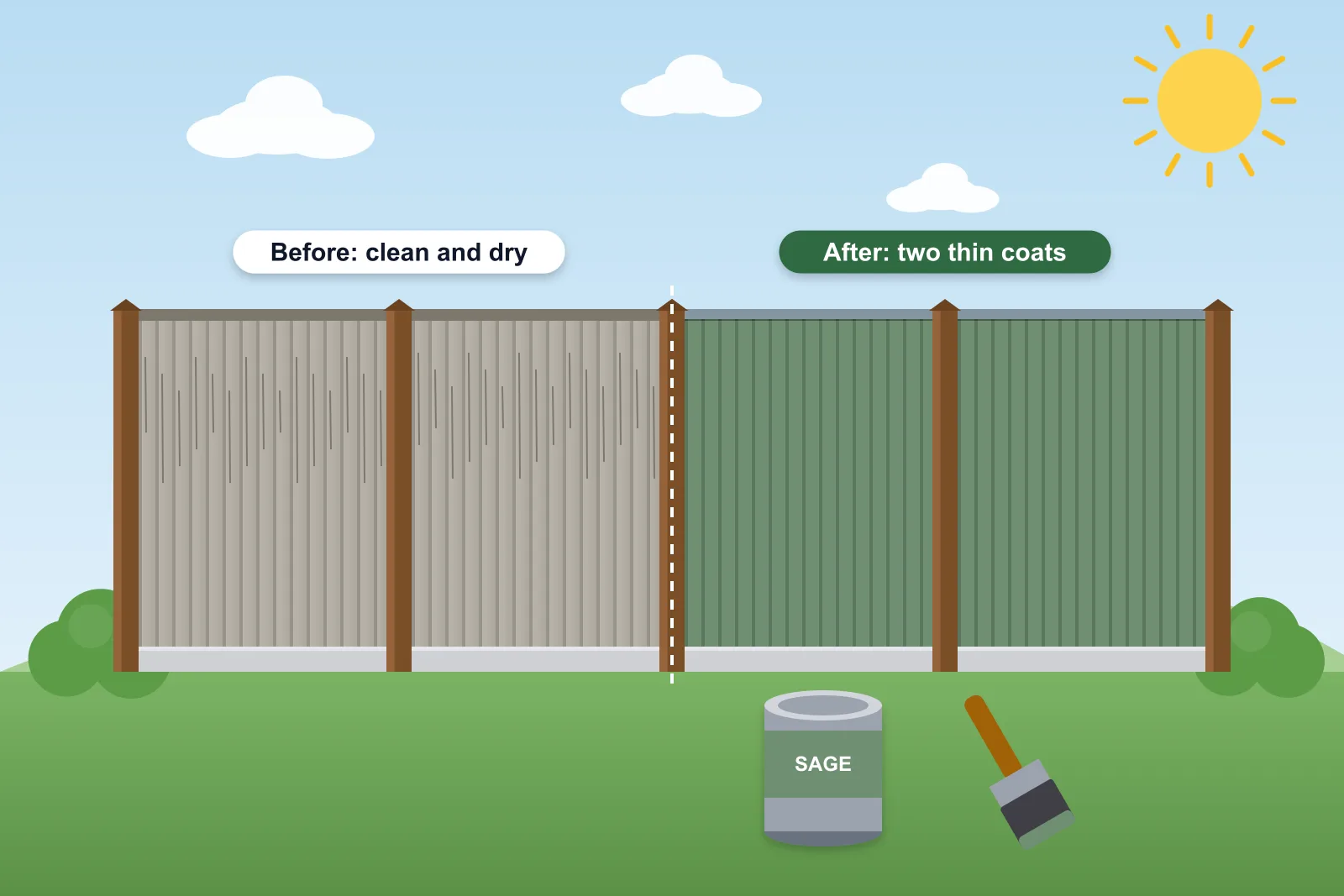
Paint a fence on a dry, mild day with no rain forecast. Clean off dirt, moss and loose fibres, let the timber dry thoroughly, protect plants and paving, then apply two thin coats of an exterior fence paint or stain, brushing along the grain and working one board or panel at a time. A sprayer is much faster on long runs of rough-sawn panels.
Painting a fence is one of the quickest ways to change the look of a garden. Dark colours make plants stand out and help a fence recede; soft greens and greys blend in; natural stains bring weathered timber back to life. A good finish also protects the wood from moisture and UV.
Here is how to get a result that looks even and lasts more than a season.
Paint, stain or oil?
Most budget fence paints are designed for rough-sawn timber and soak in rather than forming a film. Higher-quality exterior wood paints and stains last longer between coats. Check the tin for the coverage rate and recommended number of coats.
- Fence paint – opaque colour, ideal for rough-sawn panels; usually water-based and quick-drying
- Fence stain or preserver – shows the grain and adds colour; often contains wood protection
- Wood oil – for smooth planed timber such as slatted fences; nourishes the wood and needs reapplying more often
Preparation
Brush the fence down to remove dust, cobwebs and loose fibres. Treat green algae or moss with a suitable cleaner and rinse. A pressure washer on a low setting can help, but too much pressure raises the grain and forces water deep into the wood. Let the timber dry for at least two dry days afterwards.
Cover paving, decking and plants with dust sheets, and tie back climbers. New pressure-treated timber may need to dry out before it will take paint evenly – check the manufacturer's advice on the tin.
Brush or sprayer?
A wide fence brush gives good coverage and works the paint into the grain. A garden sprayer or electric paint sprayer is much faster on long runs of panels but uses more paint and is affected by wind, so mask carefully and avoid breezy days. Many people spray first and then brush the paint in.
Work from the top down, one panel or a few boards at a time, keeping a wet edge to avoid lap marks. Two thin coats look better and last longer than one thick one.