The short answer
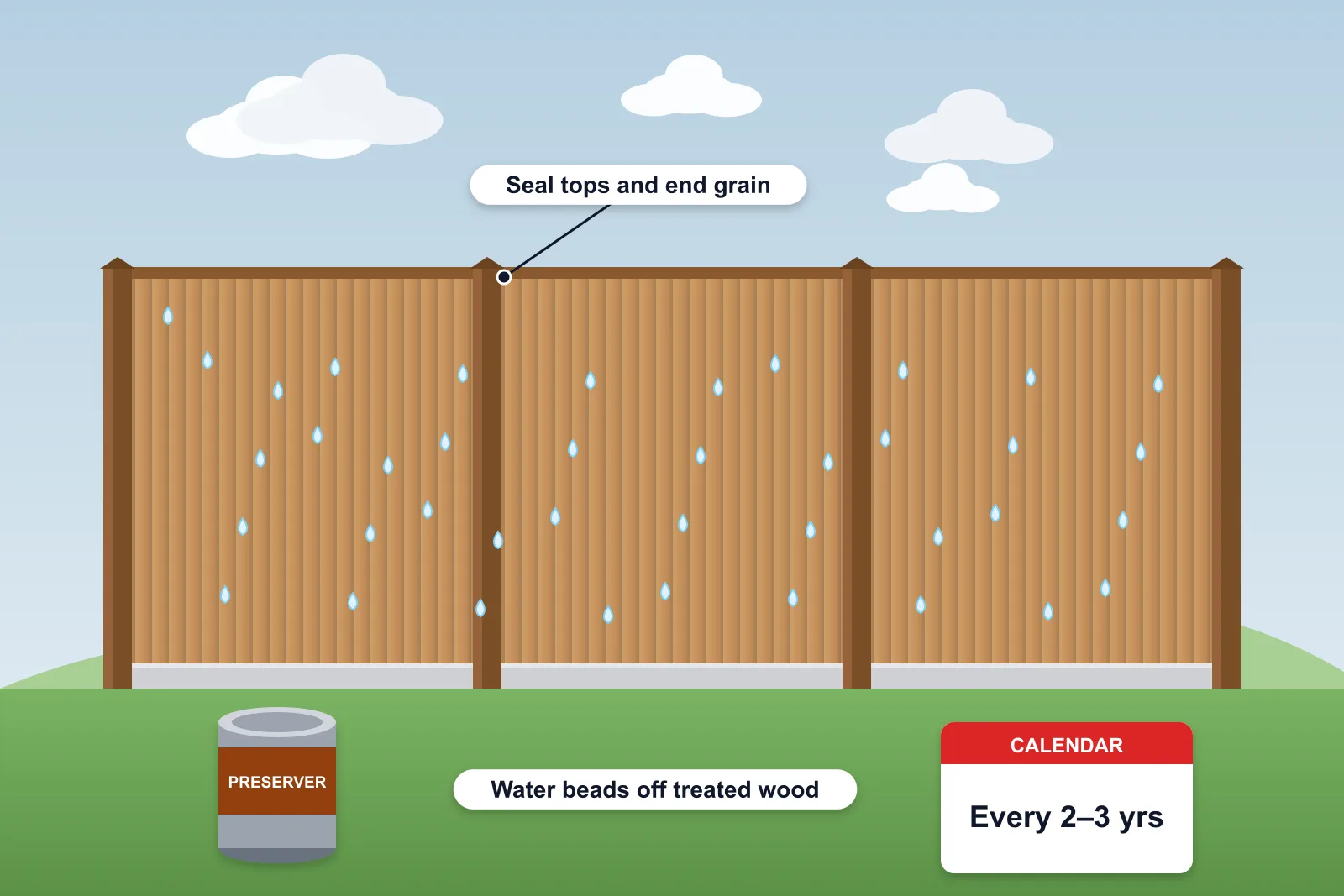
Most new fence timber is pressure-treated and does not need extra treatment straight away. After a year or so, and then every two to three years, clean the fence and apply a wood preserver or treatment-based stain on a dry day, paying most attention to the tops, cut ends and the bottom of the boards. Keep soil, leaves and plants off the timber.
Timber rots when it stays wet. Pressure treatment pushes preservative deep into the wood when it is made, but cut ends, the tops of posts and anything in contact with soil remain vulnerable. Regular treatment tops up that protection and keeps water out.
The good news is that it does not take long, and a few simple habits make as much difference as the product you choose.
Pressure-treated or dip-treated?
Pressure-treated (often called tanalised) timber has preservative forced deep into it under pressure. It usually has a green or brown tint and comes with a longer life expectancy. Dip-treated timber, common on budget panels, has only a surface coating and needs treating more often – usually every year or two.
Posts and gravel boards in contact with the ground should be treated to Use Class 4; panels and rails above ground are normally Use Class 3.
How to treat a fence
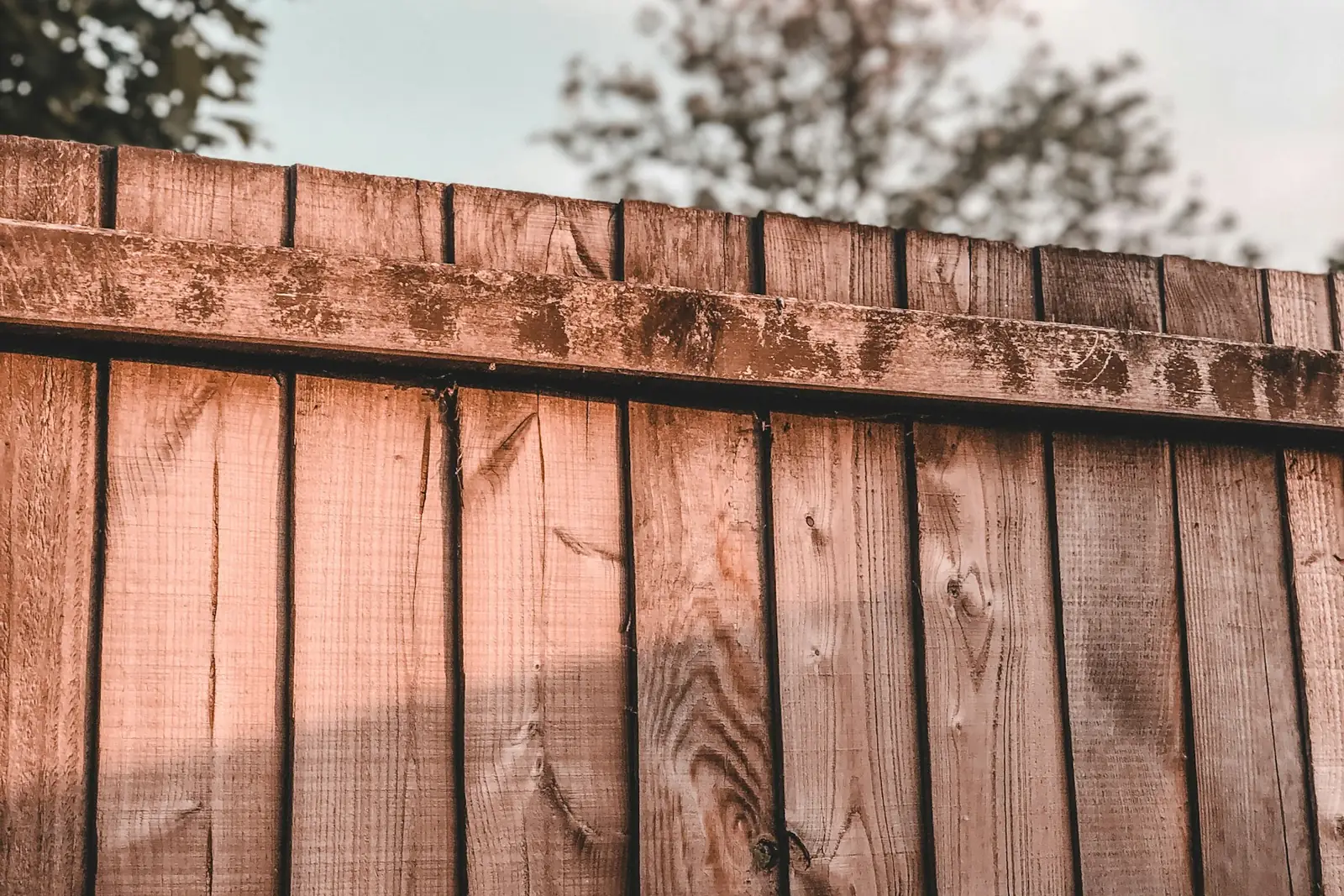
Preservers come clear or tinted. Tinted products give a uniform colour and some UV protection, while clear products keep the natural look.
- Choose a dry spell with no rain forecast for 24 hours
- Brush off dirt, cobwebs and algae and let the timber dry
- Apply preserver liberally with a brush or sprayer, working along the grain
- Concentrate on end grain, the tops of boards and the bottom edges
- Treat any cut ends on new timber before it goes up
Habits that prevent rot
These small things are often the difference between a fence that lasts ten years and one that lasts twenty.
- Keep soil and mulch from building up against panels – use gravel boards
- Clear fallen leaves and grass cuttings from the base
- Fit post caps and a capping rail to protect end grain
- Train climbers on wires rather than directly on the boards
- Make sure sprinklers and downpipes do not soak the fence