The short answer
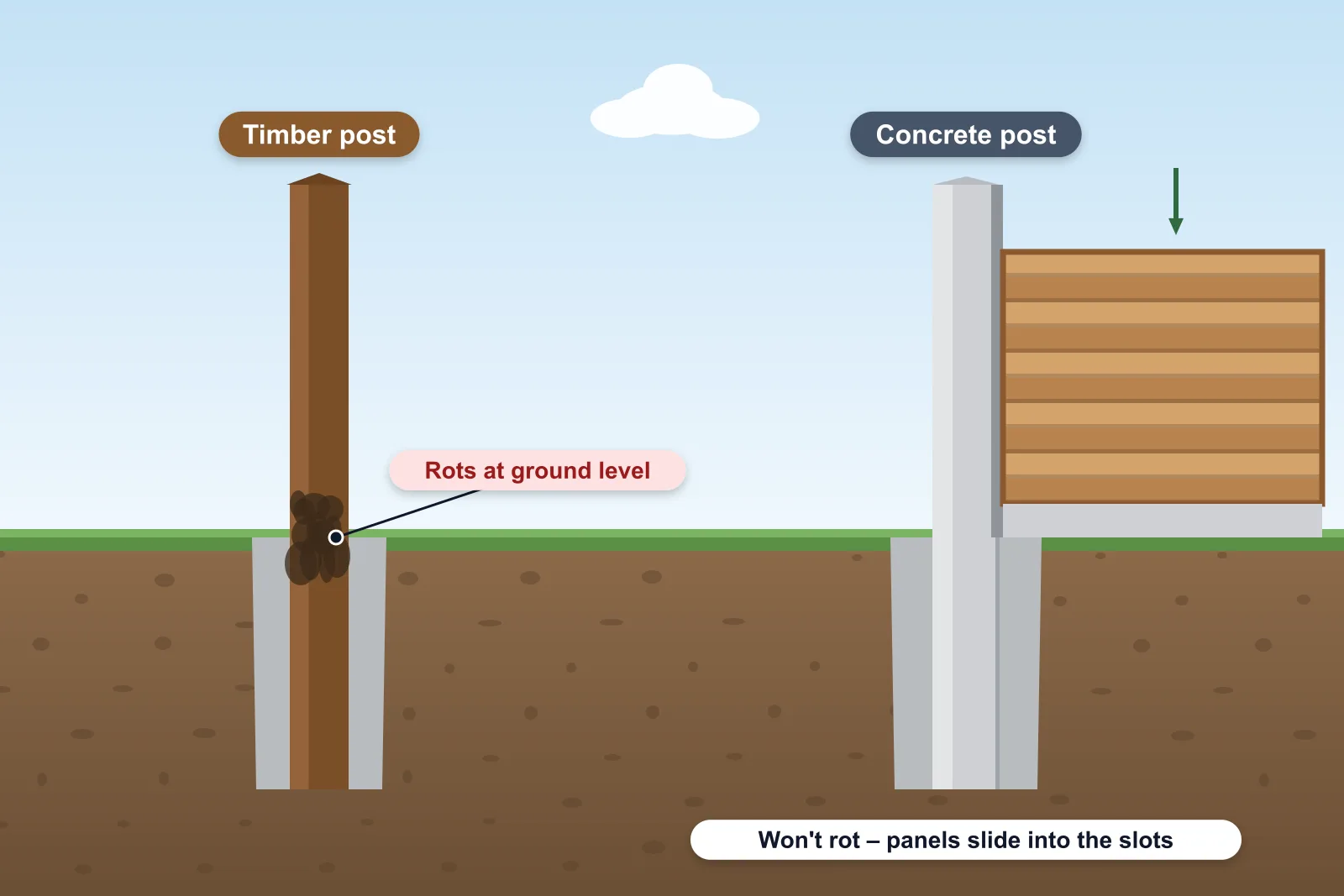
Concrete posts do not rot, so they typically last 25 years or more and make replacing panels quick – most contractors recommend them for panel fencing. Timber posts look warmer, are lighter and easier to cut, and suit closeboard, decorative and some contemporary fences, but even treated posts usually rot at ground level within 10–20 years.
When a fence fails, it is almost always the posts that go first. Timber posts rot where they meet the soil, which is exactly where the strain is greatest. That is why so many fences that look fine above ground suddenly lean or snap in a storm.
Concrete posts solve the rot problem but bring trade-offs of their own. This guide sets out the differences.
Concrete posts
Concrete posts come as slotted intermediate posts, end and corner posts, morticed posts for closeboard rails, and short repair spurs that can be bolted to a sound timber post with a rotten base.
- Do not rot, so they last much longer than timber
- Slotted posts let panels and gravel boards slide in and out
- Replacing a damaged panel takes minutes
- Heavy – often 40kg or more – so harder to handle and install
- Utilitarian look, though they can be painted or hidden by planting
- Cannot easily be cut or drilled on site

Timber posts
If you choose timber, use posts treated to Use Class 4, stand them on gravel rather than concrete at the base, and slope the concrete collar so water runs off. A post cap protects the end grain at the top.
- Warmer, more natural look that matches the fence
- Lighter, so easier to install, cut and fix to
- Needed for some designs, such as contemporary slatted fences
- Rot at ground level eventually, even when pressure-treated
- Should be Use Class 4 treated for ground contact
Which should you choose?
For standard panel fencing, concrete posts and concrete gravel boards are usually the best long-term value: the next time a panel is damaged, the repair is quick and cheap. For closeboard, picket, slatted and decorative fences, timber posts may suit the design better – just make sure they are properly treated and set.