The short answer
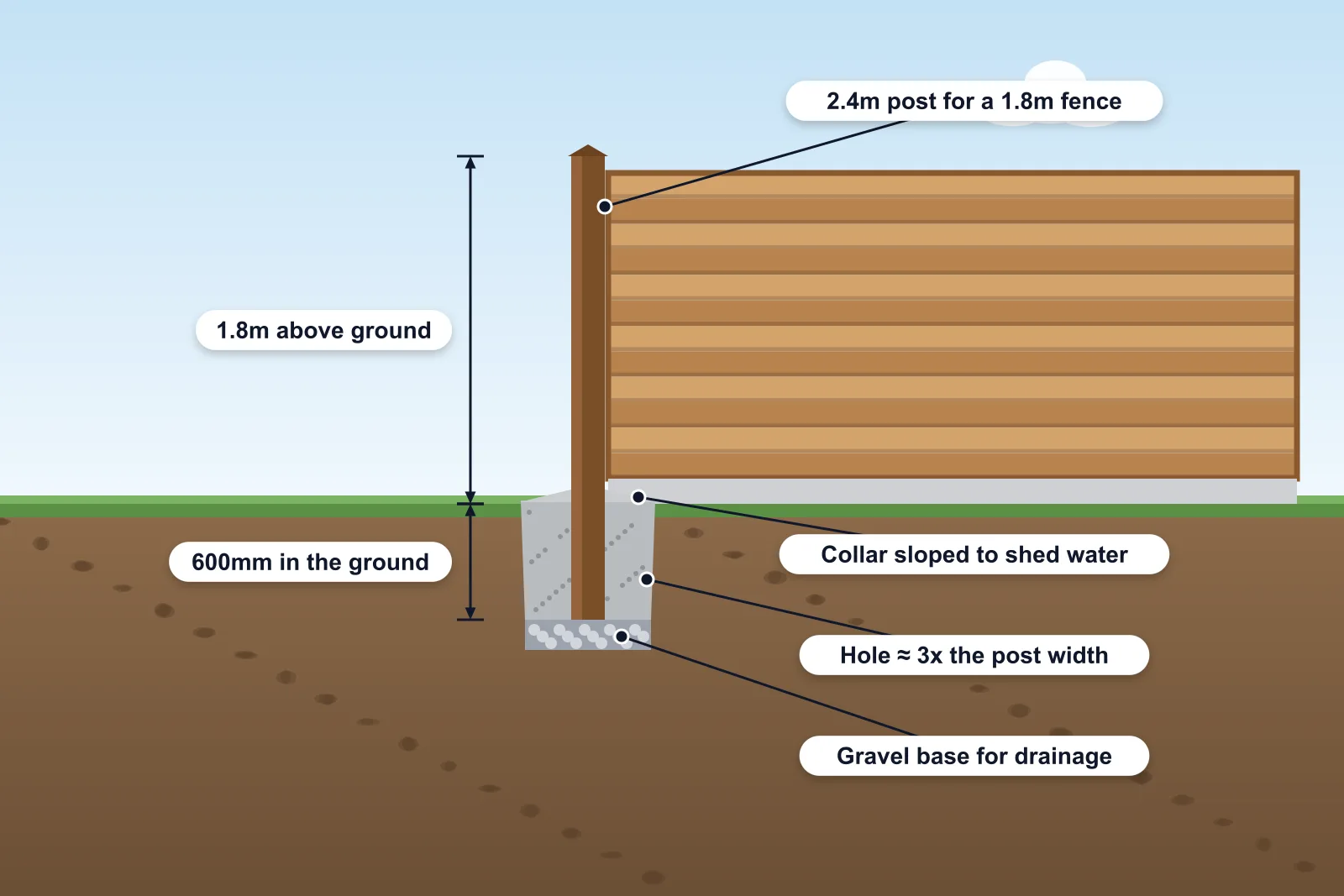
As a rule of thumb, at least a quarter of the post's length should be in the ground. For a standard 1.8m fence that means a 2.4m post with 600mm below ground. Make the hole about three times the width of the post, put a little gravel in the bottom for drainage and set the post in concrete or post mix, sloped at the top to shed water.
A fence post is a lever. The taller the fence and the more wind it catches, the more force tries to rock the post in the ground. Setting it deep enough, in a wide enough hole, is what stops it moving.
Shallow posts are one of the most common shortcuts on cheap fencing jobs, and one of the main reasons fences start leaning within a few years.
Post depth and length by fence height
On exposed sites, in soft or sandy soil or for heavy fences, contractors often go deeper than these minimums. Allow for the height of the gravel board when you work out how tall the post needs to be above ground.
- 0.9m fence – 1.35m post, about 450mm in the ground
- 1.2m fence – 1.8m post, about 600mm in the ground
- 1.5m fence – 2.1m post, about 600mm in the ground
- 1.8m fence – 2.4m post, about 600mm in the ground
- Gate posts – longer and heavier, often 750mm or more in the ground

Digging and setting the post
Dig a hole roughly three times the width of the post – about 300mm square for a 100mm post. Put 50–100mm of gravel or hardcore in the bottom so water can drain away from the end of a timber post. Stand the post on the gravel, brace it upright, check it with a spirit level on two adjacent faces and fill around it with concrete or rapid-setting post mix.
Finish the concrete just above ground level and slope it away from the post so rainwater runs off rather than pooling against the timber.
Signs a post was not set deep enough
If a post is sound but loose, it can sometimes be re-set. If it has rotted at ground level, it needs replacing or supporting with a concrete repair spur.
- The fence leans after a windy spell
- The post rocks when you push the top of it
- The concrete collar has lifted or cracked
- Panels have dropped out of their slots or brackets