The short answer
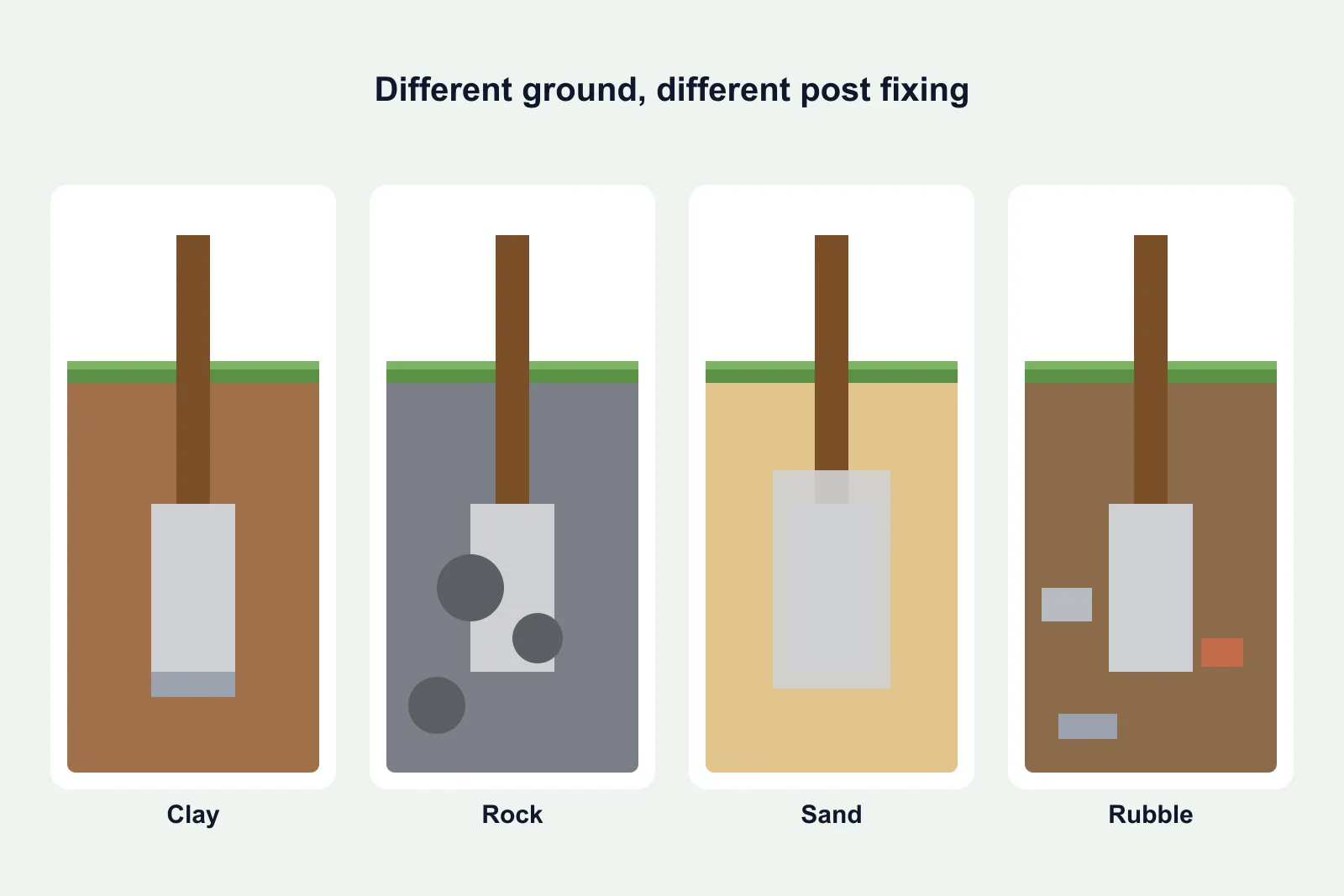
In clay, dig deeper, add a layer of gravel for drainage and use concrete. In rock, core drill or use a rock breaker, and consider bolt-down supports on solid stone. In sand, go deeper and wider with concrete. In rubble, break through to firm ground. In waterlogged ground, improve drainage and choose concrete posts. Difficult ground typically adds £10–£40 per post.
A standard fence post goes a quarter of its length into the ground, set in concrete or compacted hardcore. That works well in average soil. But the UK has huge variation – from the London clay to Pennine rock, coastal sand and new-build rubble – and the ground decides how long a fence lasts.
See how deep fence posts should be for the general rules. This guide covers the problem cases.
Heavy clay
Clay is hard work to dig when dry and sticky when wet. It also holds water around the post and shrinks and swells with the seasons, which can lift or loosen posts. Fencers usually dig slightly deeper, put 100–150mm of gravel in the bottom of the hole for drainage, set the post in concrete, and slope the top of the concrete away from the post so water runs off.
Concrete posts or timber posts in post spurs last longer in clay than timber posts set directly in the ground. See stop fence posts rotting.

Rock and stony ground
If you hit solid rock, there are three main options: break or core drill a hole into the rock and set the post in concrete or resin; use bolt-down post supports fixed directly to the rock surface (for lower, lighter fences); or adjust post positions to find softer ground. Large stones can usually be levered out with a digging bar.
Bolt-down supports reduce the depth needed but are less resistant to wind than a buried post, so they suit sheltered spots and lower fences.
Sandy soil
Sand drains well, which is good for timber, but it doesn't hold a post firmly and the hole sides collapse while digging. Dig wider and deeper, and set posts in concrete rather than relying on compacted fill. On coastal sites, wind is also likely to be a factor – see wind-resistant fencing.
Rubble and made ground
New-build gardens and old sites often have buried rubble. Break through it to firm ground, remove large pieces and backfill with concrete. Be careful of buried services – cables, pipes and drains – especially near houses. See fencing a new-build garden.
Waterlogged ground
Posts sitting in water rot quickly, and concrete in a waterlogged hole may not set well. Improve drainage where possible, add gravel to the base, use concrete posts, and consider a fence style that keeps timber well above the ground. If water sits on the surface all winter, the cause may be a drainage problem worth fixing first.
- Gravel in the base of every post hole
- Concrete posts and concrete gravel boards
- Sloped concrete collars to shed water
- Avoid timber in contact with wet soil