The short answer
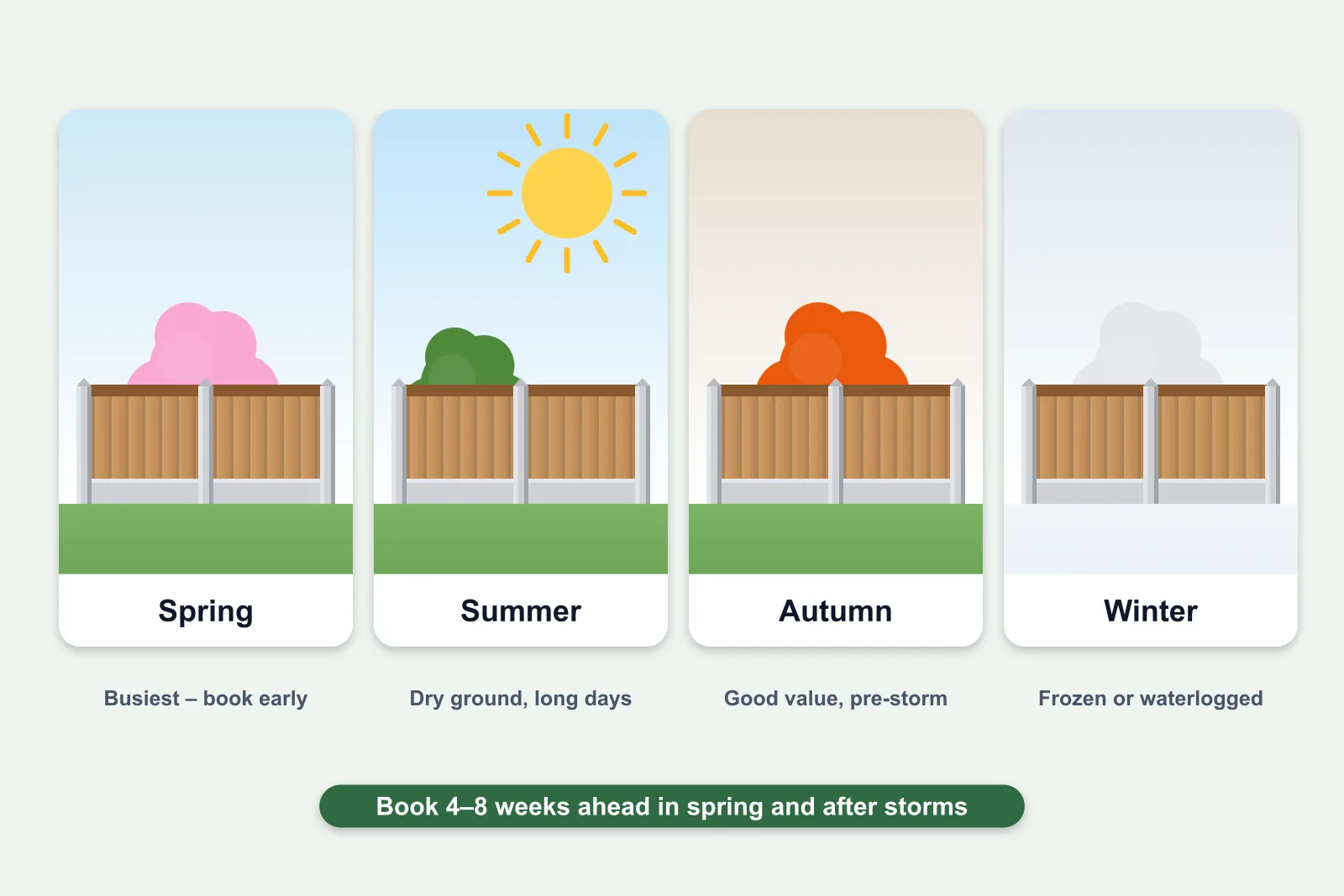
Late summer and autumn are often the best time to put up a fence in the UK: the ground is workable, contractors are less busy than in spring, and the new fence is in place before winter storms. Spring is the busiest season, so book early. Fences can be installed in winter too, except when the ground is frozen or waterlogged.
Fencing contractors work all year round, so there is no wrong time to replace a fence. But timing makes a difference to how soon you can get the work done, what condition the garden is in afterwards and – sometimes – what you pay.
Here is what to expect in each season.
Season by season
After a major named storm, local contractors can be booked up for weeks with emergency repairs. If your fence is old and leaning, replacing it before the storm season is usually far easier than waiting for it to fail.
- Spring – the busiest time, as people get gardens ready for summer; expect longer waits
- Summer – dry, workable ground and long days, but borders are full of plants that can be trampled
- Autumn – good availability, plants dying back and the fence ready before winter gales
- Winter – fine on most days, but frozen or waterlogged ground can delay work, and storms create backlogs

Protecting your garden
Fencing work needs access along the whole boundary. Contractors need room to dig holes, stack materials and remove the old fence, so plants close to the line may be disturbed. Autumn and winter, when perennials have died back, are the kindest times for borders. Cut back climbers and move pots before the team arrives.
Check for nesting birds in hedges and climbers along the boundary in spring and early summer, and avoid disturbing them.
Planning ahead
Ask for quotes four to eight weeks before you want the work done in spring, and as early as possible after storms. If you want to treat or paint the new fence, plan that for a dry spell – new pressure-treated timber is often best left to weather for a few months before staining.