The short answer
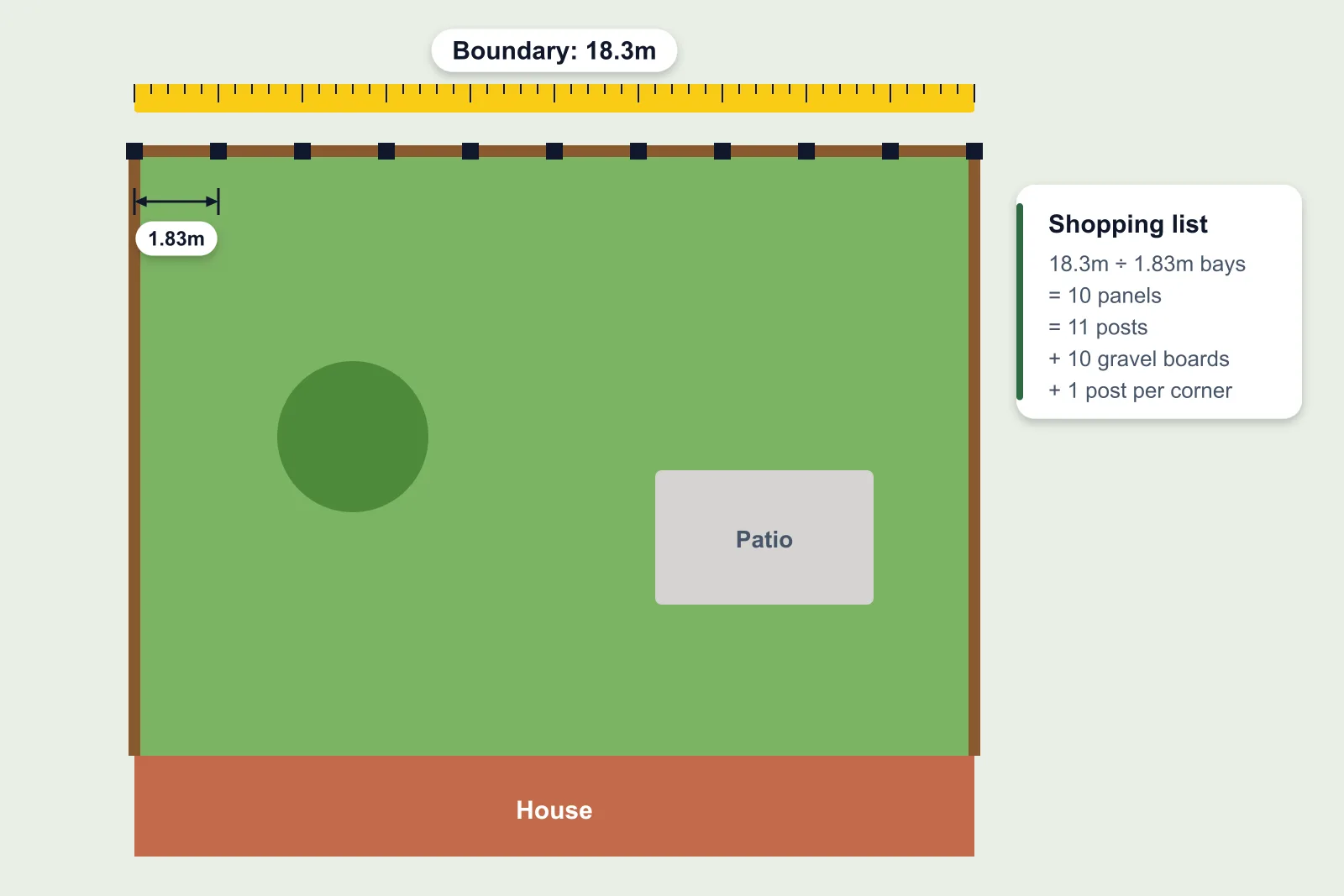
Measure each straight run of the boundary in metres. Standard panels are 1.83m wide, so divide each run by about 1.83m (plus the post width) and round up to get the number of panels. You need one more post than panels on each straight run, an extra post at every corner, and one gravel board per panel.
Whether you are buying materials or asking for quotes, the first step is the same: measure the boundary. Most fences are built from standard-width panels or bays, so once you know the length, the number of panels, posts and gravel boards follows from simple arithmetic.
It is worth being careful. Ordering one panel short holds up the whole job, and a contractor who has an accurate length can give you a firmer price.
Measuring the boundary
If you are replacing a fence, measure from the outside face of the existing end posts. Note whether the new fence will run on exactly the same line.
- Use a long tape (a 30m surveyor's tape is ideal) and a helper
- Measure each straight run separately, corner to corner
- Note the position of gates, trees, sheds and anything else on the line
- Measure along the ground line if it slopes, and note how much it falls
- Sketch the garden and write each measurement on the drawing
Working out panels and posts
Most panels are 1.83m (6ft) wide. With a typical post of about 100mm, each bay takes up roughly 1.93m. Divide the length of each run by 1.93 and round up to find the number of panels. You will need one more post than the number of panels on each straight run.
For example, an 18.3m run needs about 9.5 bays – so 10 panels and 11 posts. One panel will usually be cut down to fit, which is normal. Corners and gate openings need extra posts, and gates often need heavier posts.
- Panels = run length ÷ 1.93m, rounded up
- Posts = panels + 1 per straight run, plus extra for corners and gates
- Gravel boards = one per panel
- Post mix = usually one or two bags per post
- Post caps, panel clips or brackets as required
What to tell a contractor
For an accurate quote, give the total length of each run, the height you want, the style of fence, the post type you prefer, whether the old fence needs removing and what the access is like. Photos of the whole boundary and the route from the road into the garden help enormously.