The short answer
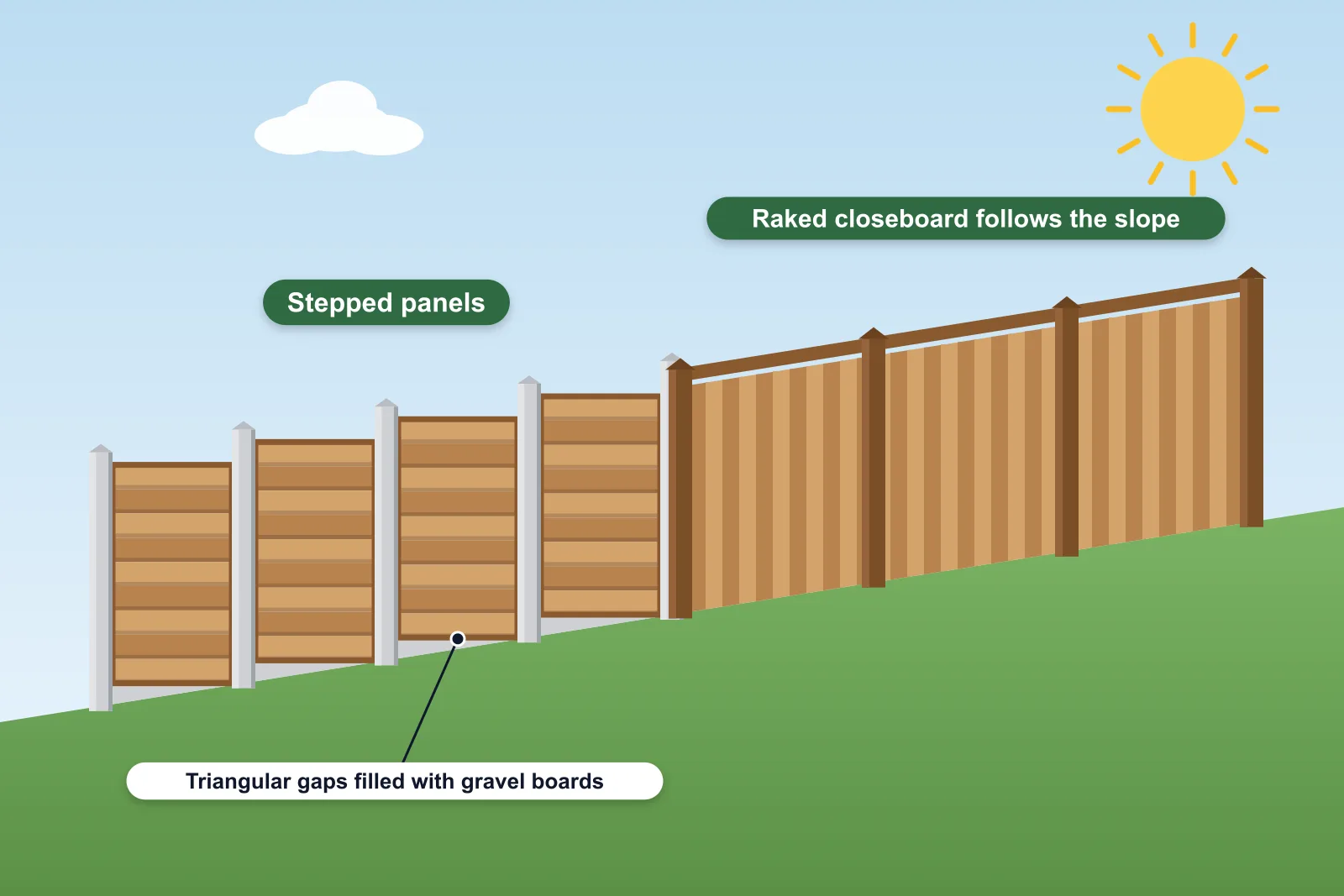
There are two ways to fence a slope. Stepping uses standard panels set level, with each panel higher or lower than the last and the triangular gaps filled with gravel boards. Raking builds the fence to follow the slope, usually as closeboard, so the top runs parallel to the ground. Stepping suits gentle slopes and panel fencing; raking suits steeper or uneven ground.
Fence panels are rectangular and need to sit level, so a slope creates a problem: either the fence steps down the hill in a series of level sections, or it is built to follow the ground. Both are perfectly good solutions, and the right one depends on the gradient, the style of fence and the look you prefer.
Slopes also affect post lengths, the cost of the job and sometimes the need to hold back soil.
Stepped fencing
Each panel is set level, with the posts at different heights so the fence steps down the slope. The drop between panels leaves a triangular gap underneath, which is filled with gravel boards, cut timber or concrete boards.
- Works with standard panels and slotted concrete posts
- Looks neat on gentle, even slopes
- Needs longer posts on the downhill side of each step
- Gaps under each panel must be filled to keep pets in
Raked fencing
A raked fence follows the slope, so the top line runs parallel to the ground. It is usually built as closeboard: the rails are fixed at an angle and the vertical feather edge boards are cut to follow the ground. There are no stepped gaps, and the fence looks continuous.
- Best for steeper or uneven slopes
- No triangular gaps at the bottom
- Usually closeboard, built on site
- Takes longer to build than stepped panels
Retaining soil and other considerations
Where the ground on one side is higher than the other, the fence may end up holding back soil. Ordinary panels and gravel boards are not designed to retain earth and will rot or push over. A proper retaining wall or sleeper wall may be needed first, with the fence on top or behind it.
On slopes, the height limit for planning purposes can be harder to judge. If the fence will be close to 2m on the lower side, check with your council.