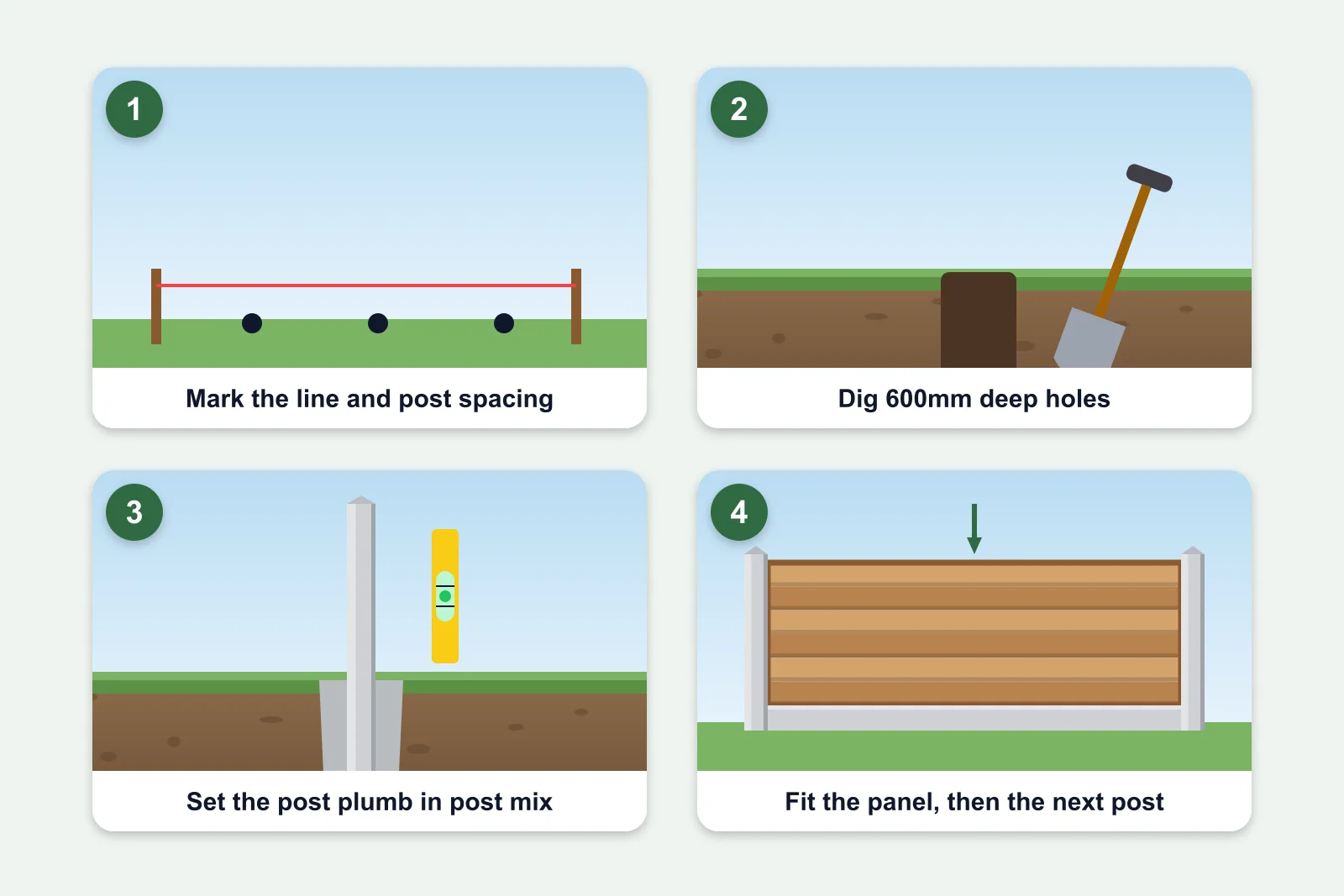
The short answer
Set out a string line along the boundary, mark the post positions at panel-width spacing, then work from one end: dig a 600mm hole, set the first post plumb in post mix, fit the gravel board and panel against it, then set the next post tight to the panel. Repeat bay by bay, checking the line and levels as you go.
Putting up fence panels is straightforward in principle, but it is physical work and the quality depends on getting the posts right. A fence built carefully over a weekend can last for many years; one rushed in an afternoon may lean by the following winter.
This guide covers the method most fencing contractors use for panels between timber or concrete posts. If you are not confident – or the fence is long, sloping or exposed – it may be worth getting quotes from a professional.
Tools and materials
Before you dig, check for buried cables and pipes – especially near the house, outside taps and lights.
- String line, pegs, tape measure and spray paint
- Spade, post-hole digger or auger and a digging bar for stony ground
- Spirit level, ideally a post level that straps to the post
- Posts, panels, gravel boards, post mix and fixings or clips
- Timber offcuts and screws for temporary bracing
- Gloves, safety glasses and a helper
Step by step
1. Set out a tight string line along the face of the fence and mark the post positions. Measure the actual width of your panels rather than assuming 1.83m.
2. Dig the first hole about 600mm deep and three times the post width. Add a little gravel in the bottom.
3. Set the first post, check it is plumb on two faces and at the right height against the string, brace it and fill with post mix.
4. Lay the first gravel board and sit the panel on it, tight to the first post. With concrete posts, slide the board and panel into the slots.
5. Dig the next hole, set the second post tight against the panel, check it is plumb and fix the panel. Repeat bay by bay.
6. Fit post caps, check the whole run is straight and level, and clear up.
Common mistakes to avoid
Working bay by bay, with each post set tight to the panel before it, is the simplest way to avoid gaps and wrongly spaced posts.
- Setting all the posts first and then finding the panels do not fit
- Posts too shallow, or in too little concrete
- Panels sitting directly on the soil without gravel boards
- Not checking posts are plumb in both directions
- Fixing panels with nails that split the frame – use clips or screws