The short answer
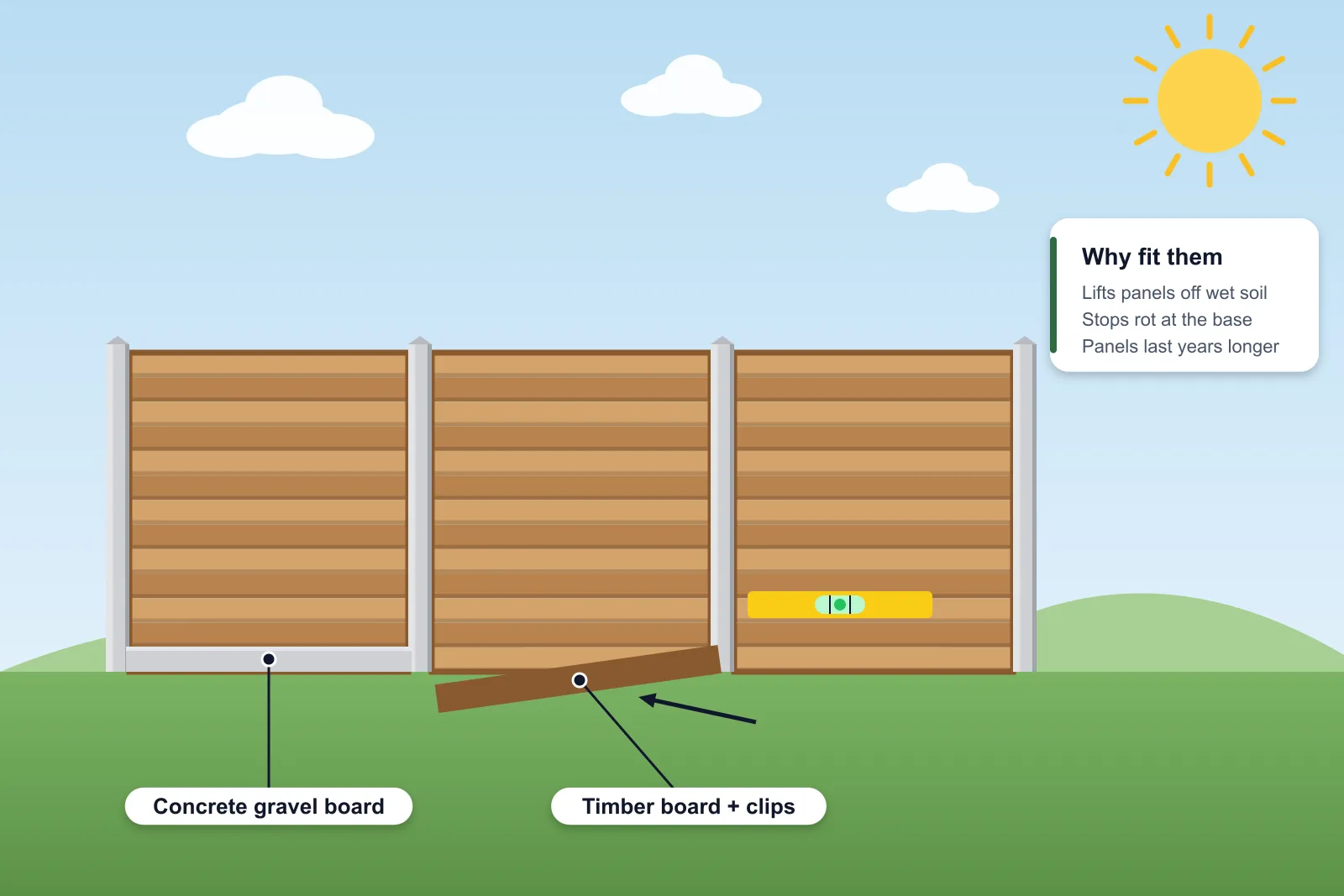
To add gravel boards under an existing fence, dig a shallow trench along the base, then either slot concrete gravel boards into the bottom of slotted concrete posts (lifting panels slightly if needed) or fix timber gravel boards to timber posts with brackets or cleats. Keep the board level, leave the panel bottom clear of the soil, and backfill with gravel.
A gravel board is a board – timber or concrete – that runs along the bottom of a fence, between the posts. It keeps the panel off the ground so it doesn't sit in wet soil, and it's far cheaper to replace a rotten gravel board than a whole panel.
Timber or concrete?
With concrete posts, concrete gravel boards are the natural choice. With timber posts, use treated timber gravel boards, fixed with cleats or brackets.
- Concrete gravel boards – don't rot, very durable, heavy; slot into concrete posts
- Timber gravel boards – lighter, easier to cut, fix to timber posts; will eventually need replacing
- Composite gravel boards – a less common middle option
With concrete posts
Slotted concrete posts have a channel on each side. If the panels currently sit low, you'll need to lift each panel by the height of the gravel board – usually 150mm – which may mean your fence becomes taller, or you trim the panel or swap to a shorter one. Lift the panel, slide the concrete gravel board down into the slots, then lower the panel onto it.
Check heights carefully before starting. In most areas, a back garden fence can be up to 2m including any gravel board without planning permission – see our fence height guide.
With timber posts
Dig a shallow trench along the base of the fence so the board can sit just below or at soil level. Fix small treated timber cleats to the inside faces of the posts, then screw the gravel board to the cleats. Some people fix the board directly to the post faces. Use galvanised or stainless screws.
Step by step
Take your time getting the boards level. Uneven boards make the panels above them look wonky.
- Clear soil and debris from the fence base
- Dig a trench about the depth of the board
- Measure the gap between posts and cut boards if needed
- Fit cleats or slot boards into position
- Check each board with a spirit level
- Backfill with gravel for drainage
Should you do it yourself?
Fitting timber gravel boards to timber posts is a manageable DIY job. Lifting heavy panels in concrete posts is easier with two people. If the posts themselves are rotten or leaning, deal with those first – see stopping fence posts rotting. Or get a quote for fence repairs.