The short answer
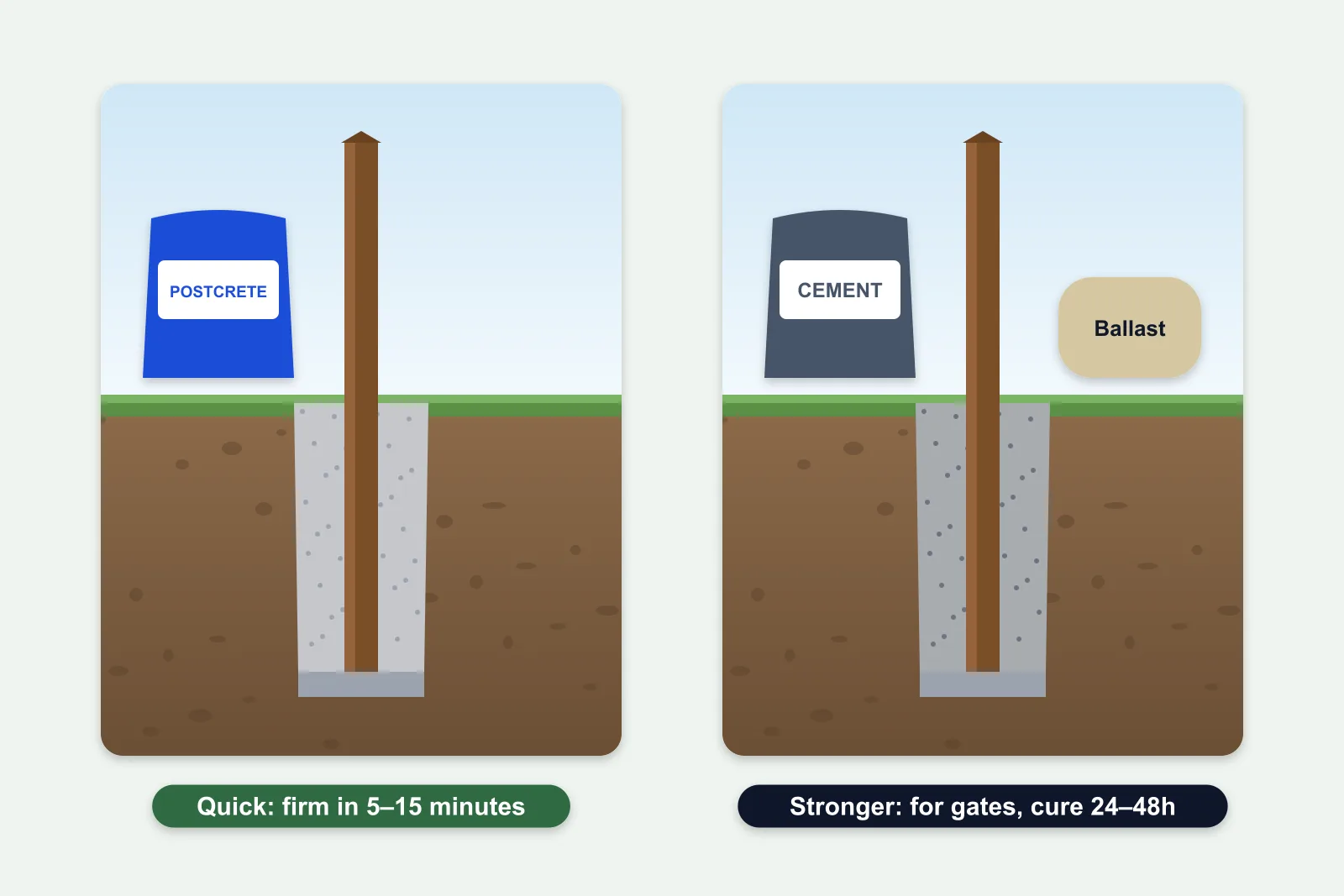
Rapid-setting post mix (often called by the brand name Postcrete) is quick and easy: pour water into the hole, add the dry mix and the post is firm in around 5–15 minutes. Site-mixed concrete is cheaper per post and stronger when fully cured, which makes it the better choice for gate posts, heavy posts and exposed sites, but it takes a day or two before it can take load.
Both products do the same job – holding the post upright in the ground – but they get there in different ways. Rapid-set post mix is designed for convenience: no mixer, no waiting and the next panel can go up straight away. Traditional concrete takes more effort but gives a dense, strong footing.
Most fencing contractors use both, choosing according to the post and the site.
Rapid-setting post mix
Post mix comes in bags, typically 20kg. The usual method is to fill the hole about a third full of water, pour in the dry mix around the post and check the post is plumb straight away. It firms up in minutes. Always follow the instructions on the bag, as products vary.
- Very quick – posts are firm in minutes
- No mixing, so less mess and fewer tools
- Typically one or two bags per post for a 1.8m fence
- More expensive per post than mixing your own
- You have to get the post plumb quickly before it sets

Site-mixed concrete
Concrete for posts is usually a fairly stiff mix of cement and all-in ballast – roughly one part cement to five or six parts ballast – mixed with just enough water to make it workable. It is packed around the post in layers, tamped down and finished with a slope at the top.
- Stronger and denser when fully cured
- Cheaper per post, especially on big jobs
- Better for gate posts, heavy concrete posts and exposed sites
- Needs 24–48 hours before loading the post heavily
- Requires temporary bracing while it cures
Which should you use?
For a short run of standard panels, rapid-set post mix is hard to beat for convenience. For gate posts, long runs, windy sites or heavy concrete posts, mixed concrete gives a more robust footing and saves money. Whichever you use, the depth and width of the hole matter more than the product.