The short answer
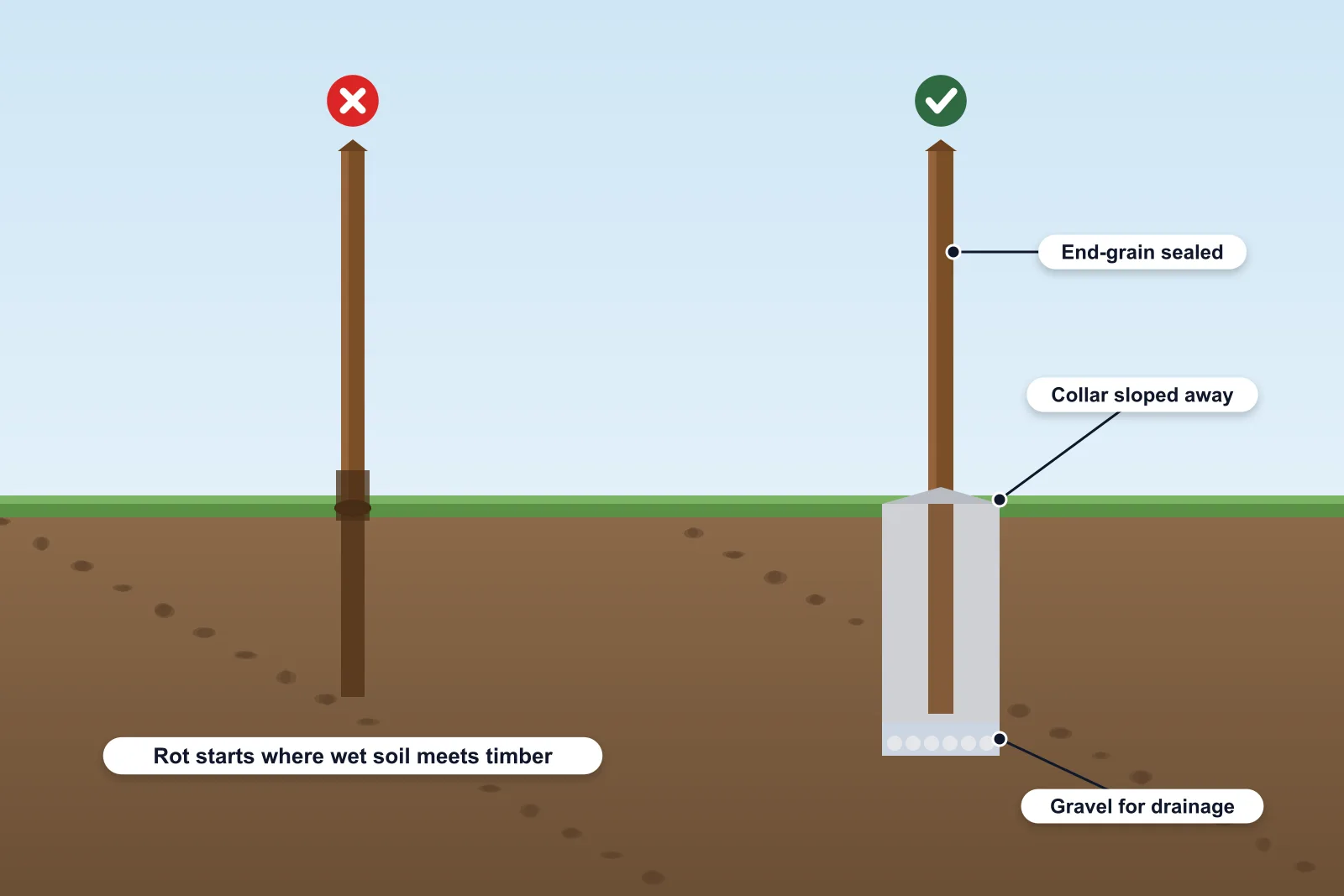
Wooden fence posts rot at ground level because that zone stays damp but has plenty of oxygen – ideal conditions for fungi. To prevent it, use pressure-treated posts rated for ground contact, set them on a gravel base for drainage, finish concrete with a collar sloping away from the post, keep soil and timber gravel boards away from the post, and seal any cut ends.
Deep underground, there's too little oxygen for wood-rotting fungi. Above the ground, timber dries out between showers. But right at the ground line, the wood stays wet, oxygen is plentiful, and soil, leaves and grass hold moisture against it. That's why posts snap at the surface after a few years, often looking perfect higher up.
Start with the right post
Not all treated timber is equal. Posts for fences should be pressure-treated to a level suitable for direct ground contact (often labelled Use Class 4). Dip-treated or 'brushed' posts have only a thin surface treatment and are much more vulnerable.
- Look for posts labelled for ground contact
- 75mm or 100mm square posts for 1.8m fences
- Avoid cutting the bottom of the post if possible
- Treat any cut ends with an end-grain preservative
Drainage and concrete
Water sitting at the bottom of a post hole is a major cause of rot. Put 100–150mm of gravel in the base of the hole so water can drain away from the end grain. When you concrete the post, don't leave a dish around it – shape the top of the concrete into a collar that slopes away from the post so rain runs off.
Our guide to how deep fence posts should be covers hole depth and size, and postcrete vs concrete compares setting methods.
Keep soil and debris away
Soil heaped against posts, flower beds built up against the fence, and piles of leaves all keep timber damp. Keep the ground level around posts, and leave a small gap between beds and the fence. Gravel boards – especially concrete ones – lift the panels off the soil and stop moisture wicking into the bottom rail. See our guide to installing gravel boards under existing panels.
Alternatives to burying timber
If you want to avoid timber in the ground altogether, there are options:
- Concrete posts – won't rot at all; see [concrete vs timber posts](/fencing-guides/concrete-vs-timber-fence-posts)
- Concrete repair spurs bolted to timber posts
- Metal post shoes or bolt-down bases on hard surfaces
- Drive-in post spikes – quick, but less stable in soft ground
- Post sleeves or wraps designed to protect the ground-line zone
Ongoing care
Re-treat exposed timber every few years with a preservative, paying attention to the bottom of the posts. Check after winter for softness at the ground line – pushing a screwdriver in is a quick test. Caught early, a post can be reinforced with a repair spur before it fails. See replacing a fence post without removing the panels.
Need help? Our fence repair page lets you compare local fencers.