The short answer
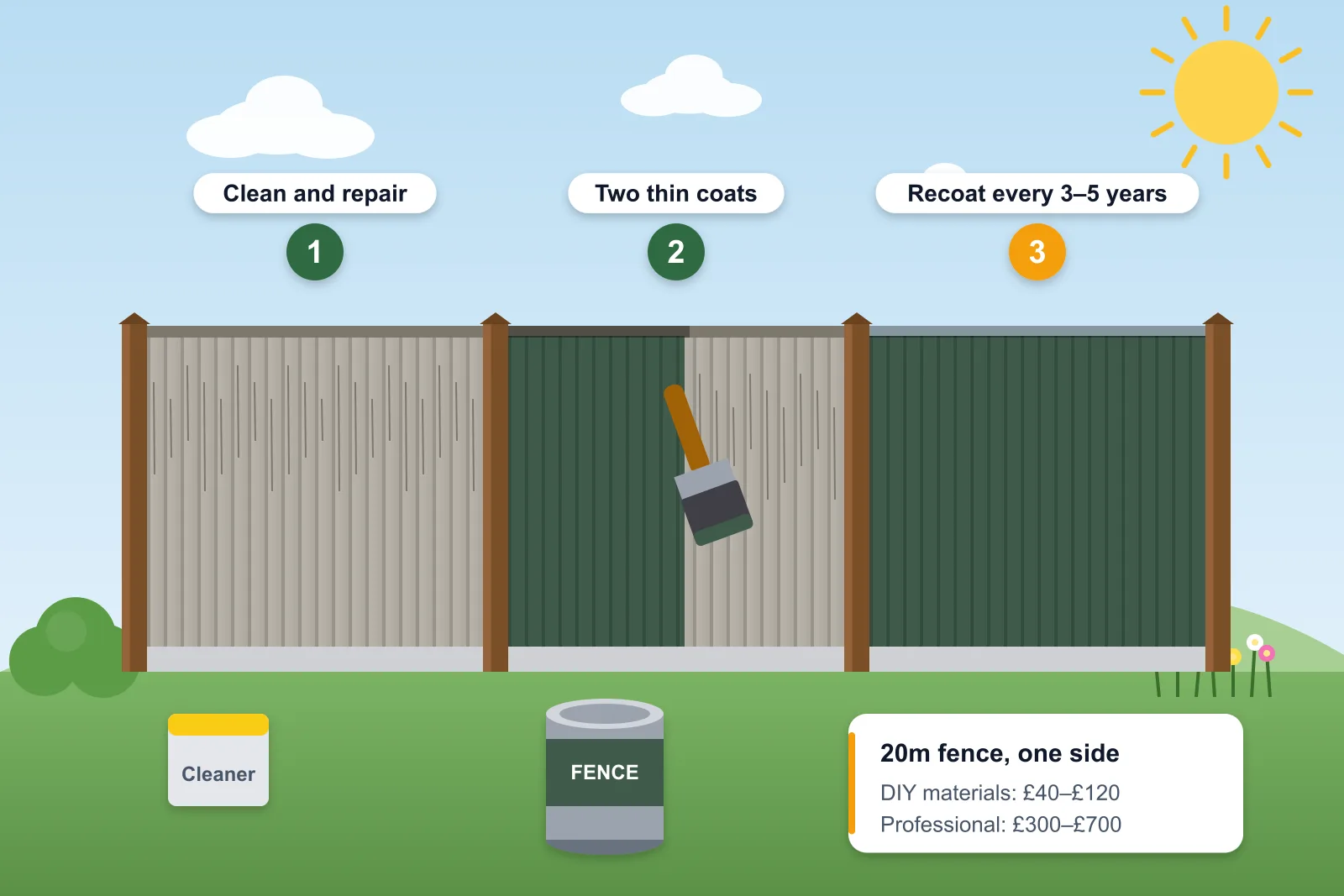
Check the fence for rot and loose boards, fix anything that needs it, then clean it and leave it to dry for at least two dry days. Protect plants and paving, and apply two thin coats of exterior fence paint on a mild, still day. Materials for a 20-metre run cost roughly £40–£120 if you do it yourself, or £300–£700 for a professional. Wash it down each spring, touch up any worn patches and recoat every three to five years.
A tired, patchy fence drags the whole garden down, and a fresh coat of paint is one of the cheapest ways to lift it. It is also a job most people can do themselves over a weekend. The catch is that painting is the easy bit. Whether the finish still looks good in two years' time depends almost entirely on what happens before you start and how you look after it afterwards.
This guide walks through the whole process for a wooden fence – the checks, the preparation, the painting itself, what you can expect to pay and the simple maintenance that stops you having to do it all again too soon.
Before you start: is the fence worth painting?
Paint will not save a fence that is falling apart, so walk along it first. Push each post firmly. If it rocks, or the timber is soft just above the ground, deal with that before anything else – a painted fence that blows down in the first winter storm is money wasted. Look for split or missing boards, rusty nails and panels that have come loose in their slots.
Check that the fence is actually yours, too. You are free to paint your own side of your own fence, but you should not paint your neighbour's side, or a fence that belongs to them, without asking first. A quick chat over the fence now saves an awkward one later.
Brand-new fencing is a special case. Pressure-treated timber is often still damp from the treatment process, and paint will not soak in evenly until it has dried out. Many manufacturers suggest waiting a few months – sometimes a full season – so check the advice on the tin before you go ahead.
Preparation: the part that makes or breaks the finish
Start by brushing the whole fence down from top to bottom. Treat any green patches with a fence cleaner, leave it to work for the time given on the label, then rinse. A pressure washer can speed things up, but keep it on a low setting and hold it well back – too much pressure tears up the surface of soft timber and drives water deep into the boards.
Scrape off any flaking paint, sand rough areas lightly and make your repairs: replace split boards, knock in or replace popped nails and fill small holes. Then be patient. The wood needs at least two dry days to dry out properly, and longer after a wet spell. Painting damp timber is the single most common reason fence paint peels.
Finally, protect everything you do not want painted. Cover paving, decking and beds with dust sheets, tie climbers back with string and mask off any metal fittings. Fence paint is surprisingly hard to get off a patio once it has dried.
- Stiff brush or broom for dust, cobwebs and loose fibres
- Fence or patio cleaner for green algae and moss
- Hose, or a pressure washer on its lowest setting
- Sandpaper or a scraper for flaking old paint
- Exterior wood filler, screws or galvanised nails for repairs
- Dust sheets or old bed sheets, string and masking tape
Choosing a paint for a wooden fence
Most fences in British gardens are made from rough-sawn timber, and for those a water-based fence paint is the obvious choice. It soaks into the grain, dries quickly, is easy to clean off your brushes and comes in a huge range of shades. Smooth, planed timber – slatted screens, tongue-and-groove and some gates – takes a higher-quality exterior wood paint or a wood stain better, and these usually last longer between coats.
Think about colour carefully. Dark greens, charcoals and near-blacks make planting stand out and help a fence fade into the background, which is why they are so popular. Pale shades can brighten a gloomy garden but show dirt and algae sooner, so expect to wash them more often. Whatever you pick, buy enough for two coats from the same batch, and check the coverage on the tin – rough-sawn panels can drink twice as much paint as smooth boards.
How to paint a wooden fence, step by step
A wide fence brush is the most forgiving tool, and it pushes paint into the texture of the wood. On a long run of panels, a garden or electric paint sprayer can cut the time dramatically, but it uses more paint and drifts in the wind – mask everything carefully, choose a still day and let your neighbours know before you start. Plenty of people spray first and then go over the wet paint with a brush to even it out.
Avoid painting in strong, direct sun if you can. The paint dries too quickly, leaving lap marks and a patchy finish. Morning shade, or working your way along the fence as the sun moves round, gives a much better result.
- Pick a dry, mild day – ideally 10–25°C, with no rain forecast for 24 hours
- Stir the paint thoroughly and decant some into a paint kettle or tray
- Start at the top of each panel and work down, following the grain
- Do one panel or a few boards at a time so you keep a wet edge
- Work the paint into gaps, edges and the tops of boards
- Leave the first coat to dry as directed, then apply a second thin coat
- Finish posts, rails and gravel boards last
What does it cost to paint a wooden fence?
If you do it yourself, the main cost is the paint. A 5-litre tin of fence paint costs roughly £15–£45 and covers somewhere between 10 and 25m² per coat, depending on the product and how rough the timber is. One side of a typical 20-metre, 1.8m-high fence is around 36m², so two coats usually means three to six tins. Add a brush, cleaner and dust sheets, and most people spend £40–£120 in total.
Hiring someone costs more, but it is often worth it for long or tall fences, older fences that need repairs first, or if you simply do not have the time. Expect roughly £15–£35 per panel or £300–£700 for one side of a 20-metre fence, depending on where you live and how much preparation is needed. If you want to compare prices for outdoor work, it helps to see what painters and decorators charge for other jobs before you start collecting quotes.
Should you do it yourself or hire a painter?
For a short, sound fence on a sunny weekend, DIY makes perfect sense. It is not skilled work, and the satisfaction of a freshly painted garden is hard to beat. Where it gets harder is with tall fences, long boundaries, fences that need several repairs or anything that requires ladders over beds and steps.
A professional will usually prepare, repair and paint in a day or two, and they will have the sprayers and dust sheets to do it cleanly. Many decorators combine fence painting with other outdoor work, such as walls, sheds or render, which can make the visit better value. If that sounds useful, you can get exterior painting quotes from local decorators and ask them to price the fence at the same time.
Maintenance: keeping a painted fence looking its best
A painted fence does not need much, but it does need a little attention every year. Algae and dirt hold moisture against the wood, and once the paint is worn through on the tops and bottoms of boards, water gets in and the finish starts to lift. Catching that early with a quick touch-up is far less work than stripping and repainting a whole run.
When the colour looks faded or the timber starts to look dry, it is time for a fresh coat. Recoating is quicker than the first time, because the prep is usually just a clean and a light sand. Stick with the same type of paint where possible – putting a water-based paint over an oil-based one, or the other way round, can cause problems unless the tin says it is compatible.
- Each spring, brush or hose the fence down and treat any algae
- Touch up scuffs, worn edges and the tops of boards before they let water in
- Keep soil, mulch and leaves away from the bottom of the boards
- Train climbers on wires or trellis rather than directly on the paint
- Recoat every three to five years, or sooner on south-facing and exposed fences